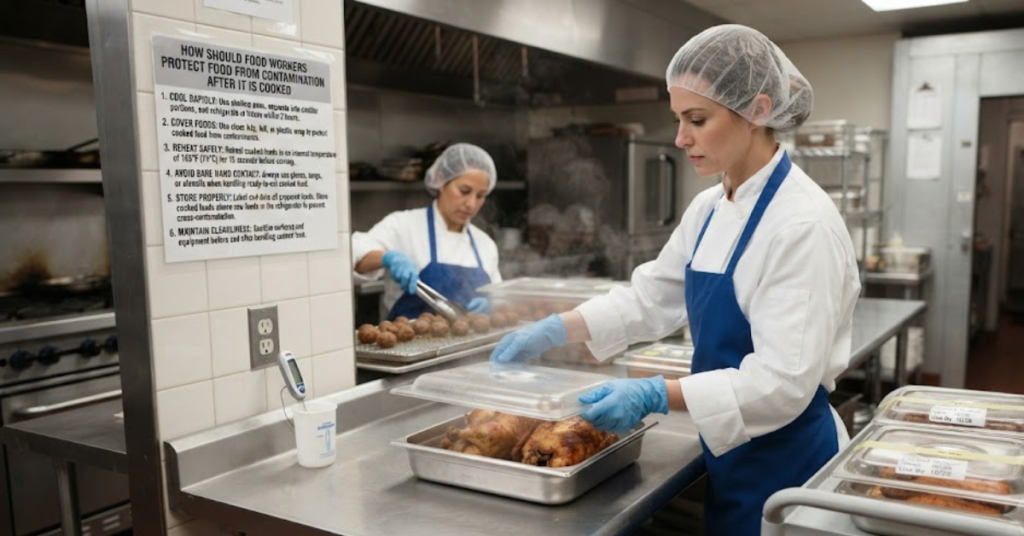

Food safety doesn’t end when a meal is fully cooked. In fact, one of the biggest risks of foodborne illness occurs after cooking, when ready-to-eat food can become contaminated through improper handling, poor storage, or contact with harmful bacteria. Understanding how should food workers protect food from contamination after it is cooked is essential for anyone working in restaurants, cafeterias, catering services, food trucks, or commercial kitchens.
This guide explains the best practices recommended by food safety authorities for protecting cooked food. You’ll learn how to prevent cross-contamination, maintain safe temperatures, store food correctly, and follow proper hygiene procedures to keep customers safe.
Why Protecting Cooked Food Matters
Cooking destroys many harmful microorganisms, but cooked food can easily become contaminated again if it isn’t handled properly. This process is known as cross-contamination, and it can occur when cooked food comes into contact with raw foods, dirty utensils, contaminated surfaces, or unwashed hands.
Improper food handling can lead to foodborne illnesses caused by bacteria such as:
- Salmonella
- Escherichia coli (E. coli)
- Listeria monocytogenes
- Campylobacter
- Staphylococcus aureus
Preventing contamination protects customers, reduces food waste, and helps businesses comply with food safety regulations.
How Should Food Workers Protect Food From Contamination After It Is Cooked?
The most effective way to protect cooked food is to combine proper hygiene, temperature control, safe storage, and careful handling throughout the entire serving process.
Here are the essential steps every food worker should follow.
Wash Hands Properly Before Handling Cooked Food
Hand hygiene is one of the simplest and most effective food safety measures.
Food workers should wash their hands:
- Before handling cooked food
- After touching raw meat, poultry, seafood, or eggs
- After using the restroom
- After coughing, sneezing, or touching the face
- After handling garbage
- After cleaning tasks
Wash hands thoroughly with soap and warm running water for at least 20 seconds, then dry them using a clean disposable towel or an approved hand dryer.
Prevent Cross-Contamination
Cross-contamination is one of the leading causes of foodborne illness.
To prevent it:
- Keep cooked food separate from raw ingredients.
- Never place cooked food on plates or trays that previously held raw meat.
- Use separate cutting boards for raw and cooked foods.
- Store raw meat below ready-to-eat foods in refrigerators.
- Clean and sanitize food-contact surfaces regularly.
Even small mistakes can transfer harmful bacteria to cooked meals.
Use Clean and Sanitized Equipment
Utensils, knives, cutting boards, serving spoons, and food containers should always be cleaned and sanitized before contacting cooked food.
Food-contact surfaces should be:
- Washed with detergent
- Rinsed thoroughly
- Sanitized using approved sanitizing solutions
- Air-dried before use
Dirty equipment can quickly contaminate food that was previously safe.
Keep Cooked Food at Safe Temperatures
Temperature control is critical after cooking.
Hot Holding
Hot foods should generally be kept at 135°F (57°C) or higher until served.
Examples include:
- Soups
- Cooked vegetables
- Rice
- Pasta
- Meat dishes
Cold Holding
Cold foods should generally be maintained at 41°F (5°C) or lower.
Examples include:
- Salads
- Prepared sandwiches
- Dairy-based desserts
- Cold appetizers
Maintaining proper temperatures helps prevent bacteria from multiplying.
Cover Food During Storage
Cooked food should be covered whenever possible to protect it from:
- Dust
- Airborne contaminants
- Insects
- Splashing liquids
- Contact with other foods
Suitable coverings include:
- Food-grade lids
- Plastic wrap
- Aluminum foil
- Approved food storage containers
Proper covering also helps preserve food quality.
Store Food Correctly
Safe storage practices reduce contamination risks.
Follow these guidelines:
- Label food with preparation dates.
- Use clean storage containers.
- Store cooked food separately from raw products.
- Rotate inventory using the First-In, First-Out (FIFO) method.
- Avoid overcrowding refrigerators to allow proper airflow.
Organized storage makes food safety easier to maintain.
Avoid Bare-Hand Contact with Ready-to-Eat Food
Whenever possible, food workers should avoid touching ready-to-eat foods with bare hands.
Instead, use:
- Disposable gloves
- Tongs
- Deli tissue
- Serving utensils
- Spatulas
If gloves are used, they should be changed frequently and never replace proper handwashing.
Cool Food Safely
Some cooked foods must be cooled before refrigeration.
Food should be cooled quickly by:
- Dividing large portions into smaller containers
- Using shallow pans
- Stirring with clean cooling paddles
- Placing containers in ice baths when appropriate
Rapid cooling helps minimize bacterial growth.
Reheat Food Properly
If cooked food is reheated for hot holding, it should reach a safe internal temperature before serving.
Always use a food thermometer to verify temperatures rather than relying on appearance alone.
Monitor Food Safety Regularly
Food safety should be an ongoing process rather than a one-time task.
Kitchen managers should:
- Train employees regularly
- Monitor food temperatures
- Inspect storage areas
- Verify cleaning procedures
- Review sanitation schedules
Routine monitoring helps identify problems before they affect customers.
Common Mistakes That Lead to Contamination
Avoid these frequent food safety errors:
- Touching cooked food with unwashed hands
- Mixing raw and cooked foods
- Leaving food in the temperature danger zone too long
- Using dirty utensils
- Failing to sanitize preparation surfaces
- Improper cooling or reheating
- Storing food uncovered
Recognizing these mistakes is the first step toward preventing them.
Best Practices Checklist
Food workers can improve food safety by following this simple checklist:
- Wash hands frequently
- Prevent cross-contamination
- Sanitize equipment
- Cover stored food
- Maintain safe temperatures
- Use clean utensils
- Wear gloves appropriately
- Store food correctly
- Monitor cooling and reheating
- Follow workplace food safety procedures
Consistently following these practices significantly reduces the risk of foodborne illness.
Frequently Asked Questions
How should food workers protect food from contamination after it is cooked?
Food workers should wash their hands, prevent cross-contamination, use clean utensils, cover food during storage, maintain safe temperatures, and store cooked food separately from raw ingredients.
Why is cross-contamination dangerous?
Cross-contamination can transfer harmful bacteria from raw foods, contaminated surfaces, or dirty equipment to cooked food, increasing the risk of foodborne illness.
Should cooked food be covered?
Yes. Covering cooked food protects it from airborne contaminants, insects, spills, and contact with other foods while preserving quality.
Can food workers touch cooked food with bare hands?
Ready-to-eat food should generally not be handled with bare hands. Food workers should use gloves, tongs, deli tissue, or other suitable utensils whenever possible.
Why is temperature control important?
Keeping hot food hot and cold food cold slows or prevents the growth of harmful bacteria that can cause foodborne illness.
How often should food-contact surfaces be sanitized?
Food-contact surfaces should be cleaned and sanitized regularly, especially after handling raw foods, between different preparation tasks, and whenever contamination may have occurred.
Conclusion
Understanding how should food workers protect food from contamination after it is cooked is a fundamental part of maintaining food safety in any commercial kitchen. While cooking destroys many harmful microorganisms, improper handling afterward can quickly undo that protection.
By practicing excellent hand hygiene, preventing cross-contamination, maintaining safe holding temperatures, using sanitized equipment, storing food correctly, and following established food safety procedures, food workers can significantly reduce the risk of foodborne illness. These simple but essential habits not only protect customers but also support compliance with food safety regulations and help maintain a strong reputation for quality and cleanliness.