
A clean kitchen isn’t just about sparkling countertops and sanitized cutting boards. One often-overlooked area that plays a major role in food safety is the garbage can. If waste containers aren’t cleaned and maintained properly, they can become breeding grounds for bacteria, attract pests, create unpleasant odors, and even contribute to cross-contamination. That’s why understanding how should food workers keep garbage cans clean and free of buildup is an essential part of maintaining a safe food service environment.
Whether you work in a restaurant, cafeteria, catering business, or commercial kitchen, following proper waste management procedures helps protect customers, maintain health code compliance, and create a cleaner workplace. This guide explains the best practices every food worker should know.
Why Clean Garbage Cans Matter in Food Safety
Garbage cans collect food scraps, packaging, liquids, and other waste throughout the day. Without regular cleaning, residue can build up inside and around the containers, creating an ideal environment for bacteria, mold, insects, and rodents.
Dirty garbage cans can lead to:
- Cross-contamination
- Unpleasant odors
- Pest infestations
- Slippery floors from leaking waste
- Health code violations
- Reduced workplace hygiene
Keeping waste containers clean is an important part of every food safety program.
How Should Food Workers Keep Garbage Cans Clean and Free of Buildup?
The best approach is to empty garbage regularly, use liners, wash and sanitize containers frequently, and inspect them for residue or damage. Consistent cleaning prevents buildup before it becomes a food safety hazard.
Empty Garbage Before It Overflows
One of the easiest ways to prevent buildup is to remove waste before containers become overly full.
Food workers should:
- Empty garbage regularly during each shift.
- Never allow trash to overflow.
- Replace full bags immediately.
- Dispose of waste in designated collection areas.
Overflowing trash increases the risk of spills, contamination, and pest activity.
Always Use Garbage Can Liners
Garbage liners help prevent food waste and liquids from sticking directly to the container.
Benefits of liners include:
- Easier cleanup
- Less residue buildup
- Reduced odors
- Improved sanitation
- Faster bag replacement
Replace liners whenever the trash is emptied or if they become torn or leaking.
Wash Garbage Cans Regularly
Even with liners, garbage cans should be cleaned on a routine schedule.
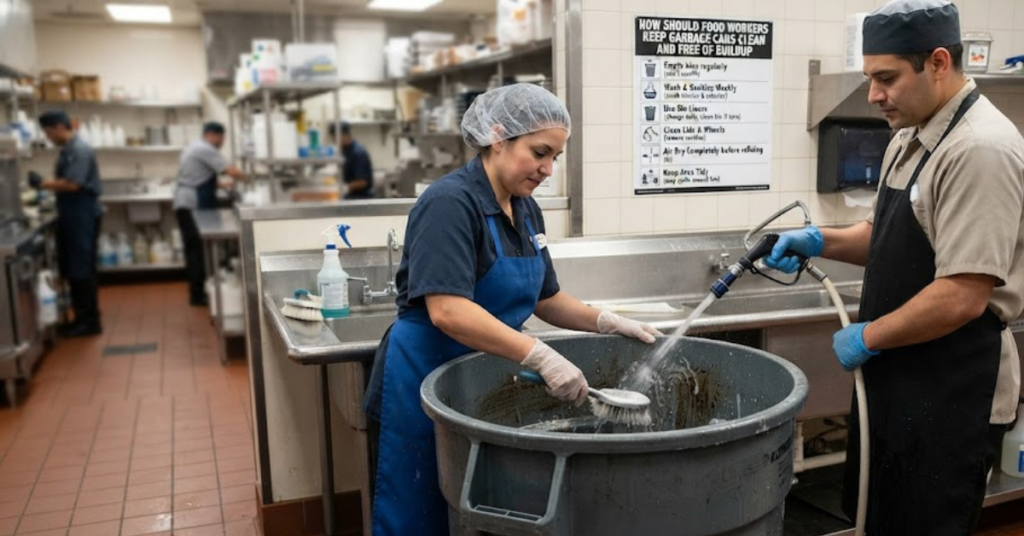
A typical cleaning process includes:
- Remove all waste and liners.
- Rinse away loose debris.
- Wash with hot water and an approved detergent.
- Scrub interior and exterior surfaces thoroughly.
- Pay special attention to corners, rims, and handles.
Routine washing removes grease, food particles, and other residue that can accumulate over time.
Sanitize After Cleaning
Cleaning removes visible dirt, but sanitizing helps reduce harmful microorganisms.
After washing:
- Apply an approved food-service sanitizer.
- Follow the manufacturer’s recommended contact time.
- Allow the container to air dry completely before inserting a new liner.
Never skip the sanitizing step, especially in commercial kitchens.
Keep Garbage Can Lids Clean
Lids are touched frequently and often collect grease, fingerprints, and food residue.
Food workers should:
- Wipe lids throughout the day.
- Wash and sanitize them during scheduled cleaning.
- Check hinges and handles for buildup.
Clean lids help reduce the spread of germs.
Clean the Area Around Garbage Cans
Food safety extends beyond the garbage container itself.
Regularly clean:
- Floors around trash cans
- Walls behind containers
- Nearby shelving
- Drain areas
- Waste collection stations
Removing spilled food helps discourage insects and rodents.
Prevent Pest Problems
Poorly maintained garbage attracts pests quickly.
To reduce pest activity:
- Keep lids closed whenever possible.
- Remove waste frequently.
- Clean spills immediately.
- Store outdoor dumpsters away from food preparation areas.
- Schedule regular pest inspections.
A proactive approach is much more effective than dealing with an infestation later.
Inspect Garbage Cans for Damage
Cracked or damaged garbage cans are harder to clean and may harbor bacteria.
Inspect containers for:
- Cracks
- Holes
- Broken lids
- Sharp edges
- Rust
- Damaged wheels
Replace damaged containers promptly to maintain sanitation standards.
Follow a Cleaning Schedule
Consistency is one of the most important aspects of food safety.
Many food service operations create cleaning schedules that specify:
- Daily cleaning tasks
- Weekly deep cleaning
- Sanitizing procedures
- Staff responsibilities
- Inspection checklists
Documented schedules help ensure that cleaning isn’t overlooked during busy shifts.
Train Food Workers on Proper Waste Handling
Every employee should understand proper waste management procedures.
Training topics should include:
- Handwashing after handling garbage
- Safe bag removal
- Cleaning procedures
- Sanitizer use
- Pest prevention
- Personal protective equipment (PPE)
Well-trained staff help maintain a safer workplace.
Common Mistakes to Avoid
Avoid these common sanitation errors:
- Allowing garbage to overflow
- Reusing dirty liners
- Skipping sanitization
- Leaving lids open
- Ignoring spills around trash cans
- Waiting too long between cleanings
- Failing to inspect containers for damage
Preventing these mistakes helps reduce contamination risks.
Best Practices Checklist
Food workers can use this checklist to keep garbage cans clean and free of buildup:
- Empty trash regularly
- Use durable garbage liners
- Wash containers with detergent
- Sanitize after every cleaning
- Keep lids clean
- Clean surrounding areas
- Prevent pest access
- Replace damaged containers
- Follow a written cleaning schedule
- Wash hands after handling waste
Small daily habits make a significant difference in maintaining food safety.
Frequently Asked Questions
How should food workers keep garbage cans clean and free of buildup?
Food workers should empty trash regularly, use liners, wash containers with detergent, sanitize them after cleaning, and inspect them frequently for residue or damage.
Why is garbage can cleaning important?
Dirty garbage cans can harbor bacteria, attract pests, create unpleasant odors, and contribute to cross-contamination in food preparation areas.
How often should garbage cans be cleaned?
Garbage cans should be cleaned on a regular schedule based on usage. High-use containers may require daily cleaning, while all containers should be cleaned whenever buildup or spills occur.
Should garbage cans always have liners?
Yes. Liners help reduce residue buildup, improve sanitation, simplify cleaning, and minimize odors.
Why should food workers wash their hands after handling garbage?
Garbage may contain harmful microorganisms. Proper handwashing prevents bacteria from being transferred to food, equipment, or preparation surfaces.
What should food workers do if a garbage can is damaged?
Damaged containers should be repaired or replaced as soon as possible because cracks and holes make effective cleaning difficult and may harbor bacteria.
Conclusion
Understanding how should food workers keep garbage cans clean and free of buildup is a key part of maintaining a safe and hygienic food service operation. Clean waste containers help prevent cross-contamination, discourage pests, reduce unpleasant odors, and support compliance with food safety regulations.
By emptying trash before it overflows, using liners, washing and sanitizing containers regularly, cleaning surrounding areas, and following a consistent maintenance schedule, food workers can create a cleaner environment that protects both employees and customers. Good waste management is more than housekeeping—it’s an essential component of every successful food safety program.