
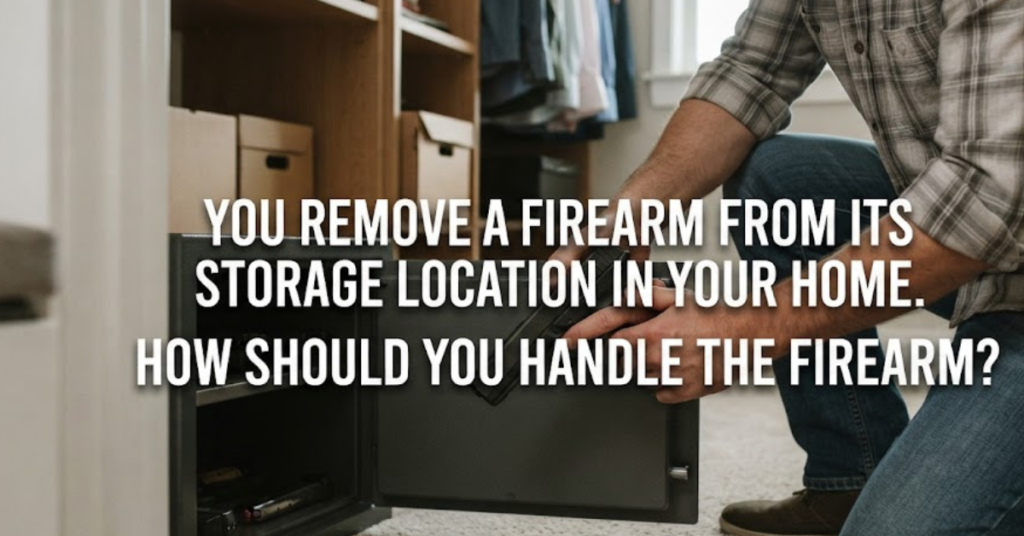

Firearm safety begins the moment a firearm leaves its storage location. Whether you’re preparing for lawful recreational shooting, cleaning, maintenance, or secure transport, knowing you remove a firearm from its storage location in your home. How should you handle the firearm? is one of the most important aspects of responsible firearm ownership.
The answer starts with universally accepted safety principles: always treat every firearm as if it is loaded, keep it pointed in a safe direction, keep your finger off the trigger until you are ready to shoot in a lawful setting, and verify its condition as soon as it can be done safely. These core practices help reduce the risk of accidental injury and are taught by major firearm safety organizations around the world.
Why Safe Firearm Handling Matters
Many firearm accidents happen because someone assumes a firearm is unloaded or becomes careless during routine handling. Developing safe habits every time you handle a firearm greatly reduces the chance of an accident.
Responsible firearm handling helps:
- Protect yourself and others.
- Prevent unintentional discharges.
- Reinforce consistent safety habits.
- Support safe firearm ownership.
Safety procedures should be followed every time, regardless of experience level.
You Remove a Firearm From Its Storage Location in Your Home. How Should You Handle the Firearm?
The safest approach is to follow these widely accepted firearm safety rules immediately after removing a firearm from storage.
1. Treat Every Firearm as if It Is Loaded
Even if you believe the firearm is unloaded, never assume that it is.
Making this your default mindset helps prevent complacency and encourages careful handling every time.
2. Keep the Muzzle Pointed in a Safe Direction
Always control where the muzzle is pointed.
A “safe direction” is one where an unintentional discharge would be unlikely to cause injury or significant property damage. This depends on your surroundings, so remain aware of your environment at all times.
3. Keep Your Finger Off the Trigger
Place your finger outside the trigger guard and alongside the frame or receiver until you are lawfully ready to fire.
This simple habit helps prevent unintended trigger activation while handling or moving the firearm.
4. Verify the Firearm’s Condition Safely
As soon as it is safe to do so, determine whether the firearm is loaded or unloaded by following the manufacturer’s instructions for that specific model.
If you are unfamiliar with the firearm, consult the owner’s manual before handling it further.
Handle Firearms Without Distractions
Avoid handling firearms when you are:
- Distracted
- Fatigued
- Under the influence of alcohol or drugs
- Rushing
- Emotionally upset
Clear focus is an essential part of responsible firearm handling.
Keep Unauthorized People Away
Whenever a firearm is out of storage:
- Ensure children cannot access it.
- Prevent unauthorized adults from handling it.
- Maintain control of the firearm at all times.
If you must stop handling it, return it to secure storage rather than leaving it unattended.
Maintain Situational Awareness
Before handling a firearm, take a moment to assess your surroundings.
Consider:
- Who is nearby
- Where the muzzle is pointed
- Whether the area is appropriate for firearm handling
- Potential hazards in the environment
Being aware of your surroundings is a key part of firearm safety.
Safe Storage After Handling
Once you have finished your lawful activity, return the firearm to secure storage as soon as practical.
Responsible storage generally includes:
- A locked safe or secure storage device
- Separate storage of ammunition when appropriate
- Restricted access for children and unauthorized users
Proper storage is just as important as safe handling.
Common Firearm Handling Mistakes to Avoid
Responsible firearm owners avoid habits such as:
- Assuming a firearm is unloaded.
- Pointing the muzzle at people or unsafe areas.
- Placing a finger on the trigger unnecessarily.
- Leaving firearms unattended.
- Handling firearms carelessly or while distracted.
Consistently avoiding these mistakes helps build safer habits.
Core Firearm Safety Principles
Remember these universal safety practices whenever you handle a firearm:
- Treat every firearm as if it is loaded.
- Keep the muzzle pointed in a safe direction.
- Keep your finger off the trigger until appropriate in a lawful shooting context.
- Be certain of your surroundings.
- Maintain control of the firearm at all times.
- Store firearms securely when not in use.
These principles are the foundation of responsible firearm ownership.
Frequently Asked Questions
You remove a firearm from its storage location in your home. How should you handle the firearm?
Handle it by treating it as if it is loaded, keeping the muzzle pointed in a safe direction, keeping your finger off the trigger, and safely verifying its condition according to the manufacturer’s instructions.
Why should every firearm be treated as if it is loaded?
Assuming every firearm is loaded helps prevent careless handling and reduces the risk of accidental injury.
Should my finger be on the trigger while handling a firearm?
No. Keep your finger outside the trigger guard until you are lawfully ready to fire in an appropriate setting.
What is a safe direction?
A safe direction is one where an unintended discharge would be unlikely to injure anyone or cause significant property damage. It depends on the environment and should always be evaluated carefully.
Should firearms ever be left unattended after removing them from storage?
No. Firearms should remain under your control while being handled and should be returned to secure storage when no longer in use.
Why is secure storage important?
Secure storage helps prevent unauthorized access, especially by children or individuals who should not have access to firearms.
Conclusion
Understanding you remove a firearm from its storage location in your home. How should you handle the firearm? starts with following the universally recognized rules of firearm safety every single time. Treat every firearm as though it is loaded, maintain muzzle awareness, keep your finger off the trigger until appropriate in a lawful setting, verify the firearm’s condition safely, and remain attentive to your surroundings.
Safe firearm handling is built on consistency rather than assumptions. By practicing these fundamental safety habits and storing firearms securely when they are not in use, responsible firearm owners can help reduce the risk of accidents and promote a culture of safety for everyone around them.