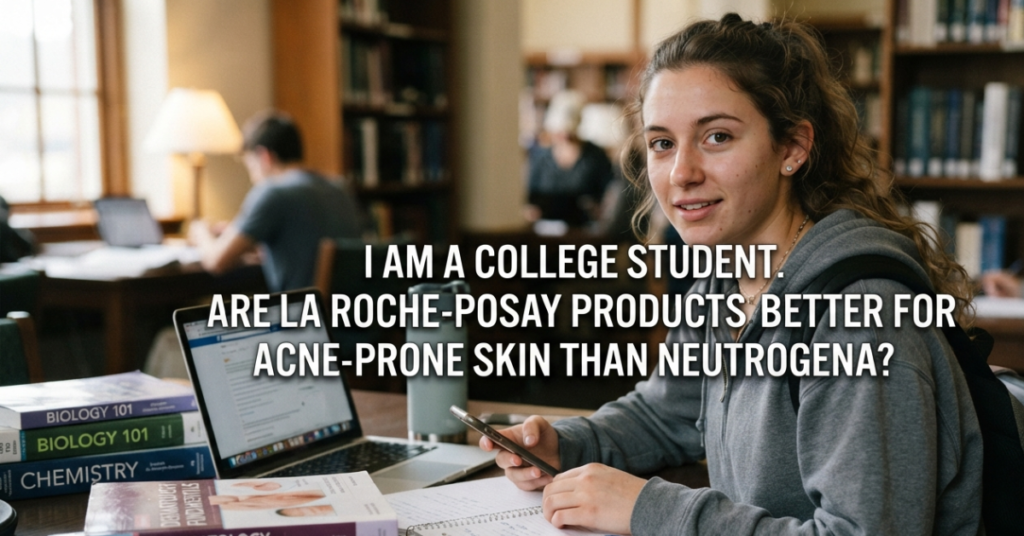

Between late-night study sessions, campus stress, irregular sleep schedules, and cafeteria food, college life can be tough on your skin. If you’re dealing with frequent breakouts, oily skin, or stubborn acne, you’ve probably come across two of the most recommended skincare brands: La Roche-Posay and Neutrogena. That naturally leads to the question: “I am a college student. Are La Roche-Posay products better for acne-prone skin than Neutrogena?”
The answer isn’t as simple as picking one brand over the other. Both companies offer effective acne-fighting products backed by science, but they take different approaches. La Roche-Posay is known for dermatologist-developed formulas that prioritize skin barrier health and gentle treatment, while Neutrogena focuses on affordable, widely available acne solutions that often use proven active ingredients like salicylic acid and benzoyl peroxide.
In this detailed guide, we’ll compare both brands based on ingredients, acne-fighting effectiveness, skin sensitivity, pricing, and overall value to help you choose the right skincare routine.
La Roche-Posay vs Neutrogena: Quick Comparison
| Feature | La Roche-Posay | Neutrogena |
| Best For | Sensitive, acne-prone skin | Mild to moderate acne |
| Main Focus | Barrier-friendly acne care | Acne treatment and oil control |
| Dermatologist Recommended | Very frequently | Frequently |
| Key Ingredients | Niacinamide, Salicylic Acid, LHA, Thermal Spring Water | Salicylic Acid, Benzoyl Peroxide, Glycolic Acid |
| Suitable for Sensitive Skin | Excellent | Good (varies by product) |
| Fragrance-Free Options | Many | Many |
| Price | Mid-range | Budget-friendly |
| Availability | Pharmacies, online | Drugstores, supermarkets, online |
Bottom Line:
If your skin is sensitive or easily irritated, La Roche-Posay often has the advantage. If you’re looking for effective acne products at a lower price point, Neutrogena is an excellent choice.
Why Acne Is Common Among College Students
College introduces several factors that can trigger acne:
- Increased stress
- Irregular sleep patterns
- Hormonal changes
- Fast food and sugary snacks
- Skipping skincare routines
- Sweating after workouts
- Wearing backpacks or hats that create friction
While lifestyle plays a role, using the right skincare products can help control breakouts and support healthier skin.
Understanding La Roche-Posay’s Acne Care Philosophy
La Roche-Posay develops skincare with a strong focus on maintaining the skin barrier while treating acne.
Instead of relying solely on powerful acne medications, many products combine active ingredients with soothing components that reduce irritation.
Common Ingredients
You’ll often find:
- Salicylic Acid
- Niacinamide
- Lipo-Hydroxy Acid (LHA)
- Glycerin
- Ceramides
- Thermal Spring Water
These ingredients help:
- Unclog pores
- Reduce inflammation
- Control excess oil
- Calm redness
- Protect the skin barrier
This balanced approach makes the brand especially popular among dermatologists.
Understanding Neutrogena’s Acne Products
Neutrogena has been a trusted name in acne care for decades.
Its products often focus on clinically proven acne-fighting ingredients that target breakouts directly.
Common Ingredients
Many Neutrogena acne products include:
- Salicylic Acid
- Benzoyl Peroxide
- Glycolic Acid
- Hyaluronic Acid
- Glycerin
These ingredients work by:
- Clearing clogged pores
- Killing acne-causing bacteria
- Removing excess oil
- Preventing future breakouts
Many products are designed for quick, visible results.
Which Brand Is More Effective for Acne?
Both brands can improve acne, but they excel in different situations.
La Roche-Posay
Best for:
- Sensitive skin
- Inflammatory acne
- Combination skin
- Acne with redness
- Long-term skin health
Neutrogena
Best for:
- Oily skin
- Mild to moderate acne
- Occasional breakouts
- Teen and young adult acne
- Budget-conscious shoppers
Winner
Neither brand is universally better.
Choose based on your skin type rather than the brand name.
Ingredient Comparison
La Roche-Posay Highlights
Niacinamide
Helps reduce redness and supports the skin barrier.
Salicylic Acid
Exfoliates inside pores to prevent blackheads and pimples.
LHA
A gentler exfoliating acid that helps smooth skin texture.
Ceramides
Support a healthy skin barrier and reduce dryness.
Neutrogena Highlights
Benzoyl Peroxide
Kills acne-causing bacteria and is highly effective for inflammatory acne.
Salicylic Acid
Helps unclog pores and control oil production.
Glycolic Acid
Improves skin texture and helps fade post-acne marks over time.
Which Brand Is Better for Sensitive Acne-Prone Skin?
Many acne treatments cause:
- Dryness
- Flaking
- Tightness
- Redness
La Roche-Posay is specifically formulated to minimize these side effects while still treating acne.
Many products are:
- Fragrance-free
- Non-comedogenic
- Dermatologist-tested
- Suitable for sensitive skin
Neutrogena also offers gentle options, but some formulas with benzoyl peroxide or alcohol may feel more drying.
Winner
La Roche-Posay.
Which Brand Is Better for Oily Skin?
Oily skin benefits from ingredients that reduce excess sebum without over-drying.
La Roche-Posay
Controls oil while maintaining skin hydration.
Neutrogena
Offers several cleansers and treatments specifically designed for oily skin.
Winner
Tie.
Both perform well depending on the product.
Which Brand Helps Acne Scars Better?
Active acne is only part of the problem—many college students also struggle with post-inflammatory hyperpigmentation and acne marks.
La Roche-Posay
Products containing niacinamide and gentle exfoliating acids can gradually improve uneven skin tone while minimizing irritation.
Neutrogena
Products with glycolic acid and retinol (where appropriate) may help improve skin texture and fade discoloration over time.
Winner
Tie.
The best choice depends on the specific ingredient rather than the brand itself.
Daily Routine Comparison
La Roche-Posay Routine
- Gentle acne cleanser
- Acne treatment serum
- Oil-free moisturizer
- Broad-spectrum sunscreen (SPF 30 or higher)
Neutrogena Routine
- Acne cleanser
- Benzoyl peroxide or salicylic acid treatment
- Lightweight moisturizer
- Broad-spectrum sunscreen (SPF 30 or higher)
Both routines are simple enough for busy college schedules.
Which Brand Is More Affordable?
Budget matters for students.
Neutrogena
Typical price range:
- $8–20 per product
La Roche-Posay
Typical price range:
- $15–35 per product
Winner
Neutrogena.
It offers excellent value and is widely available in drugstores and supermarkets.
Which Brand Offers Better Long-Term Skin Health?
Acne isn’t just about eliminating pimples—it’s also about protecting your skin from irritation and maintaining a healthy barrier.
La Roche-Posay emphasizes:
- Barrier repair
- Hydration
- Gentle exfoliation
- Reduced irritation
Neutrogena focuses more on treating acne directly, although many of its newer formulas include hydrating ingredients to improve comfort.
Winner
La Roche-Posay.
Pros and Cons
La Roche-Posay
Pros
- Excellent for sensitive skin
- Dermatologist-developed
- Gentle yet effective
- Supports skin barrier
- Fragrance-free options
Cons
- Higher price
- Smaller product range in some stores
Neutrogena
Pros
- Affordable
- Widely available
- Effective acne ingredients
- Great for oily skin
- Large product selection
Cons
- Some formulas may be drying
- Certain products contain fragrance or alcohol
Which Brand Should a College Student Choose?
If you’re asking, “I am a college student. Are La Roche-Posay products better for acne-prone skin than Neutrogena?”, here’s a quick guide:
Choose La Roche-Posay if you:
- Have sensitive skin
- Experience redness or irritation
- Want a gentle long-term routine
- Can spend a little more on skincare
Choose Neutrogena if you:
- Need affordable acne care
- Have oily skin
- Want products that are easy to find
- Prefer simple, effective treatments
Many dermatologists also recommend mixing products from both brands. For example, you might use a gentle La Roche-Posay cleanser with a Neutrogena acne treatment if it suits your skin.
Tips for Managing Acne in College
Skincare works best when paired with healthy habits.
Here are a few simple tips:
- Wash your face twice a day with a gentle cleanser.
- Avoid picking or squeezing pimples.
- Use a non-comedogenic moisturizer, even if your skin is oily.
- Wear sunscreen every day to prevent acne marks from becoming darker.
- Wash pillowcases and towels regularly.
- Manage stress with exercise, sleep, or relaxation techniques.
- Be consistent—most acne treatments take several weeks to show noticeable results.
Frequently Asked Questions (FAQs)
Is La Roche-Posay better than Neutrogena for acne?
La Roche-Posay is often a better choice for people with sensitive or easily irritated acne-prone skin because its formulas focus on both acne treatment and skin barrier support. Neutrogena remains highly effective for many people, especially those with oily or mild to moderate acne.
Which brand works faster?
Results vary by product and skin type. Acne treatments typically require 6–12 weeks of consistent use before significant improvements are visible.
Is Neutrogena good for college students?
Yes. Neutrogena offers affordable, effective products that are easy to find, making it a practical option for students on a budget.
Can I use products from both brands together?
Yes. Many people successfully combine products from both brands, but introduce new products one at a time and avoid layering multiple strong active ingredients unless advised by a dermatologist.
Which brand is better for acne scars?
Both brands offer products that can help improve post-acne marks. Look for ingredients such as niacinamide, glycolic acid, or retinoids (if appropriate for your skin).
Should I moisturize if I have acne?
Absolutely. Skipping moisturizer can lead to dryness, which may cause your skin to produce even more oil. Choose a lightweight, non-comedogenic moisturizer.
Conclusion
So, are La Roche-Posay products better for acne-prone skin than Neutrogena? The answer depends on your skin type, budget, and skincare goals. If you have sensitive or easily irritated skin and want a routine that balances acne treatment with skin barrier support, La Roche-Posay is often the stronger choice. If you’re looking for effective, affordable products that target oily skin and common breakouts, Neutrogena continues to be a trusted and accessible option.
For many college students, the ideal routine combines consistency with simplicity. A gentle cleanser, a targeted acne treatment, a non-comedogenic moisturizer, and daily sunscreen can go a long way toward improving your skin. Remember that no product works overnight—give your routine time, avoid switching products too frequently, and seek advice from a dermatologist if your acne is severe or persistent.