
Have you ever received a message that simply said “NTY” and wondered whether it was friendly, rude, or something else entirely? With texting abbreviations becoming part of everyday communication, it’s easy to come across acronyms that leave you guessing.
Understanding the NTY meaning in text can help you respond appropriately in conversations, whether you’re chatting with friends, replying to an invitation, or browsing social media. In this guide, you’ll learn what NTY means, how it’s used in slang, common examples, and when it’s appropriate to use it.
What Does NTY Mean in Text?
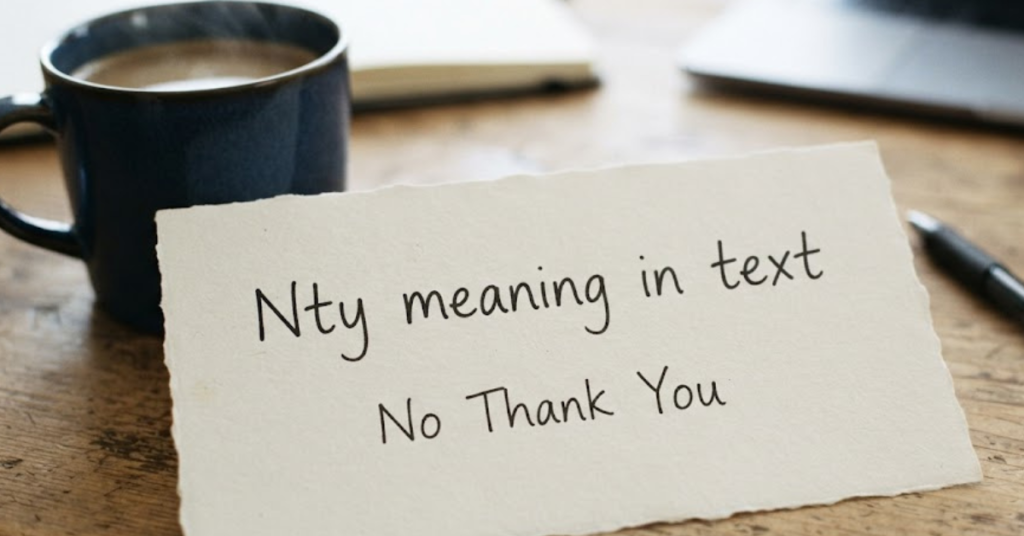
The NTY meaning in text is “No, Thank You.”
It’s a short and polite way to decline an offer, invitation, suggestion, or request without sounding rude.
For example:
Friend:
Want to grab coffee later?
Reply:
NTY, maybe another time!
In this case, the sender is politely saying no while remaining courteous.
NTY Meaning Explained
The NTY meaning is simple:
- N = No
- T = Thank
- Y = You
Together, the abbreviation means:
“No, thank you.”
It’s commonly used in text messages, online chats, gaming, and social media where people prefer quick replies.
NTY Meaning Slang
The NTY meaning slang is essentially the same as its texting meaning.
It’s considered internet shorthand rather than a completely separate slang term.
People often use NTY when they want to:
- Decline politely
- Keep messages brief
- Avoid sounding harsh
- Respond quickly
Unlike some internet abbreviations that change meaning depending on the platform, NTY remains fairly consistent.
When Is NTY Used?
NTY works in many everyday situations.
Here are some common examples.
Declining an Invitation
Friend:
Want to come over tonight?
Reply:
NTY, I’m staying home.
Refusing an Offer
Coworker:
Would you like some cake?
Reply:
NTY!
Turning Down a Suggestion
Friend:
Let’s watch a horror movie.
Reply:
NTY, I prefer comedies.
Responding in Online Games
Player:
Trade?
Reply:
NTY.
This politely declines the request without requiring a lengthy explanation.
Why Do People Use NTY?
Digital conversations tend to be fast-paced.
People use abbreviations like NTY because they:
- Save time
- Reduce typing
- Sound casual
- Keep conversations moving
- Express politeness in just three letters
Rather than writing an entire sentence, users can quickly communicate the same idea.
Is NTY Polite?
Yes—generally, it is.
Unlike simply replying “No,” adding “thank you” softens the response.
Compare these examples:
No
Sounds direct and may feel abrupt.
No, thank you
Feels respectful and considerate.
NTY
Conveys the same polite meaning in informal conversations.
Tone also depends on context. Adding an emoji or a brief explanation can make the message feel even friendlier.
For example:
NTY
or
NTY, but I appreciate the offer!
Where Is NTY Commonly Used?
You’ll find NTY across many digital platforms, including:
- Text messages
- Snapchat
- TikTok comments
- Instagram DMs
- Discord
- Facebook Messenger
- Online gaming chats
It’s especially popular in spaces where short responses are common.
NTY vs. Other Similar Abbreviations
Several internet abbreviations serve similar purposes.
| Abbreviation | Meaning | Purpose |
| NTY | No, Thank You | Politely decline |
| NVM | Never Mind | Withdraw a statement or request |
| IDC | I Don’t Care | Express indifference |
| TY | Thank You | Show gratitude |
| NP | No Problem | Respond to thanks |
Among these, NTY is specifically used to refuse something politely.
Can NTY Be Considered Rude?
Usually, no.
However, it can seem abrupt if:
- The conversation is formal.
- Someone expects a detailed response.
- It lacks context.
For example:
Boss:
Would you like to attend the meeting?
Replying with only “NTY” may appear too casual.
In professional situations, writing:
“No, thank you.”
or
“Thank you, but I won’t be able to attend.”
is generally more appropriate.
Should You Use NTY in Professional Communication?
In most business emails or formal messages, it’s better to avoid abbreviations.
Instead of writing:
NTY
Write:
No, thank you.
or
Thank you for the offer, but I’ll have to decline.
Using full sentences creates a more professional impression.
Other Meanings of NTY
Although No, Thank You is by far the most common definition, NTY may occasionally represent different abbreviations in specialized industries or organizations.
Examples include:
- Company names
- Internal project codes
- Technical abbreviations
However, in everyday texting and online conversations, NTY almost always means No, Thank You.
Common Mistakes About NTY
Assuming It’s Rude
Most people interpret NTY as polite because it includes “thank you.”
Using It Everywhere
NTY works best in casual communication.
For professional emails or formal requests, write the complete phrase instead.
Misunderstanding the Tone
Context matters.
A standalone “NTY” may seem brief, while adding a smiley emoji or explanation can make it feel warmer.
Practical Tips for Using NTY
If you’re texting friends or chatting online:
- Use NTY for casual conversations.
- Add a reason if appropriate.
- Include an emoji if you want to sound friendlier.
- Don’t use it in formal business communication.
- Remember that kindness often comes from context, not just abbreviations.
Key Takeaways
- The NTY meaning in text is “No, Thank You.”
- It’s a polite way to decline offers or invitations.
- NTY meaning slang is the same in most online communities.
- It’s commonly used in texting, gaming, and social media.
- Full phrases are usually better for formal communication.
Frequently Asked Questions
What does NTY mean in text?
The NTY meaning in text is “No, Thank You.” It’s a polite abbreviation used to decline an offer, invitation, or request in casual conversations.
What is the NTY meaning?
The NTY meaning is simply “No, Thank You.” It combines the first letters of each word to create a quick, friendly response.
What is the NTY meaning slang?
The NTY meaning slang is the same as its texting definition. It’s informal internet shorthand used across social media, messaging apps, and gaming platforms.
Is NTY rude?
No. Most people consider NTY polite because it includes “thank you.” However, in formal situations, it’s better to write the full phrase.
Can I use NTY at work?
It’s best to avoid NTY in professional emails or workplace communication. Writing “No, thank you” is clearer and more appropriate.
Where is NTY commonly used?
NTY is commonly seen in text messages, TikTok, Snapchat, Instagram, Discord, WhatsApp, Facebook Messenger, and online gaming chats.
Conclusion
Understanding the NTY meaning in text makes modern digital conversations much easier to follow. In most situations, NTY simply means “No, Thank You”—a short, polite way to decline an offer or invitation without sounding disrespectful. Whether you’re chatting with friends, responding in a game, or replying on social media, it’s a convenient abbreviation that keeps conversations quick and courteous.
While the NTY meaning is widely recognized in casual communication, it’s important to match your language to the situation. In formal or professional settings, writing the full phrase is usually the better choice. By understanding when and how to use NTY, you can communicate more naturally and confidently in today’s fast-moving digital world.