
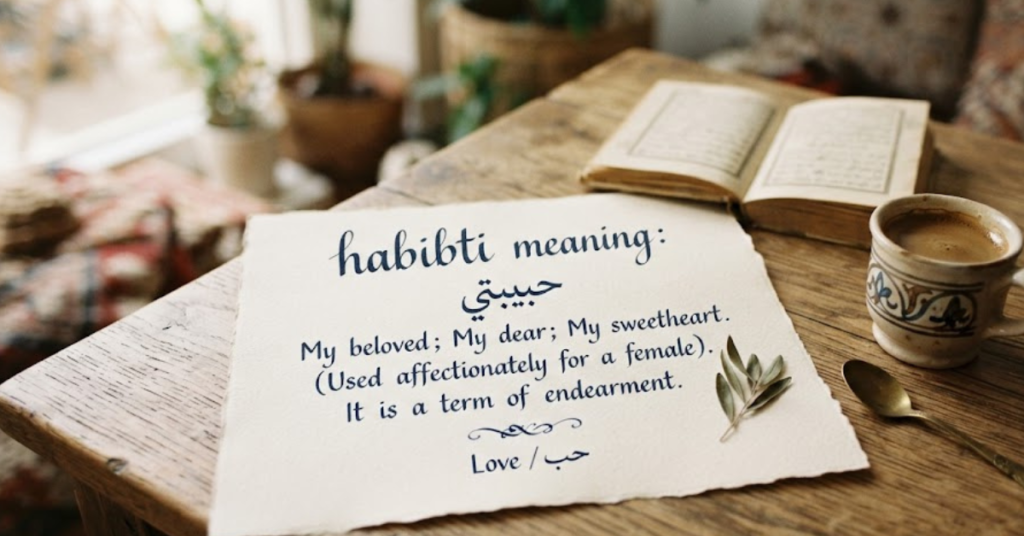

Have you ever heard someone say “habibti” in a song, movie, or social media video and wondered what it means? The word has become increasingly popular outside the Arabic-speaking world, appearing in conversations, music lyrics, TikTok videos, and even everyday texting. If you’re searching for the habibti meaning, you’re not alone. This beautiful Arabic expression is used to show affection, love, and warmth. In this guide, you’ll learn the habibti meaning in English, its original Arabic usage, the difference between Habibi vs Habibti, and what Ya Habibti means in different contexts.
What Is the Habibti Meaning?
The habibti meaning is:
“My beloved,” “my dear,” “my darling,” or “my love” when referring to a female.
It is one of the most common and affectionate expressions in Arabic.
People use habibti to address:
- A wife or girlfriend
- A daughter
- A sister
- A close female friend
- A female family member
- Someone they deeply care about
Depending on the relationship and tone, it can express romance, friendship, or family affection.
Habibti Meaning in English
The habibti meaning in English doesn’t have a single perfect translation because it carries warmth and emotional closeness.
Common English equivalents include:
- My love
- My dear
- Darling
- Sweetheart
- Beloved
- Honey
The exact translation depends on who is speaking and their relationship with the listener.
For example:
Arabic:
Habibti, how are you?
English:
My dear, how are you?
or
Sweetheart, how are you?
Habibti Meaning in Arabic
To fully understand the habibti meaning in Arabic, it’s helpful to look at the word’s origin.
The word comes from the Arabic root:
حب (ḥubb)
which means:
Love
The noun:
حبيب (Habib)
means:
Beloved
Arabic grammar changes the ending depending on gender.
- Habibi (حبيبي) = my beloved (to a male)
- Habibti (حبيبتي) = my beloved (to a female)
The ending “-ti” indicates that the speaker is addressing a woman or girl.
Habibi vs Habibti Meaning
Many people confuse these two words.
Understanding the Habibi vs Habibti meaning is actually very simple.
| Word | Used For | English Meaning |
| Habibi | Male | My beloved, my dear |
| Habibti | Female | My beloved, my dear |
The difference lies only in the gender of the person being addressed.
For example:
A woman speaking to her husband may say:
Habibi
A man speaking to his wife may say:
Habibti
Parents, friends, and relatives also use these expressions depending on whether they’re speaking to a male or female.
Ya Habibti Meaning
Another common phrase is Ya Habibti.
The ya habibti meaning is:
“Oh my dear,” “My beloved,” or “My darling.”
The word “Ya” is an Arabic vocative particle.
It functions much like saying:
- O
- Oh
- Hey
Examples:
Ya Habibti, come here.
Meaning:
My dear, come here.
Or:
Ya Habibti, don’t worry.
Meaning:
My love, don’t worry.
Adding Ya makes the expression sound more personal and emotionally expressive.
Who Uses Habibti?
Although the word originated in Arabic-speaking countries, it’s now recognized worldwide.
You’ll hear it used by people from:
- Saudi Arabia
- United Arab Emirates
- Egypt
- Lebanon
- Jordan
- Syria
- Palestine
- Iraq
- Morocco
- Tunisia
- Qatar
- Kuwait
Because of music, films, and social media, many non-Arabic speakers now use the term as well.
Is Habibti Always Romantic?
No.
One of the biggest misconceptions is that habibti always indicates romance.
In reality, Arabic speakers use it in many different relationships.
Examples include:
Family
A mother may call her daughter:
Habibti
Friends
Two close female friends may greet each other with:
Habibti!
Romantic Partners
A husband may affectionately call his wife:
Habibti.
Elders
Older relatives often use the word when speaking warmly to younger female family members.
Context determines whether the expression is romantic or simply affectionate.
Why Has Habibti Become So Popular?
The word has spread internationally through:
- Arabic music
- Pop culture
- TikTok
- YouTube
- Television series
- International travel
Many people appreciate its warm, melodic sound and positive emotional meaning.
Today, you’ll often see Habibti used in captions, comments, and messages—even by people who don’t speak Arabic.
Examples of Habibti in Everyday Conversation
Here are a few examples.
Romantic
Good morning, Habibti.
Meaning:
“My love.”
Friendship
Thank you, Habibti!
Meaning:
“My dear.”
Family
Habibti, dinner is ready.
Meaning:
“My sweetheart.”
Comforting Someone
Don’t worry, Ya Habibti.
Meaning:
“My dear, everything will be okay.”
When Should You Use Habibti?
If you aren’t an Arabic speaker, it’s generally appropriate to use habibti only with people who understand the cultural context and are comfortable with affectionate language.
Good situations include:
- Close friendships
- Family relationships
- Romantic partners
- Learning Arabic
- Cultural conversations
Avoid using it casually with strangers, as it may sound overly familiar.
Common Misunderstandings About Habibti
Habibti Means Girlfriend
Not exactly.
It can be used for girlfriends, but it also refers to daughters, sisters, friends, and other women you care about.
Habibti and Habibi Mean the Same Thing
They share the same basic meaning, but they’re used for different genders.
Only Couples Say Habibti
No.
Families and close friends use the word frequently in everyday conversation.
Key Takeaways
- The habibti meaning is “my beloved,” “my dear,” or “my love” when addressing a female.
- The habibti meaning in English varies depending on the relationship and context.
- The habibti meaning in Arabic comes from the Arabic word for love.
- Understanding Habibi vs Habibti meaning is simply a matter of gender.
- Ya Habibti adds warmth and emphasis, similar to saying “Oh my dear.”
Read also <<< Conventionally Attractive Meaning
Frequently Asked Questions
What is the Habibti meaning?
The habibti meaning is “my beloved,” “my dear,” or “my love” when speaking to a female. It’s a common Arabic expression of affection.
What is the Habibti meaning in English?
The habibti meaning in English can be translated as “my darling,” “sweetheart,” “my dear,” or “my beloved,” depending on the situation.
What is the Habibi vs Habibti meaning?
The difference is grammatical. Habibi is used when addressing a male, while Habibti is used when addressing a female.
What is the Habibti meaning in Arabic?
The habibti meaning in Arabic comes from the root word for love and refers to a beloved female. It’s one of the most widely used affectionate expressions in Arabic-speaking cultures.
What does Ya Habibti mean?
The ya habibti meaning is “Oh my dear,” “My beloved,” or “My darling.” The word “Ya” simply calls or addresses the person directly.
Can friends say Habibti?
Yes. Friends, family members, and romantic partners all use Habibti. The meaning depends on the relationship and context rather than romance alone.
Conclusion
Understanding the habibti meaning offers more than just a translation—it provides insight into the warmth and affection that are deeply rooted in Arabic language and culture. Whether you encounter the word in a conversation, a song, a movie, or on social media, it usually expresses genuine care and closeness. From the habibti meaning in English to the distinction between Habibi vs Habibti and the heartfelt expression Ya Habibti, each variation reflects the importance of relationships and emotional connection.
As Arabic words continue to gain popularity around the world, learning expressions like Habibti can help you appreciate both the language and the culture behind it. The next time you hear someone say “Habibti,” you’ll understand that it’s much more than a simple word—it’s a meaningful expression of love, friendship, and affection.