








Ever heard someone say “go kick rocks” and wondered whether they were joking, angry, or just being sarcastic? The phrase sounds simple, but its meaning carries a surprising amount of attitude. Today, the expression has become popular in everyday speech, online conversations, memes, and even pop culture.
Understanding the kick rocks meaning can help you avoid confusion and use the phrase naturally in conversation. In this guide, we’ll explore the definition, history, tone, examples, and the fascinating kick rocks meaning origin behind this slang expression.
What Does “Kick Rocks” Mean?
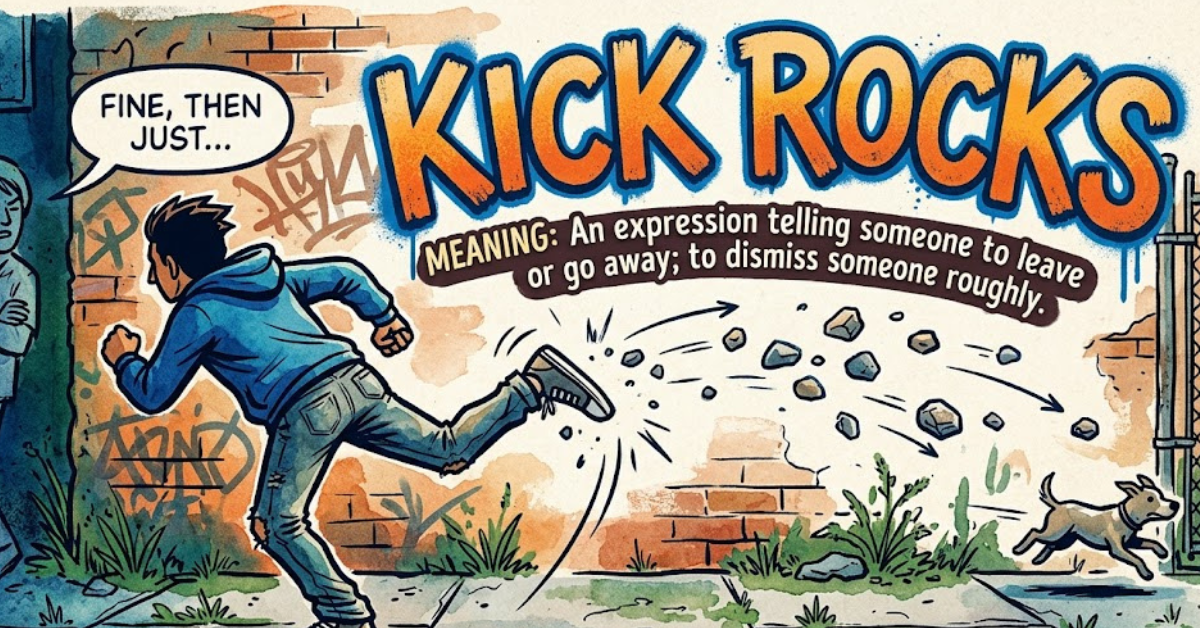
The phrase “kick rocks” is an informal slang expression that basically means:
- “Go away”
- “Leave me alone”
- “Get lost”
- “Stop bothering me”
When someone says “go kick rocks,” they are usually dismissing another person in a rude, sarcastic, or playful way. The phrase often implies that the person being addressed should go do something pointless instead of continuing the conversation.
Simple Definition
Kick rocks meaning: A slang phrase used to tell someone to leave, go away, or stop annoying you.
For example:
- “If you’re going to complain all day, go kick rocks.”
- “He told the scammers to kick rocks and hung up.”
The tone can range from mildly teasing to openly hostile depending on the situation.
The Origin of “Kick Rocks”
Many people search for the kick rocks meaning origin because the phrase sounds unusual. While its exact beginnings are difficult to trace, linguists and slang historians believe it emerged in American English during the 20th century.
Why “Kick Rocks”?
The imagery behind the phrase is actually pretty clear when you think about it.
If someone is “kicking rocks,” they’re wandering around aimlessly with nothing productive to do. Imagine a bored person walking down a dirt road, absentmindedly kicking stones with their shoes.
That visual eventually evolved into a dismissive insult meaning:
“Go waste your time somewhere else.”
Early Usage in American Slang
The expression became more widely recognized in urban slang and casual speech throughout the late 1900s. Over time, it spread through:
- Movies
- Television
- Hip-hop lyrics
- Social media
- Internet culture
Today, the phrase is commonly used in both spoken and written English.
Go Kick Rocks Meaning Explained
The phrase “go kick rocks” is simply a stronger version of “kick rocks.”
Adding the word “go” makes the statement more direct and confrontational.
Tone Matters
Depending on delivery, the phrase can mean different things:
Playful Tone
Friends may jokingly say it to each other without real anger.
Example:
- “You beat me again? Man, go kick rocks!”
Annoyed Tone
It can also express irritation.
Example:
- “If you don’t like the rules, go kick rocks.”
Aggressive Tone
In some situations, it’s meant as a clear insult.
Example:
- “The customer started yelling, so the manager told him to kick rocks.”
Context and body language make a huge difference.
Is “Kick Rocks” Offensive?
Not always — but it can be.
Compared to harsher insults or profanity, “kick rocks” is relatively mild. However, it still carries a dismissive and disrespectful tone.
When It’s Acceptable
The phrase is usually fine in:
- Casual conversations
- Friendly teasing
- Online jokes
- Informal settings
When to Avoid It
You should avoid using it in:
- Professional emails
- Workplace meetings
- Formal situations
- Conversations with authority figures
Even though it’s not vulgar, it can still sound rude or immature in serious settings.
Common Situations Where People Say “Kick Rocks”
You’ll often hear the expression used during disagreements or moments of frustration.
Examples in Everyday Conversation
Friends Teasing Each Other
- “You ate the last slice of pizza? Kick rocks.”
Rejecting Bad Advice
- “He told me to quit my dream job, so I told him to go kick rocks.”
Online Arguments
- “Trolls in the comments can kick rocks.”
Ending an Annoying Conversation
- “If you’re just here to argue, kick rocks.”
Similar Slang Phrases and Expressions
The English language has plenty of expressions similar to “kick rocks.”
Related Phrases
Here are a few alternatives:
| Phrase | Meaning |
|---|---|
| Get lost | Go away |
| Take a hike | Leave |
| Beat it | Go away quickly |
| Buzz off | Stop bothering me |
| Scram | Leave immediately |
| Get out of here | Leave or disbelief |
While the meanings overlap, “kick rocks” has a slightly more sarcastic and modern feel.
Why the Phrase Became Popular Online
Social media played a huge role in making the phrase trendy again.
Memes and Internet Culture
People often use “go kick rocks” online because it sounds:
- Funny
- Less harsh than profanity
- Creative
- Slightly sarcastic
It’s especially common on:
- Twitter/X
- TikTok
- Instagram comments
The phrase works well in memes because it communicates annoyance without being overly aggressive.
Psychological Meaning Behind the Phrase
Interestingly, dismissive phrases like “kick rocks” reflect social boundaries.
When someone says it, they are usually:
- Rejecting criticism
- Ending a conversation
- Showing frustration
- Asserting dominance
- Refusing engagement
In many cases, the phrase acts as a verbal shortcut for:
“I no longer want to deal with this.”
Can “Kick Rocks” Be Used Positively?
Rarely, but yes.
Sometimes people jokingly use it in a motivational or humorous way.
Example:
- “Negative thoughts can kick rocks.”
In these cases, the phrase becomes playful and empowering instead of insulting.
How to Use “Kick Rocks” Naturally
If you want to sound natural using the expression, keep these tips in mind.
Best Practices
Use It Casually
The phrase fits best in relaxed conversations.
Match the Tone
Be careful not to sound harsher than intended.
Avoid Formal Situations
It’s slang, so it doesn’t belong in professional communication.
Don’t Overuse It
Using the phrase too often can make conversations sound aggressive.
Kick Rocks Meaning in Pop Culture
The phrase appears regularly in:
- Comedy shows
- Rap lyrics
- Viral videos
- Internet memes
Its popularity comes from its balance between humor and attitude. It’s strong enough to make a point but mild enough to stay socially acceptable in many casual settings.
FAQs About Kick Rocks Meaning
What does “kick rocks” mean in slang?
In slang, “kick rocks” means to go away, leave someone alone, or stop bothering them.
Is “go kick rocks” rude?
Yes, it can be rude depending on tone and context. However, it’s usually considered milder than direct profanity.
What is the kick rocks meaning origin?
The phrase likely comes from the image of someone wandering aimlessly while kicking stones on the ground, symbolizing pointless activity.
Is “kick rocks” the same as “take a hike”?
They are very similar. Both expressions tell someone to leave, though “kick rocks” often sounds more modern and sarcastic.
Can friends say “kick rocks” jokingly?
Absolutely. Many people use it playfully with friends during teasing or friendly arguments.
Why is “kick rocks” popular online?
The phrase became popular online because it’s humorous, expressive, and less offensive than harsher insults.
Conclusion
The kick rocks meaning is simple but expressive: it’s a slang phrase used to tell someone to go away or stop bothering you. Whether used seriously or jokingly, the phrase carries a dismissive tone that has made it popular in casual conversations and internet culture.
Understanding the go kick rocks meaning and the kick rocks meaning origin helps you recognize when the phrase is playful, sarcastic, or genuinely rude. Like many slang expressions, context matters just as much as the words themselves.