
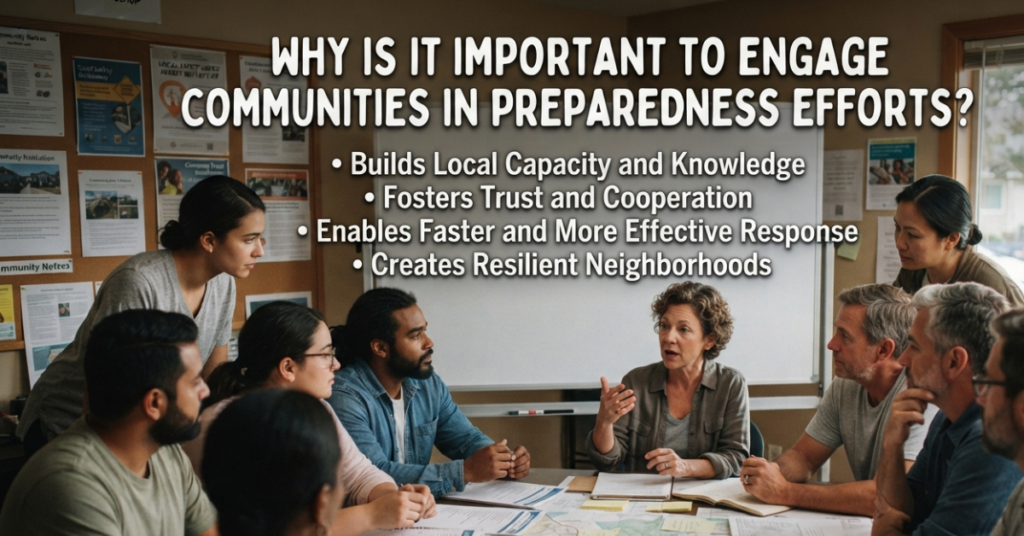

Natural disasters, public health emergencies, severe weather, and other crises can happen with little warning. While governments and emergency responders play a critical role, communities themselves are often the first to respond before outside help arrives. That’s why many people ask, “Why is it important to engage communities in preparedness efforts?”
The answer is simple: community involvement saves lives, reduces risks, and helps neighborhoods recover more quickly after emergencies. This article explores why is important to engage communities in preparedness efforts, the benefits of local participation, and practical ways individuals, organizations, and local governments can work together to build stronger, more resilient communities.
What Is Community Preparedness?
Community preparedness is the process of helping individuals, families, businesses, schools, and local organizations prepare for emergencies before they happen.
Preparedness activities may include:
- Emergency planning
- Disaster education
- Community drills
- First aid training
- Communication planning
- Resource coordination
Rather than relying solely on emergency services, preparedness encourages everyone to play an active role in reducing disaster risks.
Why Is It Important to Engage Communities in Preparedness Efforts?
Engaging communities creates a shared responsibility for safety and resilience. When residents understand potential risks and know how to respond, emergency plans become much more effective.
Community participation also improves communication, strengthens trust, and ensures that local knowledge is included in emergency planning.
Benefits of Community Engagement in Emergency Preparedness
1. Faster Response During Emergencies
In many disasters, neighbors are the first people available to help one another.
When communities are prepared, residents can:
- Check on vulnerable neighbors
- Provide basic first aid
- Share emergency information
- Assist with evacuations
- Report hazards quickly
Early action can significantly reduce injuries and property damage.
2. Better Communication
Prepared communities develop reliable ways to share information before, during, and after emergencies.
Examples include:
- Community messaging groups
- Emergency contact lists
- Local radio announcements
- Social media updates
- Neighborhood communication networks
Clear communication reduces confusion and helps people make informed decisions.
3. Stronger Community Trust
Preparedness programs encourage people to work together before disasters occur.
This collaboration builds trust among:
- Residents
- Local governments
- Emergency responders
- Schools
- Nonprofit organizations
- Businesses
Trust becomes especially valuable during stressful situations.
4. Local Knowledge Improves Planning
Community members understand their neighborhoods better than anyone else.
They can identify:
- Flood-prone streets
- Elderly residents needing assistance
- Local shelters
- Evacuation challenges
- Critical community resources
Including local perspectives makes emergency plans more realistic and effective.
5. Greater Resilience After Disasters
Prepared communities recover more quickly because they already have relationships, communication systems, and recovery plans in place.
Resilient communities often experience:
- Faster cleanup efforts
- Better resource coordination
- Stronger volunteer participation
- Improved emotional support
- More efficient rebuilding
Preparedness doesn’t eliminate disasters, but it helps reduce their long-term impact.
How Communities Can Improve Preparedness
Building preparedness doesn’t require large budgets. Small actions can make a significant difference.
Some practical steps include:
- Organize neighborhood preparedness meetings.
- Create emergency contact lists.
- Develop evacuation plans.
- Conduct disaster drills.
- Encourage first aid and CPR training.
- Build emergency supply kits.
- Share accurate emergency information.
Regular practice helps ensure these plans work when they’re needed most.
The Role of Schools, Businesses, and Organizations
Preparedness is most effective when the entire community participates.
Schools
Schools can teach emergency procedures, conduct drills, and educate students about disaster safety.
Businesses
Businesses can develop continuity plans, protect employees, and support community recovery.
Community Organizations
Faith-based groups, nonprofits, and volunteer organizations often provide shelter, food, transportation, and emotional support during emergencies.
Working together creates a stronger emergency response network.
Common Challenges to Community Engagement
Despite its benefits, preparedness programs sometimes face obstacles.
These may include:
- Limited public awareness
- Lack of volunteer participation
- Funding constraints
- Language barriers
- Accessibility challenges
- Misinformation
Addressing these challenges requires ongoing education, inclusive planning, and clear communication.
Tips for Encouraging Community Participation
Communities can increase involvement by:
- Hosting educational workshops.
- Organizing emergency preparedness fairs.
- Offering free CPR or first aid classes.
- Conducting neighborhood emergency drills.
- Sharing preparedness resources online.
- Encouraging families to create emergency plans together.
Making preparedness accessible and engaging encourages long-term participation.
Why Preparedness Is Everyone’s Responsibility
Emergency management professionals play an essential role, but they cannot be everywhere at once.
Individuals, families, businesses, schools, and community organizations all contribute to public safety.
When everyone participates, communities become better equipped to respond to emergencies, protect vulnerable populations, and recover more effectively.
Frequently Asked Questions (FAQs)
Why is it important to engage communities in preparedness efforts?
Community engagement improves emergency response, strengthens communication, builds trust, increases resilience, and helps communities recover more quickly after disasters.
Why is important to engage communities in preparedness efforts?
Engaging communities ensures that local knowledge, resources, and volunteers become part of emergency planning, making preparedness more practical and effective.
What is community preparedness?
Community preparedness involves planning, training, education, and collaboration to help people respond safely to emergencies and disasters.
How can individuals contribute?
Individuals can prepare emergency kits, create family emergency plans, participate in drills, learn first aid, and help educate neighbors about preparedness.
What role do local organizations play?
Schools, businesses, nonprofits, and community groups provide education, resources, volunteers, shelter, and support before, during, and after emergencies.
Does community preparedness really make a difference?
Yes. Research and emergency management experience consistently show that prepared communities respond faster, reduce risks, and recover more effectively following disasters.
Conclusion
Understanding why is it important to engage communities in preparedness efforts is essential for building safer and more resilient neighborhoods. Emergency preparedness works best when it is a shared responsibility rather than relying solely on emergency services. By involving residents, schools, businesses, nonprofits, and local governments, communities can improve communication, strengthen trust, respond more effectively during crises, and recover more quickly afterward.
Whether you’re preparing for severe weather, public health emergencies, or other unexpected events, every step toward community engagement makes a meaningful difference. Start by creating a family emergency plan, participating in local preparedness programs, and encouraging others to get involved. A prepared community is a stronger community—ready to face challenges together.