






Have you ever come across the words complacent and complaisant and wondered whether they mean the same thing? You’re not alone. These two terms look and sound remarkably similar, making them easy to confuse. However, understanding complacent vs complaisant is important because each word carries a very different meaning.
In this guide, we’ll break down the definitions, origins, examples, and practical usage of both words. By the end, you’ll know exactly when to use each one and avoid a common vocabulary mistake that even experienced writers sometimes make.
What Does Complacent Mean?
The word complacent describes a person who is overly satisfied with themselves or a situation, often without recognizing potential problems or dangers.
Definition of Complacent
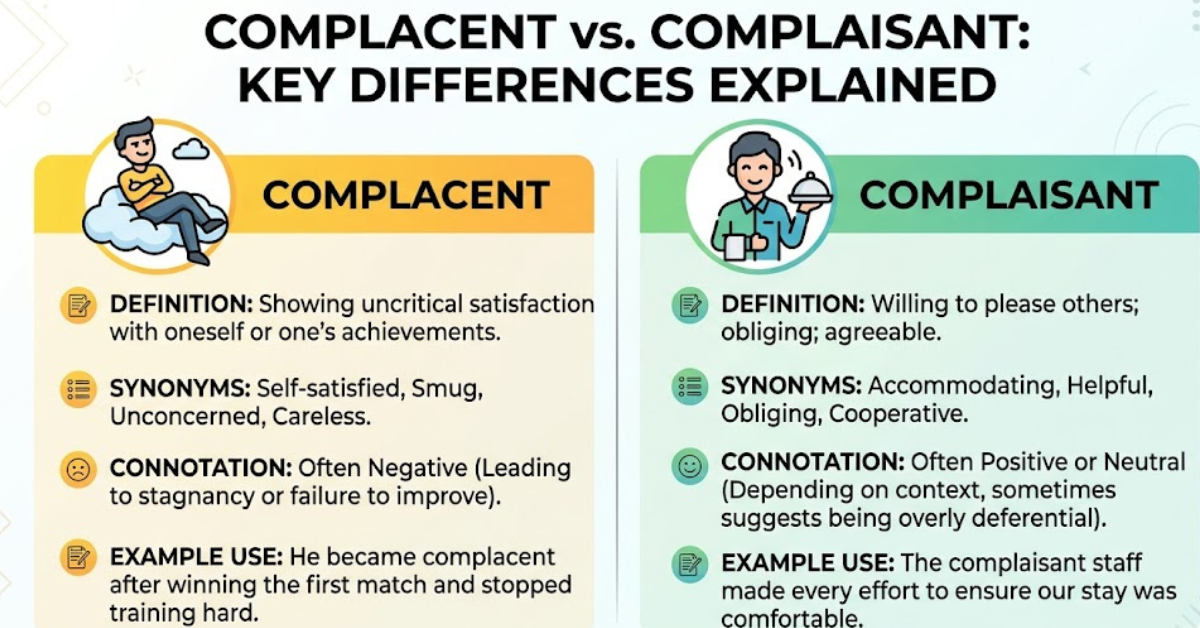
Complacent (adjective): Feeling so satisfied with one’s achievements, abilities, or circumstances that there is little motivation to improve or remain alert.
Examples of Complacent in a Sentence
- The company became complacent after years of success and failed to adapt to market changes.
- Students who become complacent may stop studying as hard as they should.
- The team lost the championship because it grew complacent after an undefeated season.
Common Characteristics of Complacency
People who are complacent often:
- Feel overly comfortable with the status quo
- Ignore warning signs
- Resist change or improvement
- Underestimate risks
- Lack motivation to grow
In many contexts, complacent has a negative connotation because it suggests carelessness or overconfidence.
What Does Complaisant Mean?
The word complaisant is much less common in everyday conversation. It refers to someone who is eager to please others and willing to accommodate their wishes.
Definition of Complaisant
Complaisant (adjective): Willing to please, agreeable, courteous, and eager to comply with others’ requests.
Examples of Complaisant in a Sentence
- The manager was complaisant and always willing to listen to employee concerns.
- Her complaisant attitude made her popular among clients.
- The host remained complaisant even when guests made unusual requests.
Common Traits of a Complaisant Person
A complaisant individual is often:
- Cooperative
- Polite
- Accommodating
- Friendly
- Flexible
Unlike complacent, complaisant is generally viewed positively, although it can occasionally imply excessive eagerness to please.
Complacent vs Complaisant: The Key Difference
The easiest way to understand complacent vs complaisant is to focus on their core meanings.
| Word | Meaning | Connotation |
| Complacent | Self-satisfied and unconcerned about improvement | Usually negative |
| Complaisant | Willing to please and accommodate others | Usually positive |
| Focus | Satisfaction with oneself | Consideration for others |
| Typical Use | Business, performance, growth | Service, hospitality, relationships |
Simple Memory Trick
A useful way to remember the difference:
- Complacent = Comfortable and careless.
- Complaisant = Pleasing and polite.
Think of the word “please” hidden within complaisant. Since a complaisant person likes to please others, the meaning becomes easier to remember.
Why Are Complacent and Complaisant Confused?
Several factors contribute to the confusion between these words:
Similar Spelling
Both words share the same first few letters and have a similar structure.
Similar Pronunciation
Although pronounced slightly differently, they sound close enough to cause misunderstandings in conversation.
Shared Historical Roots
Both words originate from Latin and French language influences, which explains their visual similarity.
Despite these similarities, their meanings evolved in different directions over time.
Etymology: Where the Words Come From
Understanding the origins of words can make them easier to remember.
Origin of Complacent
Complacent comes from the Latin word complacere, meaning “to please greatly.” Over time, the English meaning shifted toward excessive self-satisfaction.
Origin of Complaisant
Complaisant comes from French complaisant, meaning “obliging” or “courteous.” The modern English meaning remains close to its original sense of being accommodating.
Real-World Examples of Complacent vs Complaisant
Let’s compare these words in context.
Example 1: Workplace
Complacent:
The sales department became complacent after achieving record profits and ignored new competitors.
Complaisant:
The customer service representative remained complaisant and patiently addressed every complaint.
Example 2: Personal Relationships
Complacent:
He became complacent in the relationship and stopped putting effort into communication.
Complaisant:
She was complaisant and always willing to compromise during disagreements.
Example 3: Leadership
Complacent Leader:
Fails to recognize emerging threats.
Complaisant Leader:
Listens carefully and accommodates reasonable requests.
Common Mistakes to Avoid
Many writers accidentally substitute one word for the other.
Incorrect Usage
The waiter was complacent and eager to satisfy every customer.
Correct Usage
The waiter was complaisant and eager to satisfy every customer.
Another example:
The company was complaisant about cybersecurity threats.
Correct Usage
The company was complacent about cybersecurity threats.
Pay attention to whether the sentence describes self-satisfaction or a willingness to please others.
When Should You Use Complacent?
Use complacent when discussing:
- Business performance
- Personal growth
- Risk management
- Safety procedures
- Competitive environments
Example Situations
- A business ignoring market trends
- An athlete who stops training hard
- A student satisfied with average grades
- An organization overlooking security concerns
When Should You Use Complaisant?
Use complaisant when describing:
- Customer service
- Hospitality
- Diplomacy
- Teamwork
- Social interactions
Example Situations
- A helpful employee
- An accommodating host
- A cooperative colleague
- A polite customer support agent
Synonyms for Complacent and Complaisant
Synonyms for Complacent
- Self-satisfied
- Smug
- Contented
- Overconfident
- Unconcerned
Synonyms for Complaisant
- Accommodating
- Agreeable
- Cooperative
- Courteous
- Obliging
Using these alternatives can help diversify your writing while maintaining clarity.
Why Understanding Word Choice Matters
Choosing the correct word enhances communication and credibility. Whether you’re writing a business report, academic essay, blog post, or professional email, using precise language helps readers understand your message without confusion.
Misusing words like complacent and complaisant may seem minor, but it can significantly alter the intended meaning of a sentence.
Frequently Asked Questions (FAQs)
What is the difference between complacent and complaisant?
The main difference is that complacent means overly self-satisfied and unconcerned about improvement, while complaisant means willing to please or accommodate others.
Is complacent a positive or negative word?
Generally, complacent has a negative meaning because it suggests overconfidence, carelessness, or a lack of awareness about potential problems.
Is complaisant a positive word?
Yes, complaisant is usually positive because it describes someone who is courteous, cooperative, and eager to help others.
Can a person be both complacent and complaisant?
Yes. A person could be complacent about their own achievements while also being complaisant in their interactions with others. The two traits are not mutually exclusive.
Which word is more commonly used?
Complacent is far more common in modern English. Complaisant is considered somewhat formal and appears less frequently in everyday conversation.
How do I remember the difference between complacent and complaisant?
Remember:
- Complacent = Comfortable and overly satisfied.
- Complaisant = Pleasing and accommodating.
The word “please” can help you remember complaisant.
Conclusion
Understanding complacent vs complaisant can instantly improve your vocabulary and writing accuracy. While the words look similar, they describe very different qualities. Complacent refers to excessive self-satisfaction that can lead to stagnation or mistakes, whereas complaisant describes a person who is courteous, accommodating, and eager to please others.
The next time you encounter these terms, think about the context. Is the subject overly comfortable and unconcerned, or are they trying to be helpful and agreeable? That simple distinction will help you choose the right word every time.
For more language guides, grammar tips, and vocabulary comparisons, explore related articles and continue sharpening your communication skills.