





Have you ever heard someone say a politician made an “about face” or a company did an “about face” on a major decision? The phrase may sound simple, but its meaning carries a powerful idea—a complete and often surprising change in direction, attitude, or opinion.
The about face meaning originally comes from military commands, where soldiers physically turn around to face the opposite direction. Today, it is widely used in everyday conversations, politics, business, and personal situations to describe a dramatic reversal of position or behavior.
In this guide, we’ll explore the meaning of “about face,” its history, examples of usage, and how you can correctly use this expression in your own conversations.
What Does About Face Mean?
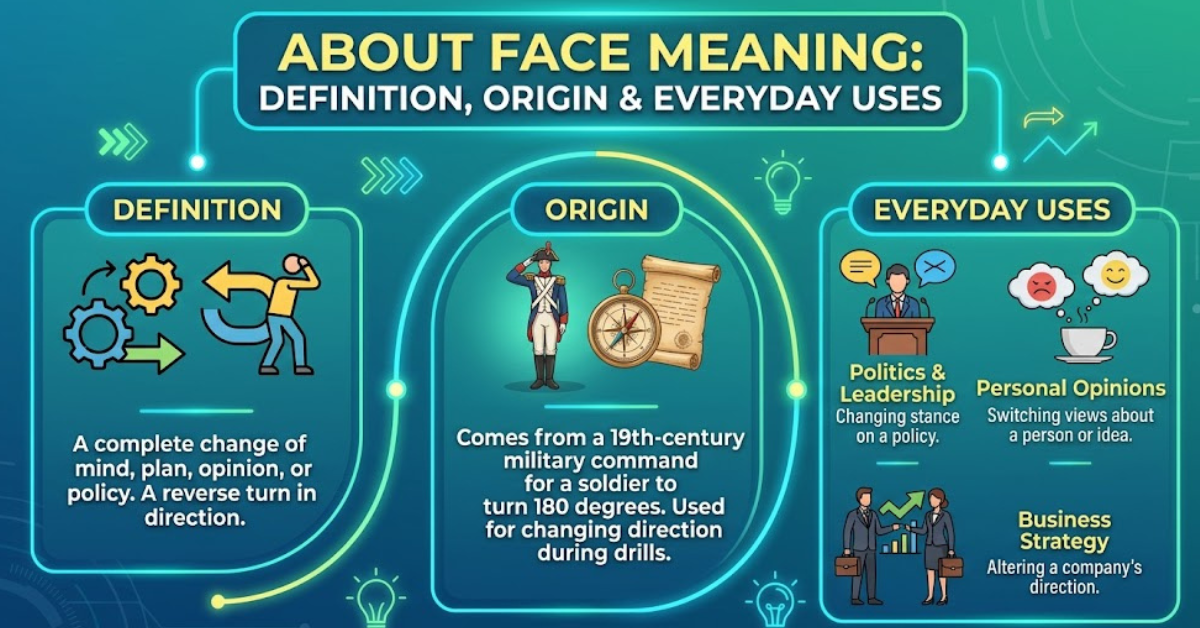
About face is an idiom that means a complete change of direction, opinion, decision, or attitude. It refers to a sudden reversal from a previous position.
In simple terms, when someone makes an about face, they completely change their mind or course of action.
Examples of About Face in a Sentence
Here are some common examples:
- The company made an about face and decided not to raise its prices after customer complaints.
- The politician’s about face on environmental policies surprised many voters.
- After hearing the new evidence, she made an about face and supported the proposal.
- He was against moving to another city but did an about face after receiving a great job offer.
In each example, the person or organization changes direction from their earlier stance.
The Military Origin of About Face
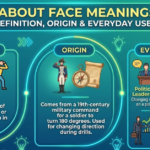
The phrase about face has its roots in military drill commands. It comes from the command “about face!”, which instructs soldiers to turn around 180 degrees and face the opposite direction.
This movement requires discipline and precision, as all soldiers must turn at the same time. Over time, the physical act of turning around became a metaphor for a complete change in ideas, decisions, or plans.
The term has been used in English for centuries and remains closely connected to military traditions.
About Face Meaning in Everyday Language
Although the expression started in the military, it is now commonly used in many areas of daily life.
1. Politics
Political leaders often make an about face when they change their stance on important issues.
Example:
A government may oppose a law at first but later support it due to public pressure or new information.
2. Business and Marketing
Companies sometimes make strategic about faces to adapt to market changes, customer feedback, or new technologies.
Example:
A brand that initially rejected online sales may later embrace e-commerce after seeing increased demand.
3. Personal Relationships and Decisions
Individuals can also make an about face in their personal lives.
Example:
Someone who refuses to adopt a pet may change their mind after spending time with animals.
About Face vs. Turnaround: Are They the Same?
The terms about face and turnaround are similar but have slight differences.
| Term | Meaning |
| About Face | A sudden or complete reversal of opinion, direction, or decision |
| Turnaround | A change or improvement, often after a difficult period |
An about face often emphasizes the act of changing one’s position, while a turnaround usually focuses on improvement or recovery.
How to Use About Face Correctly
When using the phrase “about face,” keep these tips in mind:
- Use it to describe a major change rather than a small adjustment.
- It can apply to people, organizations, governments, and situations.
- It often implies surprise because the new direction contrasts with the previous one.
Common phrases include:
- “The company made an about face.”
- “She did an about face on the issue.”
- “There was a complete about face in policy.”
Is About Face Positive or Negative?
The phrase about face is generally neutral. Whether it has a positive or negative meaning depends on the context.
For example:
Positive:
A company makes an about face and improves its environmental practices.
Negative:
A leader makes an about face after breaking promises made to supporters.
Therefore, the phrase simply describes a reversal, not whether the change is good or bad.
Similar Words and Synonyms for About Face
Several expressions carry a meaning similar to about face, including:
- U-turn
- Reversal
- Change of heart
- Change of mind
- Turnaround
- Shift in position
- Policy reversal
- Complete turnaround
Each phrase has slightly different shades of meaning, but they all involve some form of change.
FAQs About About Face Meaning
What does “about face” mean in simple words?
About face means making a complete change in direction, opinion, decision, or attitude. It describes a situation where someone changes their previous position.
Is about face a military term?
Yes. The phrase originated as a military command that instructs soldiers to turn 180 degrees and face the opposite direction.
What is another word for about face?
Common synonyms include U-turn, reversal, change of heart, and change of mind.
Can “about face” be used in business?
Yes. In business, an about face often describes a company changing its strategy, policies, or decisions.
Is it “about-face” or “about face”?
Both forms are accepted. “About face” is commonly used as a phrase, while “about-face” is often used as a noun or adjective in modern writing.
Conclusion
Understanding the about face meaning helps you recognize one of the English language’s most vivid expressions for change. What began as a military command describing a 180-degree turn has evolved into a popular idiom used in politics, business, and everyday conversations.
Whether someone changes their opinion, a company shifts its strategy, or a leader reverses a decision, an about face describes a significant move in the opposite direction. Explore more idioms and expressions to strengthen your vocabulary and understand the deeper meanings behind everyday language.