




Imagine a major storm, earthquake, flood, or public health emergency striking your community without warning. Emergency services arrive as quickly as possible, but the first people on the scene are often neighbors, families, local organizations, and community leaders. This reality highlights why it is important to engage communities in preparedness efforts before a crisis occurs.
Community preparedness is far more than government planning and emergency response. It involves empowering local residents, businesses, schools, healthcare providers, and nonprofit organizations to work together, identify risks, and build resilience. When communities actively participate in preparedness efforts, they become better equipped to prevent, respond to, and recover from emergencies.
In this article, you’ll learn why community engagement is essential, the benefits it delivers, practical strategies for increasing participation, and how it strengthens long-term resilience.
Understanding Community Preparedness
Community preparedness refers to the actions people, organizations, and local authorities take to prepare for emergencies and disasters before they happen.
These emergencies may include:
- Natural disasters such as hurricanes, floods, earthquakes, and wildfires
- Public health crises and pandemics
- Infrastructure failures
- Severe weather events
- Industrial accidents
- Cybersecurity incidents affecting critical services
Preparedness involves planning, training, communication, resource management, and risk awareness at every level of society.
Why Is It Important to Engage Communities in Preparedness Efforts?
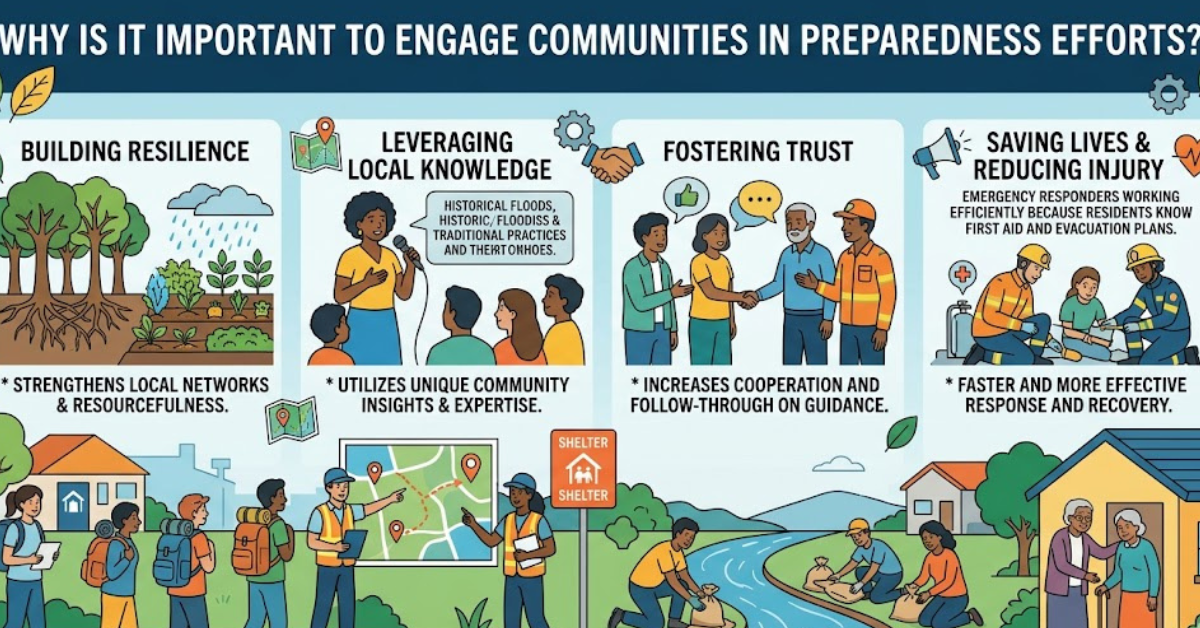
Community engagement is critical because disasters affect everyone, and no single agency can manage every challenge alone. When residents actively participate in preparedness activities, they become part of the solution rather than passive recipients of aid.
Engaged communities are:
- Better informed about risks
- More capable of protecting themselves
- Faster at responding during emergencies
- Stronger during recovery efforts
- More resilient over the long term
Preparedness becomes significantly more effective when it is shared among community members rather than managed solely by emergency professionals.
Building Stronger Community Resilience
What Is Community Resilience?
Community resilience is the ability of a community to withstand, adapt to, and recover from adverse events.
A resilient community can:
- Maintain essential services
- Protect vulnerable populations
- Recover more quickly after disasters
- Adapt to future challenges
How Engagement Supports Resilience
When people understand local risks and participate in planning, they are more likely to:
- Create emergency plans
- Maintain emergency supplies
- Support neighbors during crises
- Follow evacuation procedures
- Participate in recovery efforts
The collective preparedness of individuals contributes directly to the resilience of the entire community.
Improving Emergency Response and Coordination
One major reason why it is important to engage communities in preparedness efforts is that local residents often become first responders before professional help arrives.
Faster Initial Response
During emergencies, community members can:
- Provide first aid
- Conduct welfare checks
- Share critical information
- Assist with evacuations
- Support vulnerable individuals
These actions can save lives during the crucial first hours of a disaster.
Better Communication Networks
Community engagement creates trusted communication channels that can function even when official systems are overwhelmed.
Examples include:
- Neighborhood groups
- Community associations
- Faith-based organizations
- Local businesses
- Volunteer networks
These networks help distribute information quickly and reduce confusion during emergencies.
Enhancing Public Awareness of Risks
Preparedness starts with awareness.
Many people underestimate the risks they face or assume disasters will not affect them personally. Community engagement initiatives help educate residents about potential hazards and practical preparedness measures.
Increased Risk Understanding
Public education programs can teach people about:
- Local disaster threats
- Evacuation routes
- Emergency alerts
- Shelter locations
- Family communication plans
When people understand risks, they are more likely to take preparedness seriously.
Encouraging Personal Responsibility
Preparedness efforts encourage individuals to take proactive steps rather than relying entirely on government assistance.
Examples include:
- Creating emergency kits
- Storing food and water
- Learning basic first aid
- Developing family emergency plans
Strengthening Trust Between Communities and Authorities
Trust is essential during emergencies.
People are more likely to follow official guidance when they trust the organizations providing information.
Building Credibility Before a Crisis
Regular engagement activities such as:
- Community meetings
- Preparedness workshops
- Emergency drills
- Public consultations
allow authorities to establish relationships with residents before emergencies occur.
Encouraging Two-Way Communication
Community engagement is not simply about delivering information. It also involves listening.
Residents can provide valuable insights about:
- Local vulnerabilities
- Infrastructure concerns
- Cultural considerations
- Communication barriers
This feedback helps emergency planners create more effective strategies.
Supporting Vulnerable and At-Risk Populations
Not everyone experiences disasters in the same way.
Certain groups may face additional challenges, including:
- Older adults
- People with disabilities
- Low-income households
- Non-English-speaking populations
- Individuals with chronic health conditions
Inclusive Preparedness Planning
Engaged communities are better able to identify vulnerable residents and address their needs.
Examples include:
- Accessible evacuation plans
- Transportation assistance
- Multilingual communication materials
- Medical support services
Inclusive planning reduces disparities and improves outcomes during emergencies.
Leveraging Local Knowledge and Resources
Local residents possess valuable knowledge that outside agencies may not have.
Community Expertise
Residents often know:
- Flood-prone streets
- Isolated neighborhoods
- Community gathering locations
- Local transportation challenges
- Cultural and social dynamics
This information can improve emergency planning and response.
Resource Sharing
Community members may contribute:
- Equipment
- Facilities
- Volunteers
- Transportation
- Specialized skills
These local resources can significantly strengthen preparedness efforts.
Increasing Volunteer Participation
Volunteers play a critical role in emergency management.
Community engagement helps recruit, train, and retain volunteers who can assist during disasters.
Common Volunteer Activities
Volunteers may support:
- Emergency shelters
- Search and rescue operations
- Disaster relief distribution
- Public education campaigns
- Recovery projects
Programs such as Community Emergency Response Teams (CERT) demonstrate how trained volunteers can enhance local preparedness.
Improving Recovery After Disasters
Preparedness is not only about surviving an emergency. Recovery is equally important.
Communities that engage in preparedness activities before disasters often recover more quickly afterward.
Benefits During Recovery
Prepared communities typically experience:
- Faster restoration of services
- Better coordination of resources
- Stronger social support systems
- Reduced economic disruption
- Improved mental health outcomes
Social connections developed before disasters often become critical during recovery.
Encouraging Long-Term Sustainability
Preparedness should be an ongoing process rather than a one-time event.
Creating a Culture of Preparedness
When communities remain actively engaged, preparedness becomes part of everyday life.
This culture may include:
- Annual preparedness campaigns
- School education programs
- Regular emergency drills
- Community resilience projects
- Ongoing volunteer training
Over time, these efforts help communities adapt to evolving risks.
Real-World Examples of Community Engagement in Preparedness
Public Health Emergencies
During disease outbreaks, community organizations often help:
- Share accurate information
- Reduce misinformation
- Promote preventive measures
- Support vulnerable residents
Natural Disaster Preparedness
In hurricane-prone regions, local preparedness initiatives may include:
- Neighborhood evacuation planning
- Community shelter preparation
- Volunteer training programs
- Public awareness campaigns
Wildfire Preparedness
Communities in wildfire-prone areas frequently organize:
- Defensible space projects
- Emergency alert education
- Evacuation drills
- Fire prevention initiatives
These collaborative efforts reduce risk and improve outcomes.
Practical Ways to Engage Communities in Preparedness Efforts
Organizations and local governments can improve engagement through several strategies.
1. Conduct Community Workshops
Educational sessions help residents understand risks and preparedness actions.
2. Organize Emergency Drills
Practice exercises increase confidence and reveal gaps in planning.
3. Use Multiple Communication Channels
Reach residents through:
- Social media
- Local radio
- Community newsletters
- Schools
- Public events
4. Partner With Local Organizations
Collaborate with:
- Faith groups
- Nonprofits
- Businesses
- Schools
- Healthcare providers
5. Encourage Volunteer Programs
Provide opportunities for residents to participate directly in preparedness initiatives.
Key Takeaways
- Community engagement strengthens disaster preparedness and resilience.
- Residents often serve as the first line of response during emergencies.
- Public participation improves awareness, communication, and coordination.
- Inclusive planning helps protect vulnerable populations.
- Local knowledge enhances emergency management strategies.
- Engaged communities recover faster and adapt better to future risks.
- Building a culture of preparedness benefits everyone.
Frequently Asked Questions
Why is community engagement important in disaster preparedness?
Community engagement ensures residents understand risks, participate in planning, and contribute to response efforts. It improves resilience and helps communities recover more effectively after disasters.
Why is it important to engage communities in preparedness efforts before emergencies occur?
Preparation before an emergency allows people to develop plans, learn safety procedures, and build support networks. This proactive approach reduces confusion and improves outcomes during crises.
How does community preparedness improve emergency response?
Prepared communities can respond more quickly by sharing information, assisting neighbors, and supporting emergency services. Early action often saves lives and reduces damage.
What role do local organizations play in preparedness efforts?
Local organizations help educate residents, coordinate volunteers, distribute information, and support vulnerable populations. Their trusted community relationships strengthen preparedness initiatives.
How can individuals contribute to community preparedness?
Individuals can create emergency plans, maintain preparedness supplies, attend training sessions, volunteer, and participate in local preparedness programs.
What are the benefits of building a culture of preparedness?
A preparedness culture promotes ongoing awareness, resilience, and cooperation. Communities become better equipped to handle disasters and recover more efficiently.
Conclusion
Understanding why it is important to engage communities in preparedness efforts is essential for building safer, stronger, and more resilient communities. Emergencies affect entire populations, making preparedness a shared responsibility rather than a task for emergency management agencies alone.
When residents, organizations, businesses, schools, and local leaders work together, they create networks of support that improve awareness, strengthen response capabilities, protect vulnerable populations, and accelerate recovery. Community engagement transforms preparedness from a government initiative into a collective effort that benefits everyone.
By encouraging participation, fostering trust, and investing in long-term resilience, communities can better face future challenges and emerge stronger from adversity. Start applying these principles today to help create a more prepared and resilient community for tomorrow.