



Have you ever noticed experienced drivers slowing down without constantly pressing the brake pedal? Whether driving down a steep mountain road or approaching a bend, skilled drivers often rely on their vehicle’s engine to help manage speed.
So, how can you use your vehicle’s engine to control your speed? The answer lies in a driving technique called engine braking, where the engine helps slow the vehicle by reducing acceleration and creating resistance. Understanding this technique can improve safety, reduce brake wear, and give you better control in challenging driving conditions.
In this guide, you’ll learn how engine braking works, when to use it, its benefits, and the best practices for both manual and automatic vehicles.
Understanding Engine Speed Control
Using your engine to control speed means taking advantage of the engine’s natural resistance rather than relying entirely on the brakes.
When you remove your foot from the accelerator, fuel delivery decreases, and the engine begins resisting the vehicle’s forward motion. This resistance slows the car gradually. The effect becomes stronger when you shift into a lower gear.
This process is commonly known as engine braking and is widely taught in defensive driving courses around the world.
What Is Engine Braking?
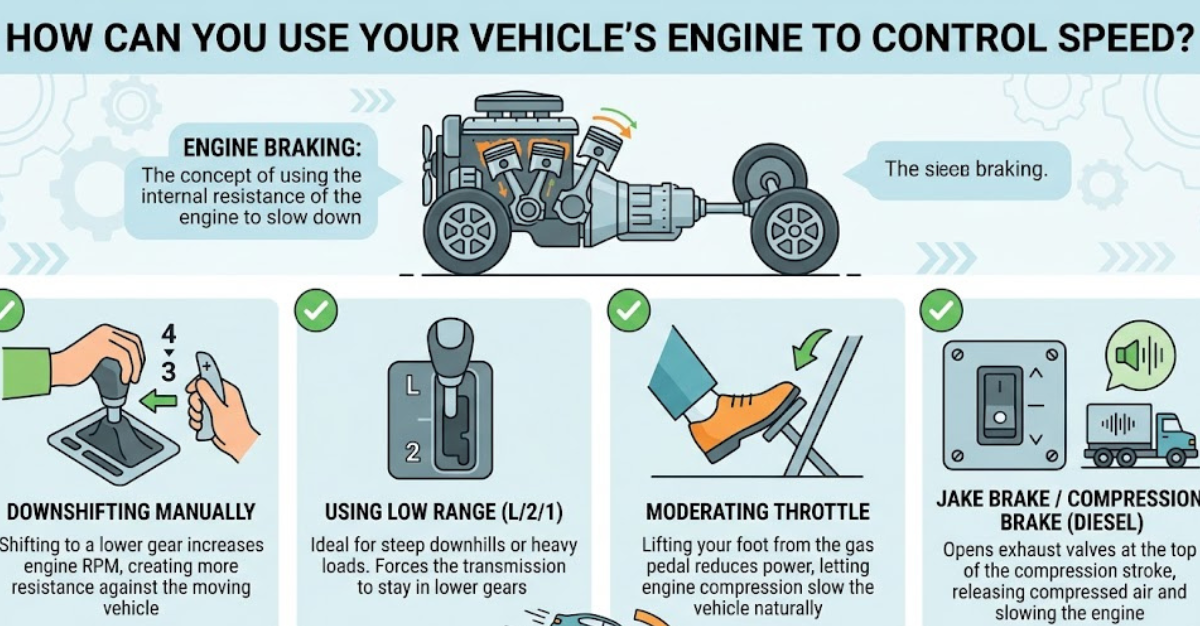
Engine braking occurs when the engine helps slow the vehicle instead of the wheel brakes doing all the work.
When you downshift into a lower gear:
- Engine RPM increases
- The engine creates more resistance
- Vehicle speed decreases naturally
- Less pressure is placed on the braking system
For example, if you’re traveling downhill in third gear and shift into second gear, the vehicle will begin slowing without significant brake input.
This technique is especially useful on long descents where continuous braking could overheat the brakes.
How Can You Use Your Vehicle’s Engine to Control Your Speed Effectively?
The most effective way is by combining throttle control and proper gear selection.
1. Ease Off the Accelerator
The simplest method is to release the gas pedal.
When you stop accelerating:
- Fuel delivery decreases
- Engine resistance increases
- The vehicle gradually slows down
This works well when approaching:
- Traffic lights
- Stop signs
- Congested traffic
- Curves and bends
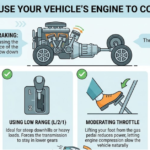
2. Downshift to a Lower Gear
Downshifting increases engine braking force.
For manual transmissions:
- Release the accelerator.
- Press the clutch.
- Shift to a lower gear.
- Release the clutch smoothly.
For automatic transmissions:
- Use low gear settings such as “L,” “2,” or “3.”
- Many modern vehicles also feature manual shift modes.
3. Match the Gear to Road Conditions
Choosing the appropriate gear helps maintain control.
Examples include:
Why Engine Braking Is Important
Many drivers underestimate how valuable engine braking can be.
Improved Vehicle Control
Gradual deceleration helps maintain tire traction and stability.
This is especially beneficial when:
- Driving on icy roads
- Navigating mountain routes
- Handling winding roads
Reduced Brake Wear
Using the engine to assist with slowing reduces:
- Brake pad wear
- Rotor wear
- Brake maintenance costs
Many commercial truck drivers rely heavily on engine braking for this reason.
Lower Risk of Brake Fade
Brake fade occurs when brakes become less effective due to overheating.
Long downhill stretches can generate significant heat in braking components. Engine braking helps prevent excessive temperatures and maintains stopping power.
Engine Braking in Manual vs. Automatic Vehicles
Manual Transmission Vehicles
Manual vehicles generally offer the greatest control over engine braking.
Drivers can:
- Select exact gears
- Control RPM levels
- Adapt quickly to changing conditions
This flexibility makes manual transmissions ideal for mountainous terrain.
Automatic Transmission Vehicles
Modern automatic transmissions also support engine braking.
Features may include:
- Manual mode
- Paddle shifters
- Low-range gear settings
- Hill descent assistance systems
Drivers should consult the owner’s manual to understand available options.
Best Situations to Use Engine Braking
Driving Down Long Hills
This is perhaps the most common use of engine braking.
Instead of riding the brakes continuously:
- Select a lower gear
- Let the engine control speed
- Use brakes only when necessary
Approaching Intersections
By lifting off the accelerator early, you can reduce speed smoothly and improve fuel efficiency.
Driving in Snow or Rain
Abrupt braking can sometimes reduce traction.
Gentle engine braking provides smoother deceleration and can help maintain vehicle stability.
Towing Heavy Loads
Vehicles towing trailers place additional stress on brakes.
Using the engine to help control speed reduces strain on the braking system.
Common Mistakes to Avoid
While engine braking is useful, improper use can create problems.
Downshifting Too Aggressively
Shifting into a gear that is too low can:
- Cause excessive RPM
- Stress drivetrain components
- Lead to loss of traction
Always choose gears progressively.
Ignoring Engine Speed
Watch the tachometer when downshifting.
Operating at extremely high RPM can damage the engine.
Relying Only on Engine Braking
Engine braking supplements the brakes—it doesn’t replace them.
For emergency stops:
- Use the brake pedal immediately
- Apply firm, controlled pressure
- Follow safe braking procedures
Does Engine Braking Save Fuel?
In many modern vehicles, the answer is yes.
When you release the accelerator while in gear:
- Fuel injection may be significantly reduced or temporarily stopped
- The engine uses the vehicle’s momentum
- Fuel consumption decreases during deceleration
However, the fuel savings are generally modest. The biggest benefits remain vehicle control and reduced brake wear.
Safety Tips for Using Your Engine to Control Speed
To maximize safety:
- Anticipate traffic conditions ahead
- Downshift gradually
- Avoid sudden gear changes
- Monitor engine RPM
- Use brakes when necessary
- Practice on familiar roads before attempting steep descents
Developing these habits can make driving smoother and safer in all conditions.
Key Takeaways
- Engine braking uses engine resistance to slow the vehicle.
- Releasing the accelerator is the simplest form of engine speed control.
- Downshifting increases braking effect.
- Engine braking reduces brake wear and helps prevent brake fade.
- It is particularly useful on hills, curves, slippery roads, and when towing.
- Manual and automatic vehicles can both benefit from this technique.
- Proper gear selection is essential for safety.
Frequently Asked Questions
How can you use your vehicle’s engine to control your speed on a hill?
Select a lower gear before beginning the descent. The increased engine resistance helps maintain a safe speed while reducing reliance on the brakes.
Is engine braking bad for the engine?
No. When performed correctly, engine braking is a normal driving technique and does not harm a healthy engine or transmission.
Can automatic cars use engine braking?
Yes. Most automatic vehicles allow engine braking through low gear settings, manual shift modes, or paddle shifters.
Does engine braking save brake pads?
Yes. Because the engine helps slow the vehicle, the brakes are used less frequently, which can extend brake pad and rotor life.
When should you avoid aggressive downshifting?
Avoid aggressive downshifting at high speeds or on slippery roads, as it may cause excessive RPM or reduce traction.
Is engine braking enough to stop a vehicle completely?
No. Engine braking helps reduce speed but should be combined with the brakes when coming to a complete stop or during emergencies.
Conclusion
Understanding how can you use your vehicle’s engine to control your speed is an important driving skill that improves safety, enhances vehicle control, and reduces wear on your braking system. By easing off the accelerator, selecting appropriate gears, and using engine braking strategically, you can handle hills, curves, and changing road conditions with greater confidence.
The next time you’re behind the wheel, practice using your engine to assist with speed control. Over time, you’ll develop smoother driving habits, improve vehicle efficiency, and become a more skilled and confident driver.