






Have you ever unpacked a new DeLonghi espresso machine, stared at the buttons and controls, and wondered where to begin? You’re not alone. While DeLonghi machines are designed to make café-quality coffee at home, getting the best results requires understanding the basics of setup, brewing, and maintenance.
If you’re searching for delonghi espresso machine how to use, this guide walks you through everything you need to know—from initial setup and pulling your first espresso shot to steaming milk and keeping your machine in top condition. Whether you own a DeLonghi Dedica, La Specialista, Stilosa, Magnifica, or another model, the core principles remain largely the same.
Understanding Your DeLonghi Espresso Machine
Before brewing, it’s helpful to understand the main components of a typical DeLonghi espresso machine.
Key Parts You’ll Use
Most DeLonghi espresso makers include:
- Water reservoir
- Portafilter
- Filter baskets (single and double shot)
- Drip tray
- Steam wand
- Control panel or buttons
- Boiler or thermoblock heating system
Some premium models also feature:
- Built-in coffee grinder
- Automatic milk frother
- Pressure gauge
- Temperature controls
- Programmable drink settings
Understanding these components makes operation much easier and helps improve coffee quality.
How to Set Up a DeLonghi Espresso Machine for the First Time
Proper setup is essential for great espresso and long-term machine performance.
Step 1: Unpack and Inspect
Remove all packaging materials and check that all accessories are included.
Look for:
- Portafilter
- Filter baskets
- Water tank
- Cleaning tools
- User manual
Step 2: Wash Removable Parts
Before first use:
- Remove the water reservoir.
- Wash removable components with warm water.
- Dry thoroughly before reassembling.
Avoid using harsh detergents that may leave residue.
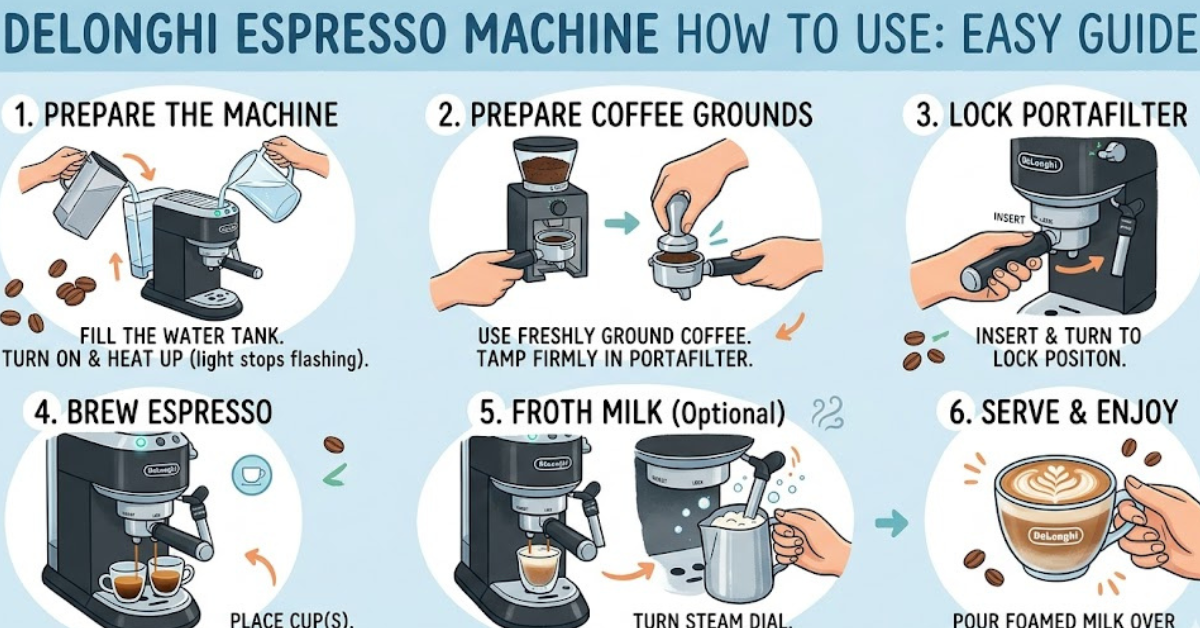
Step 3: Fill the Water Tank
Use:
- Fresh filtered water
- Cold water
- Clean reservoir
Filtered water helps reduce mineral buildup and improves coffee taste.
Step 4: Prime the Machine
Most DeLonghi machines require an initial rinse cycle.
To do this:
- Turn on the machine.
- Allow it to heat up.
- Run water through the brew head without coffee.
- Activate the steam wand briefly.
This clears manufacturing residue and prepares the internal system.
DeLonghi Espresso Machine How to Use: Step-by-Step Brewing Process
Now let’s get to the fun part—making espresso.
Step 1: Preheat the Machine
Allow the machine to fully heat before brewing.
Most DeLonghi models take:
- 30 seconds to 2 minutes for thermoblock systems
- Several minutes for larger boiler systems
Preheating ensures stable extraction temperatures.
Step 2: Grind Your Coffee Beans
Freshly ground coffee produces noticeably better espresso.
Recommended grind:
- Fine espresso grind
- Similar to table salt consistency
If the grind is too coarse, espresso may taste weak. If too fine, extraction can become bitter.
Step 3: Fill the Portafilter
Add coffee grounds to the filter basket.
General guideline:
| Espresso Type | Coffee Amount |
|---|---|
| Single Shot | 7–10 grams |
| Double Shot | 14–18 grams |
Distribute grounds evenly.
Step 4: Tamp the Coffee
Using a tamper:
- Press firmly and evenly
- Keep the coffee bed level
- Avoid excessive force
Proper tamping helps water flow evenly through the coffee.
Step 5: Lock the Portafilter
Insert the portafilter into the group head and rotate until securely locked.
A tight seal is important for maintaining brewing pressure.
Step 6: Start Extraction
Press the espresso button.
A quality espresso shot typically:
- Begins flowing after a few seconds
- Produces a rich golden crema
- Takes approximately 25–30 seconds
Ideal extraction creates balanced flavor with sweetness, body, and aroma.
How to Steam Milk With a DeLonghi Espresso Machine
Many DeLonghi machines include a manual steam wand for cappuccinos and lattes.
Preparing the Milk
For best results:
- Use cold milk
- Fill the pitcher one-third full
- Use stainless steel milk pitchers
Whole milk generally creates the richest foam.
Steaming Process
- Purge the steam wand briefly.
- Place the wand just below the milk surface.
- Turn on steam.
- Lower the pitcher slightly to introduce air.
- Continue heating until milk reaches approximately 140–150°F (60–65°C).
Creating Microfoam
Well-textured milk should look:
- Glossy
- Smooth
- Velvety
Avoid large bubbles, which can affect texture and latte art quality.
How to Make Popular Coffee Drinks
Espresso
- Single or double shot
- Served without milk
Americano
- Pull an espresso shot.
- Add hot water.
This creates a smoother, less concentrated coffee.
Cappuccino
Typical ratio:
- 1/3 espresso
- 1/3 steamed milk
- 1/3 milk foam
Latte
Typical ratio:
- 1 espresso shot
- More steamed milk
- Thin layer of foam
Macchiato
A shot of espresso topped with a small amount of milk foam.
Common Mistakes Beginners Make
Learning delonghi espresso machine how to use often involves a few trial-and-error moments.
Using Pre-Ground Coffee That’s Too Old
Coffee begins losing flavor shortly after grinding.
For better results:
- Buy whole beans
- Grind immediately before brewing
Skipping Preheating
Cold equipment can lead to:
- Weak extraction
- Lower temperatures
- Reduced crema
Incorrect Grind Size
One of the biggest causes of poor espresso quality.
Symptoms include:
Too Coarse:
- Fast extraction
- Sour taste
- Thin crema
Too Fine:
- Slow extraction
- Bitter taste
- Over-extraction
Ignoring Cleaning
Coffee oils and milk residue can quickly impact flavor and machine performance.
Cleaning and Maintenance Tips
Regular maintenance helps ensure consistent espresso quality.
Daily Cleaning
After each use:
- Empty used coffee grounds
- Rinse portafilter
- Wipe steam wand
- Clean drip tray
Weekly Cleaning
Perform deeper cleaning by:
- Washing removable parts
- Cleaning brew head
- Removing coffee oil buildup
Monthly Descaling
Mineral deposits naturally accumulate over time.
Signs descaling is needed:
- Slower brewing
- Reduced steam pressure
- Unusual noises
Use a DeLonghi-approved descaling solution for best results.
Troubleshooting Common Problems
Espresso Tastes Weak
Possible causes:
- Coarse grind
- Insufficient coffee
- Light tamping
Espresso Tastes Bitter
Possible causes:
- Over-extraction
- Fine grind
- Excessive brew time
No Steam Production
Check:
- Water level
- Steam mode activation
- Steam wand blockage
Machine Leaks Water
Inspect:
- Water reservoir seating
- Drip tray position
- Portafilter gasket condition
Little or No Crema
Potential reasons:
- Stale beans
- Incorrect grind size
- Low-quality coffee
Fresh beans usually solve many crema issues.
Tips for Better Espresso Every Time
Use Fresh Coffee Beans
Coffee is best within a few weeks of roasting.
Measure Consistently
Using a digital scale improves repeatability and flavor consistency.
Experiment With Extraction Time
Small adjustments can dramatically improve results.
Use Filtered Water
Better water quality means:
- Better flavor
- Less scale buildup
- Longer machine lifespan
Practice Milk Frothing
Milk texturing is a skill that improves with repetition.
Don’t worry if your first few attempts aren’t café-quality.
Key Takeaways
- Always preheat your DeLonghi espresso machine before brewing.
- Use freshly ground coffee whenever possible.
- Maintain a consistent grind size and tamp pressure.
- Steam milk carefully to create smooth microfoam.
- Clean the machine daily and descale regularly.
- Small adjustments can significantly improve espresso quality.
Frequently Asked Questions
How do I use a DeLonghi espresso machine for the first time?
Start by washing removable parts, filling the water tank, and running a rinse cycle without coffee. Once the machine is heated, add coffee to the portafilter and brew your first shot.
What coffee should I use in a DeLonghi espresso machine?
Freshly roasted espresso beans are ideal. Grind them finely just before brewing for the best flavor and crema.
Why is my DeLonghi espresso machine not making strong coffee?
Weak coffee is often caused by a coarse grind, insufficient coffee grounds, or poor tamping. Adjusting these variables usually improves extraction.
How often should I descale my DeLonghi espresso machine?
Most users should descale every one to three months, depending on water hardness and usage frequency.
Can I use pre-ground coffee in a DeLonghi machine?
Yes, most models support pre-ground coffee. However, freshly ground beans typically produce superior flavor and aroma.
How long does it take to learn DeLonghi espresso machine how to use properly?
Most beginners become comfortable within a few days. Consistently producing excellent espresso may take a few weeks of practice and experimentation.
Conclusion
Learning delonghi espresso machine how to use is easier than it first appears. Once you understand the basics of machine setup, coffee grinding, extraction, milk steaming, and maintenance, you’ll be able to create café-style drinks right at home.
The key is consistency. Use fresh beans, pay attention to grind size, keep your machine clean, and don’t be afraid to make small adjustments. With a little practice, your DeLonghi espresso machine can deliver rich, flavorful espresso and expertly crafted milk drinks day after day. Apply these techniques, refine your routine, and enjoy a better coffee experience with every cup.