









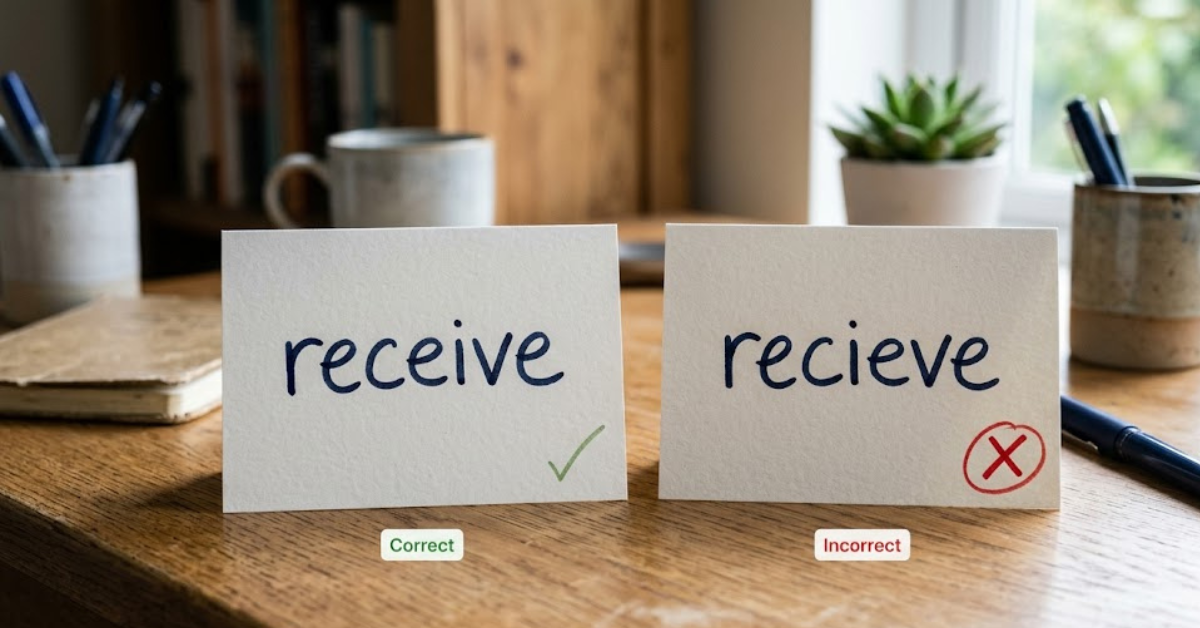
English spelling can be surprisingly tricky, even for native speakers. One of the most common spelling mistakes people make is writing “recieve” instead of “receive.” If you’ve ever paused while typing and wondered about receive or recieve, you’re definitely not alone.
The confusion happens because English spelling rules aren’t always straightforward. In this guide, we’ll explain the correct spelling, why people make the mistake, and how to remember the difference easily.
Is It Receive or Recieve?
The correct spelling is:
Receive
Correct:
- Receive
Incorrect:
- Recieve
So when comparing recieve or receive, the proper English spelling is always “receive.”
Why “Recieve” Is Incorrect
The mistake comes from one of the most confusing grammar patterns in English:
“I before E except after C.”
Since the word has the letter “c” before the vowel combination, the correct order becomes:
- ei → receive
Not:
- ie → recieve
That’s why recieve spelling is considered incorrect in standard English.
Meaning of the Word “Receive”
The word “receive” means:
- To get something
- To accept something
- To be given something
Example sentences:
- “I received your email.”
- “She will receive the package tomorrow.”
- “They received excellent feedback.”
It’s a very common verb in everyday English.
Recieve vs Receive: Simple Comparison
Here’s a quick breakdown of recieve vs receive:
| Word | Correct? |
| Receive | Yes |
| Recieve | No |
Even though “recieve” may look correct at first glance, dictionaries and grammar rules recognize only “receive.”
Why People Commonly Misspell Receive
The word is frequently misspelled because English pronunciation can be misleading.
Common reasons include:
- Confusing “ie” and “ei” patterns
- Typing quickly
- Forgetting spelling rules
- Pronunciation sounding similar either way
Since both versions sound almost identical, many people accidentally reverse the vowels.
Easy Trick to Remember the Correct Spelling
One of the easiest ways to remember the spelling is this classic grammar rule:
“I before E except after C.”
Since the word has a “C”:
- Receive
Similar examples:
- Ceiling
- Deceive
- Conceive
- Perceive
These words follow the same spelling pattern.
Common Words Similar to Receive
Many English words use the same “ei after c” rule.
Examples:
| Correct Word | Common Mistake |
| Receive | Recieve |
| Deceive | Decieve |
| Perceive | Percieve |
| Ceiling | Cieling |
Learning one pattern helps you avoid multiple spelling mistakes.
How “Receive” Is Used in Everyday English
The word appears constantly in:
- Emails
- Business communication
- School assignments
- Online messaging
- Banking and shipping updates
Common phrases:
- Receive payment
- Receive information
- Receive a message
- Receive an award
Because it’s so common, learning the correct spelling is especially important.
Why Correct Spelling Matters
Proper spelling improves:
- Professional writing
- Academic performance
- Online communication
- Reader trust and clarity
Even small spelling mistakes can affect how polished or credible writing appears.
For example:
- “Please recieve the package” looks less professional than
- “Please receive the package.”
FAQs About Receive or Recieve
1. Is recieve correct spelling?
No. “Recieve” is incorrect.
2. Which is correct: receive or recieve?
“Receive” is the correct spelling.
3. Why is receive spelled with “ei”?
Because it follows the grammar rule “I before E except after C.”
4. Is recieve in the dictionary?
It may appear only as a common misspelling reference, not as a correct word.
5. What does receive mean?
It means to get, accept, or be given something.
Conclusion
If you’ve ever been confused about receive or recieve, the answer is simple: “receive” is always the correct spelling. The mistake usually happens because English spelling rules can feel inconsistent, especially with “ie” and “ei” combinations.
Remembering the phrase “I before E except after C” can help you avoid this common error in the future. Since “receive” is used so often in emails, work, school, and daily communication, learning the correct spelling is a useful skill for both personal and professional writing.
The next time you type the word, you’ll know exactly which version is correct.