








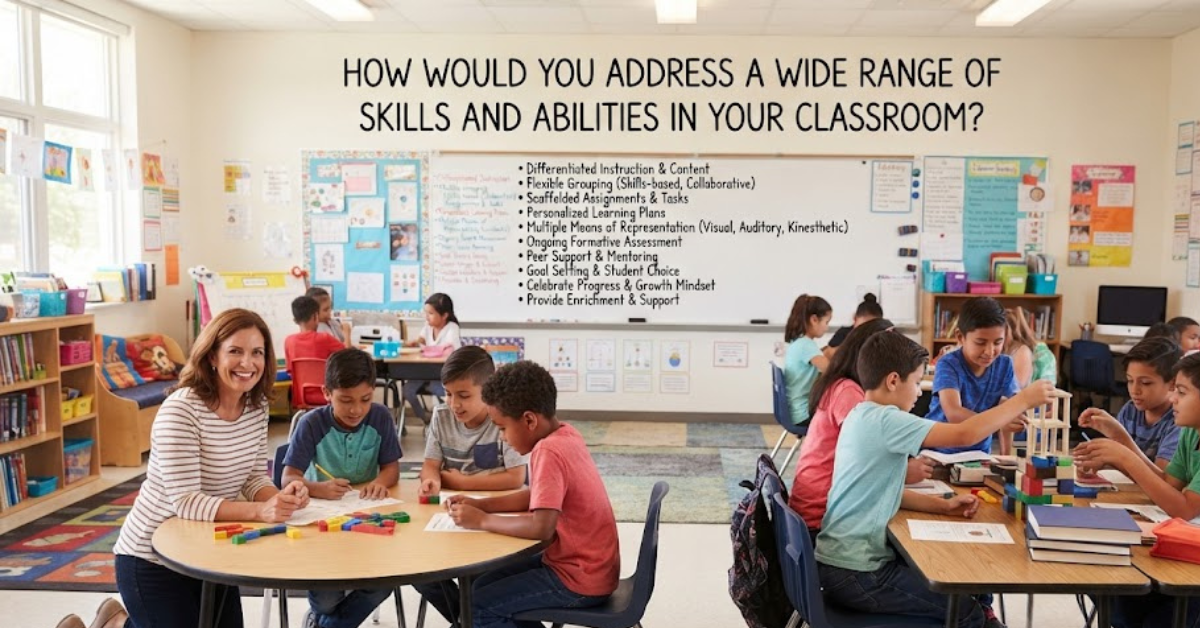
Every classroom is unique. Some students grasp new concepts quickly, while others need additional time, practice, or different teaching methods to succeed. That’s why one of the most common interview and teacher training questions is: how would you address a wide range of skills and abilities in your classroom?
The best classrooms recognize that learners have different strengths, interests, backgrounds, and learning styles. Instead of expecting every student to learn in exactly the same way, effective teachers adapt their instruction to meet diverse needs while maintaining high expectations for everyone. This article explores practical, evidence-based strategies that help teachers create an inclusive classroom where every student has the opportunity to thrive.
Why Do Students Have Different Skills and Abilities?
No two students learn in exactly the same way.
Differences in skills and abilities can result from many factors, including:
- Prior knowledge and experiences
- Learning pace
- Interests and motivation
- Language background
- Learning differences or disabilities
- Cultural influences
- Confidence and self-esteem
Recognizing these differences allows teachers to plan lessons that are engaging and accessible for all learners.
How Would You Address a Wide Range of Skills and Abilities in Your Classroom?
If asked this question during a teaching interview or professional discussion, a strong response is that you would use differentiated instruction, ongoing assessment, flexible teaching strategies, and an inclusive learning environment to ensure every student can succeed.
Rather than using a one-size-fits-all approach, effective teachers adapt their instruction based on students’ individual needs while encouraging every learner to achieve their full potential.
1. Differentiate Instruction
Differentiated instruction is one of the most effective ways to support students with varying abilities.
This means adjusting:
- Lesson content
- Learning activities
- Teaching methods
- Assessment tasks
- Levels of support
For example, while all students work toward the same learning objective, they may complete different activities based on their readiness or learning needs.
2. Get to Know Your Students
Strong teaching begins with understanding your learners.
Take time to learn about each student’s:
- Strengths
- Challenges
- Interests
- Learning preferences
- Goals
- Cultural background
Building positive relationships helps teachers plan lessons that are meaningful and engaging.
3. Use Flexible Grouping
Students benefit from working in different group settings.
Consider using:
- Whole-class instruction
- Small-group learning
- Pair work
- Independent tasks
- Mixed-ability groups
- Similar-ability groups for targeted instruction
Changing group arrangements regularly keeps lessons dynamic and ensures students learn from one another.
4. Incorporate Multiple Teaching Methods
Not every student learns best through lectures or textbooks.
Use a variety of instructional approaches, such as:
- Visual presentations
- Hands-on activities
- Class discussions
- Demonstrations
- Educational technology
- Videos
- Interactive games
- Real-world examples
Offering multiple ways to access information helps more students understand the material.
5. Provide Scaffolding
Scaffolding means giving students temporary support as they learn new concepts.
Examples include:
- Step-by-step instructions
- Graphic organizers
- Worked examples
- Vocabulary lists
- Sentence starters
- Guided practice
As students become more confident, gradually reduce the support to encourage independent learning.
6. Challenge Advanced Learners
Supporting struggling students is important, but advanced learners also need opportunities to grow.
Offer:
- Extension activities
- Independent research projects
- Leadership roles
- Higher-order thinking questions
- Creative problem-solving tasks
Keeping high-achieving students engaged prevents boredom and encourages continuous development.
7. Offer Additional Support When Needed
Some students may require extra assistance.
Possible supports include:
- One-on-one instruction
- Small-group intervention
- Peer tutoring
- Additional practice
- Modified assignments
- Classroom accommodations
The goal is to provide equitable opportunities without lowering expectations unnecessarily.
8. Use Ongoing Assessment
Assessment isn’t just for assigning grades.
Regular formative assessments help teachers identify:
- Student understanding
- Learning gaps
- Areas needing review
- Progress over time
Examples include:
- Exit tickets
- Classroom observations
- Quizzes
- Discussions
- Student reflections
Using assessment data allows teachers to adjust instruction as needed.
9. Encourage Student Choice
Giving students some control over their learning increases motivation.
Choices might include:
- Selecting project topics
- Choosing presentation formats
- Picking reading materials
- Deciding how to demonstrate understanding
Student choice promotes ownership and engagement.
10. Create an Inclusive Classroom Environment
Every student should feel valued and respected.
An inclusive classroom encourages:
- Respect for diversity
- Positive relationships
- Collaboration
- Open communication
- Equal participation
Students learn best when they feel safe, supported, and included.
The Role of Technology
Educational technology can help meet diverse learning needs.
Useful tools include:
- Interactive learning platforms
- Educational videos
- Speech-to-text software
- Reading support tools
- Digital quizzes
- Learning management systems
Technology should enhance learning rather than replace effective teaching.
Classroom Management Strategies
A well-managed classroom supports students with different abilities.
Effective strategies include:
- Clear expectations
- Consistent routines
- Positive reinforcement
- Visual schedules
- Smooth lesson transitions
- Active student engagement
Good classroom management creates an environment where learning can flourish.
Common Challenges
Teachers often face challenges such as:
- Large class sizes
- Limited instructional time
- Diverse learning needs
- Varying levels of motivation
- Resource limitations
Despite these challenges, thoughtful planning and flexible teaching practices can help meet the needs of all learners.
Sample Interview Answer
If asked, “How would you address a wide range of skills and abilities in your classroom?”, you might respond:
“I would create an inclusive learning environment by using differentiated instruction, flexible grouping, and ongoing assessment. and believe every student learns differently, so I would adapt my teaching methods, provide appropriate support where needed, and offer extension activities for advanced learners. I would also build positive relationships with students to better understand their strengths, challenges, and interests, ensuring that every learner has the opportunity to succeed.”
This answer demonstrates both practical teaching knowledge and a commitment to inclusive education.
Benefits of Addressing Diverse Learning Needs
When teachers adapt instruction effectively, students often experience:
- Higher engagement
- Greater confidence
- Improved academic achievement
- Stronger collaboration
- Better problem-solving skills
- Increased motivation
An inclusive classroom benefits every learner—not just those who need additional support.
FAQs
How would you address a wide range of skills and abilities in your classroom?
You can address diverse skills and abilities by using differentiated instruction, flexible grouping, varied teaching methods, ongoing assessment, scaffolding, and an inclusive classroom environment that supports all learners.
What is differentiated instruction?
Differentiated instruction is a teaching approach that adapts lessons, activities, and assessments to meet students’ varying learning needs, readiness levels, and interests.
Why is classroom differentiation important?
It helps ensure every student has access to meaningful learning opportunities while promoting engagement, confidence, and academic growth.
How can teachers support struggling students?
Teachers can provide additional guidance through small-group instruction, one-on-one support, scaffolding, modified resources, and regular feedback while maintaining appropriate learning expectations.
How do you challenge high-achieving students?
Advanced learners can be challenged through enrichment activities, independent projects, higher-order thinking tasks, leadership opportunities, and creative problem-solving exercises.
What role does assessment play in meeting diverse learning needs?
Ongoing assessments help teachers identify learning gaps, monitor progress, and adjust instruction to better support individual students.
Why is an inclusive classroom important?
An inclusive classroom fosters respect, belonging, and equal opportunities for all students, helping them develop academically, socially, and emotionally.
Conclusion
Understanding how would you address a wide range of skills and abilities in your classroom is essential for creating an effective and inclusive learning environment. Every student brings unique strengths, challenges, and experiences to the classroom, and successful teachers recognize that flexibility is key to meeting those diverse needs. By using differentiated instruction, formative assessment, flexible grouping, and supportive teaching strategies, educators can help every learner reach their potential while maintaining high expectations.
Ultimately, great teaching isn’t about delivering the same lesson to every student in the same way—it’s about ensuring that every student has a meaningful opportunity to learn, participate, and succeed. By embracing inclusive practices and continually reflecting on your teaching methods, you can build a classroom where all learners feel valued, supported, and inspired to achieve their best.