




Have you ever paused while writing and wondered, “Is it scarey or scary?” You’re not alone. Many English speakers and writers frequently question the correct spelling of this common adjective, especially because English is filled with words that don’t always follow predictable patterns.
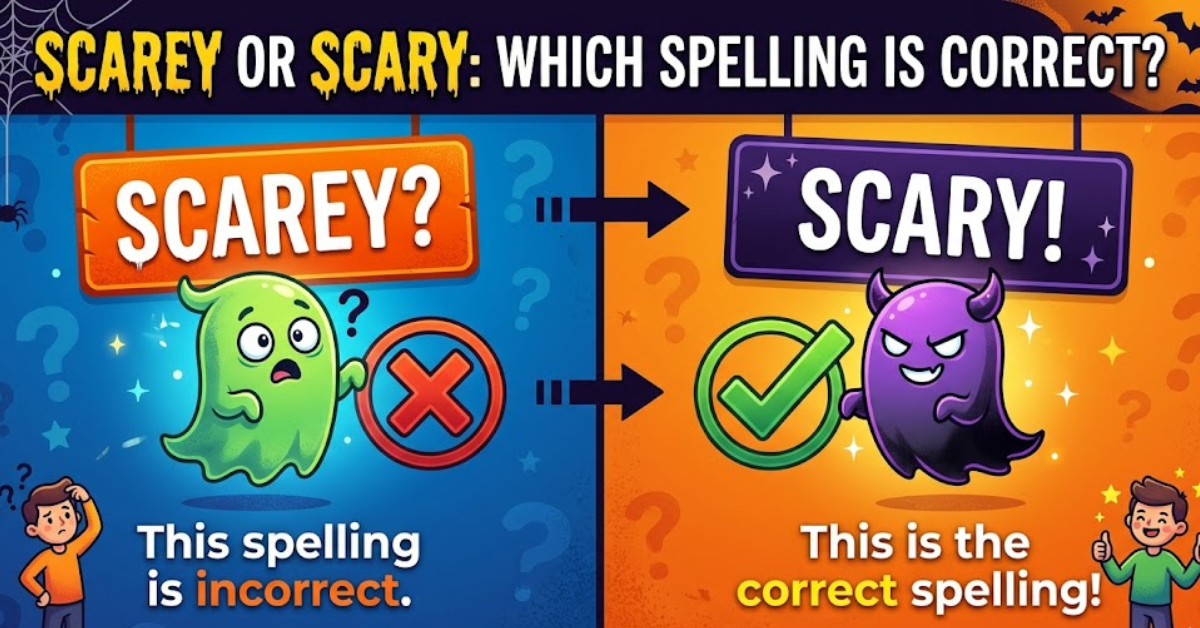
The short answer is simple: “Scary” is the correct spelling. While you may occasionally see “scarey” online, it is generally considered a misspelling in modern English. In this guide, we’ll explain why scary or scarey causes confusion, explore the grammar behind the word, and provide examples to help you remember the correct form.
Is It Scary or Scarey?
The correct spelling is scary.
Correct: That movie was scary.
Incorrect: That movie was scarey.
The word scary is an adjective that describes something frightening, spooky, alarming, or capable of causing fear. It comes from the noun and verb scare, but when transformed into an adjective, the spelling changes slightly.
Quick Answer
| Word | Correct? |
| Scary | Yes |
| Scarey | No |
Most dictionaries, style guides, educational institutions, and professional publications recognize scary as the standard spelling.
How Do You Spell Scary?
If you’re asking “how do you spell scary?”, the correct spelling is:
S-C-A-R-Y
Pronunciation
Scary is pronounced as:
/ˈsker.i/
It sounds like:
“SKAIR-ee”
The pronunciation often contributes to confusion because some people assume the word should retain the “e” from scare, leading them to write scarey.
Why Do People Write “Scarey”?
One reason many people spell it as scarey is because the root word is scare.
Consider these examples:
- Care → Careful
- Hope → Hopeful
- Scare → Scary
Unlike some word formations where the silent “e” remains, the adjective scary drops the “e” before adding the suffix -y.
Common Spelling Pattern
When a word ends in silent e, the e is often removed before adding a suffix beginning with a vowel.
Examples:
| Root Word | Adjective Form |
| Ice | Icy |
| Spice | Spicy |
| Noise | Noisy |
| Scare | Scary |
This pattern helps explain why scary is correct and scarey is not.
The Grammar Rule Behind Scary
Understanding the grammar rule makes the spelling easier to remember.
Rule: Drop the Silent E Before Adding Y
Many English words ending in a silent e lose that letter when a suffix is added.
For example:
- Taste → Tasty
- Shine → Shiny
- Ice → Icy
- Scare → Scary
Because scare ends with a silent e, it becomes scary, not scarey.
Examples of Scary Used Correctly
Here are some examples showing how to use scary in everyday writing.
In Conversations
- That haunted house was incredibly scary.
- I watched a scary movie last night.
- The thunderstorm looked scary from a distance.
- Some roller coasters can feel scary at first.
In Professional Writing
- The report highlighted a scary increase in cybercrime.
- Climate experts warn of several potentially scary environmental trends.
- The company’s financial losses presented a scary outlook for investors.
Is “Scarey” Ever Correct?
In standard English, scarey is generally not considered correct.
However, there are a few situations where you might encounter it:
1. Typographical Errors
Many instances of scarey are simply spelling mistakes.
2. Usernames and Brand Names
Some people intentionally use scarey in:
- Social media handles
- Website names
- Business brands
- Creative projects
In these cases, the spelling is a stylistic choice rather than a grammatically correct form.
3. Historical Variations
Older texts occasionally contain alternative spellings that are no longer accepted in modern English. Today, dictionaries overwhelmingly favor scary.
Scary vs Scarey: A Side-by-Side Comparison
| Feature | Scary | Scarey |
|---|---|---|
| Standard English | Yes | No |
| Dictionary Approved | Yes | Generally No |
| Common Usage | Very Common | Rare |
| Accepted in Academic Writing | Yes | No |
| Recommended for SEO and Professional Content | Yes | No |
Related Words and Synonyms for Scary
Understanding related words can help expand your vocabulary.
Synonyms
- Frightening
- Terrifying
- Chilling
- Creepy
- Spooky
- Horrifying
- Alarming
- Eerie
- Unsettling
- Fearsome
Example
Instead of writing:
“The movie was scary.”
You could write:
“The movie was terrifying.”
or
“The movie was eerie and unsettling.”
Common Mistakes People Make
When discussing scarey or scary, several mistakes appear frequently.
Mistake #1: Keeping the Silent E
Scarey
Scary
Mistake #2: Assuming Pronunciation Determines Spelling
English spelling often differs from pronunciation. Just because a word sounds like it might contain an “e” doesn’t mean it should.
Mistake #3: Trusting Autocorrect Too Much
Some browsers or older systems may fail to flag uncommon misspellings, so it’s always worth verifying with a dictionary.
Tips to Remember the Correct Spelling
If you struggle with is it scary or scarey, these memory tricks can help.
Easy Memory Trick
Think about these words:
- Ice → Icy
- Spice → Spicy
- Scare → Scary
The silent e disappears.
Another Trick
Remember:
“Scary drops the E before adding Y.”
This simple rule works in many similar English words.
Why Correct Spelling Matters
Correct spelling affects more than grammar.
Benefits of Using the Correct Form
- Improves credibility
- Enhances readability
- Supports SEO performance
- Helps avoid confusion
- Creates a professional impression
Whether you’re writing blog posts, social media captions, emails, or academic papers, using scary instead of scarey ensures your writing follows standard English conventions.
Frequently Asked Questions (FAQs)
Is scarey or scary correct?
Scary is correct. Scarey is generally considered a misspelling in modern English.
How do you spell scary?
The correct spelling is S-C-A-R-Y.
Why isn’t it spelled scarey?
The word comes from scare, but English spelling rules typically drop the silent e before adding the suffix -y, resulting in scary.
Is scarey in the dictionary?
Most major dictionaries recognize scary as the standard spelling. Scarey is usually not listed as an accepted alternative.
Can I use scarey in creative writing?
You can use it intentionally for stylistic reasons, character dialogue, branding, or artistic effect, but it is not considered standard English.
What part of speech is scary?
Scary is an adjective used to describe something that causes fear or anxiety.
What are some synonyms for scary?
Common synonyms include frightening, terrifying, spooky, creepy, eerie, alarming, and horrifying.
Conclusion
If you’ve been wondering “scarey or scary?”, the answer is clear: scary is the correct spelling. While scarey occasionally appears online, it is generally viewed as a spelling error rather than an accepted variation.
Remember the simple rule: when adding -y to scare, the silent e is dropped, creating scary. Understanding this pattern not only helps you spell the word correctly but also improves your overall writing accuracy.
For stronger communication, professional credibility, and better SEO results, always choose scary. If you’re interested in improving your grammar and spelling further, explore related articles on common English word confusions and writing tips.