





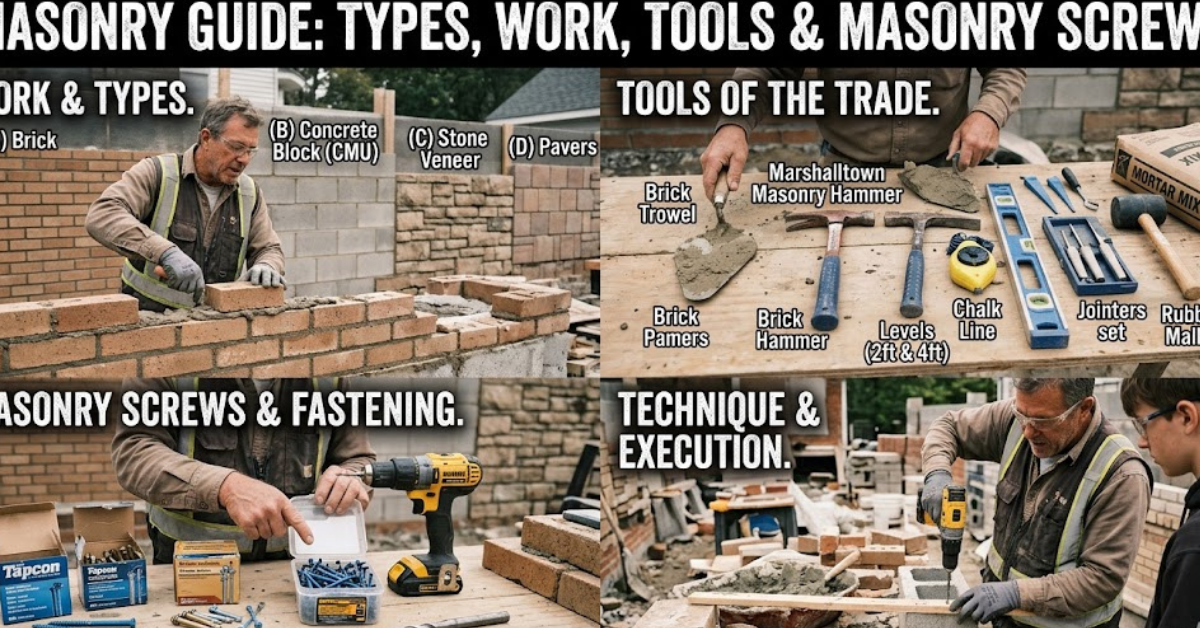
sFrom ancient pyramids and castles to modern homes and skyscrapers, masonry has shaped the world’s most durable structures. This centuries-old construction method combines skilled craftsmanship with materials like brick, stone, and concrete to create buildings that can last for generations.
In this comprehensive guide, we’ll explore what masonry is, its different types, benefits, construction techniques, common materials, and why masonry continues to be one of the most trusted methods in the construction industry.
What Is Masonrys?
Masonrys is the art and process of constructing structures using individual units such as bricks, stones, or concrete blocks. These units are usually bonded together with mortar to form strong, stable walls, foundations, chimneys, and other architectural elements.
The practice of masonrys dates back thousands of years and remains popular because of its exceptional strength, durability, and aesthetic appeal.
Common masonrys structures include:
- Residential homes
- Commercial buildings
- Retaining walls
- Fireplaces and chimneys
- Garden walls
- Bridges and monuments
Types of Masonrys Construction
Different types of masonrys are chosen based on the project’s design, budget, and structural requirements.
Brick Masonrys
Brick masonrys involves arranging clay or concrete bricks in a specific pattern and securing them with mortar.
Advantages of Brick Masonrys
- Excellent durability
- Fire-resistant properties
- Attractive appearance
- Good thermal insulation
- Low maintenance requirements
Brick masonrys is commonly used in homes, schools, and commercial buildings because it provides both strength and visual appeal.
Stone Masonrys
Stone masonry is one of the oldest and strongest forms of construction. It uses natural stones such as granite, limestone, or marble.
There are two major categories:
Rubble Stone Masonrys
This method uses irregularly shaped stones and is often used for traditional structures, boundary walls, and rural construction.
Ashlar Stone Masonrys
Ashlar masonrys uses finely cut and shaped stones arranged in uniform layers. It offers a more polished and elegant appearance.
Concrete Block Masonrys
Concrete block masonrys uses larger manufactured blocks that allow faster construction compared to traditional bricks.
Its benefits include:
- High structural strength
- Faster installation
- Better resistance to weather
- Cost-effectiveness for large projects
It is widely used for foundations, exterior walls, and industrial buildings.
Masonrys Materials Used in Construction
The quality of a masonrys project depends heavily on the materials used. The most common masonry materials include:
- Bricks
- Natural stones
- Concrete blocks
- Mortar
- Cement
- Sand
- Reinforcement steel (for reinforced masonrys)
Choosing the right materials ensures long-term performance and safety.
Masonrys Construction Techniques
Professional masons use various techniques to create durable and visually appealing structures.
Mortar Bonding
Mortar acts as the glue that holds masonry units together. Proper mortar mixing and application are essential for strength and weather resistance.
Masonrys Patterns and Bonds
Different bonding patterns affect both appearance and structural performance, including:
- Running bond
- Stack bond
- English bond
- Flemish bond
Reinforced Masonry
This technique incorporates steel reinforcement within masonry walls to improve resistance against heavy loads and natural forces like earthquakes and strong winds.
Benefits of Masonry Construction
Masonrys remains a preferred construction method because of several advantages.
Exceptional Durability
Masonrys buildings can survive for decades or even centuries when properly designed and maintained.
Fire Resistance
Materials like brick, stone, and concrete have excellent fire-resistant properties, making masonry a safer choice.
Energy Efficiency
Masonrys walls provide thermal mass, helping regulate indoor temperatures and reducing heating and cooling costs.
Low Maintenance
Unlike some construction materials that require frequent repairs, masonry requires minimal upkeep.
Aesthetic Value
The natural textures and colors of stone and brick provide a timeless and attractive appearance.
Common Applications of Masonry
Masonrys is used in many areas of modern construction, including:
- Building exterior and interior walls
- Constructing foundations
- Creating decorative facades
- Building fireplaces and chimneys
- Designing landscape features
- Constructing retaining walls
Its versatility makes it suitable for both functional and decorative purposes.
Masonry vs. Other Construction Methods
Compared with wood or steel framing, masonry offers superior durability, sound insulation, and fire resistance.
However, masonrys can require more labor and time to complete. The best construction method depends on factors such as budget, climate, design goals, and local building requirements.
How to Maintain Masonry Structures
Proper maintenance helps preserve masonry for many years.
Important maintenance tips include:
- Inspect walls for cracks regularly.
- Repair damaged mortar joints through repointing.
- Clean surfaces using suitable methods.
- Prevent excessive moisture buildup.
- Seal masonrys when recommended for the material type.
Routine care can significantly extend the lifespan of a masonrys structure.
The Future of Masonry in Modern Construction
Although construction technology continues to evolve, masonrys remains highly relevant. Modern innovations such as reinforced masonry, engineered blocks, and improved mortars have made it stronger and more efficient than ever.
Architects and builders continue to choose masonry because it combines traditional beauty with modern engineering performance.
Frequently Asked Questions (FAQs)
What is masonrys in construction?
Masonrys is a construction method that uses materials like brick, stone, and concrete blocks bonded with mortar to create strong and durable structures.
What are the main types of masonry?
The main types of masonrys are brick masonry, stone masonry, and concrete block masonry. Each has unique benefits depending on the project.
Is masonry stronger than wood construction?
Masonrys generally offers greater durability, fire resistance, and weather protection compared with traditional wood construction.
How long does masonrys last?
A well-built masonrys structure can last 50 to 100 years or more with proper maintenance.
Is masonrys expensive?
The cost of masonrys varies based on materials, labor, and project size. While initial costs can be higher, its long lifespan and low maintenance often provide excellent long-term value.
Conclusion
Masonry remains one of the most reliable and respected construction methods in the world. Whether using brick, stone, or concrete blocks, masonry offers unmatched durability, fire resistance, energy efficiency, and timeless beauty.
If you’re planning a construction project, understanding different masonry materials and techniques can help you make smarter decisions. Explore more construction guides and consult experienced masonry professionals to choose the best solution for your building needs.