





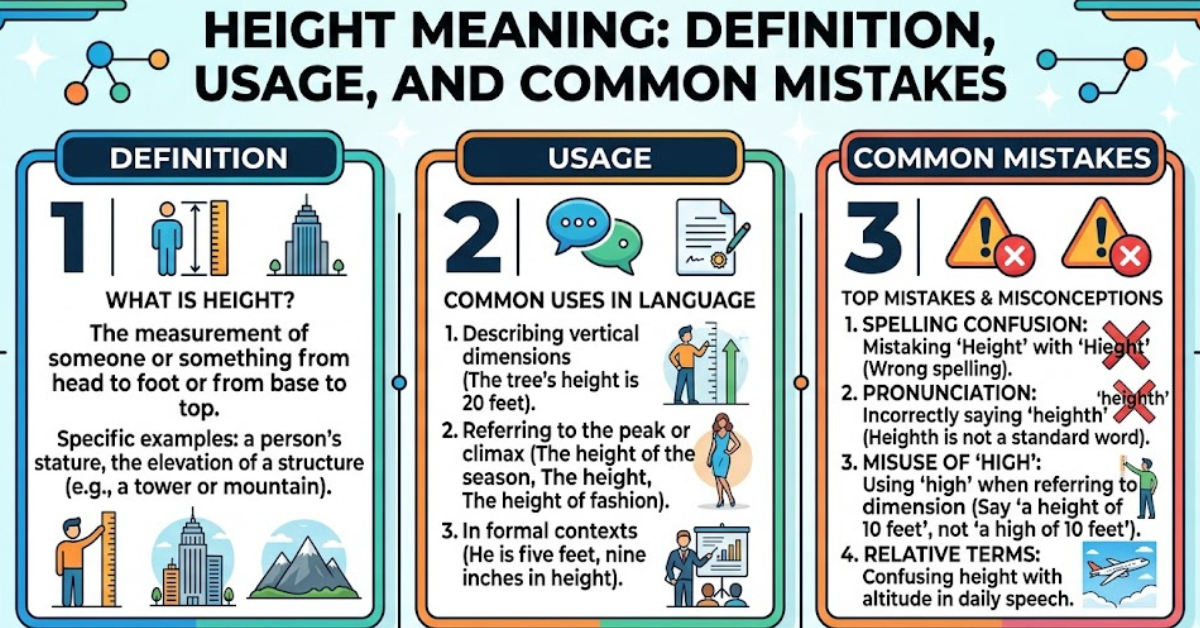
Have you ever searched for hight meaning and wondered whether it is the same as “height”? You are not alone. Many people confuse these two words because they sound similar. However, “hight” and “height” have different meanings and uses in English.
In this article, we’ll explore the hight meaning, its origin, how it is used in sentences, and why people often mistake it for the more common word “height.”
What Is the Meaning of Hight?
The word hight is an old English term that means “called,” “named,” or “to be named.” It comes from historical and literary English and is rarely used in modern everyday conversations.
For example:
- “A brave knight hight Sir Arthur rode through the forest.”
- “The lady was hight Eleanor.”
In these examples, hight means “was named” or “was called.”
Hight Meaning in Modern English
In modern English, the word hight is considered archaic. This means it belongs to an older form of the language and mainly appears in:
- Classic literature
- Historical texts
- Poetry
- Medieval stories
Most English speakers today use phrases like “named” or “called” instead of hight.
Example Comparison
Old English Style:
- “The king’s son was hight William.”
Modern English Style:
- “The king’s son was named William.”
The meaning remains the same, but the modern version is much more commonly used.
Hight vs Height: Understanding the Difference
One of the biggest reasons people search for hight meaning is because they accidentally type “hight” when they actually mean “height.”
Height Meaning
Height refers to the measurement of how tall a person, object, or place is.
Examples:
- “The height of the building is 200 feet.”
- “She measured her height before buying new clothes.”
Hight Meaning
Hight means:
- Called
- Named
- Known as
Quick Difference Table
| Word | Meaning | Common Usage |
| Hight | Named or called | Old literature and poetry |
| Height | The measurement from bottom to top | Everyday English |
Origin and History of the Word Hight
The word hight has roots in Old English. It comes from the verb “hātan,” which meant “to call” or “to name.” Over centuries, the English language evolved, and words like “called” and “named” replaced hight in normal speech.
You may still find hight in famous poems, ancient writings, and translations of medieval texts.
How to Use Hight in a Sentence
Although uncommon today, hight can still be used for a historical or poetic effect.
Examples include:
- “The warrior hight Roland fought with great courage.”
- “A maiden hight Isabella lived in the ancient castle.”
- “The hero was hight by many different names.”
However, in modern writing, it is generally better to use “named” or “called” for clarity.
Common Mistakes Related to Hight Meaning
People often make these mistakes:
- Using “hight” when they mean “height.”
- Assuming hight is a spelling error rather than an actual old word.
- Using hight in formal modern writing where “named” would be clearer.
Remember this simple rule:
- If you are talking about how tall something is, use height.
- If you are reading old literature, hight may mean named or called.
FAQs About Hight Meaning
Is hight a real English word?
Yes, hight is a genuine English word. It is an archaic term meaning “named” or “called.”
Is hight the same as height?
No. Height relates to measurement and tallness, while hight is an old word meaning “named.”
Why do people search for hight meaning?
Many people confuse hight with the word “height” due to their similar pronunciation and spelling.
Is hight still used today?
Hight is rarely used in modern English. It mainly appears in historical works, poetry, and classic literature.
What is the modern alternative to hight?
The most common modern alternatives are named, called, or known as.
Conclusion
Understanding the hight meaning helps clear up a common English language confusion. While hight is a real word that means “named” or “called,” it is mostly found in old literature and historical writings. In everyday English, people usually mean height, which refers to how tall something is.
If you are learning English or improving your vocabulary, understanding these small differences can make your writing more accurate and professional. Explore more language guides to discover the fascinating history behind English words and their meanings.