









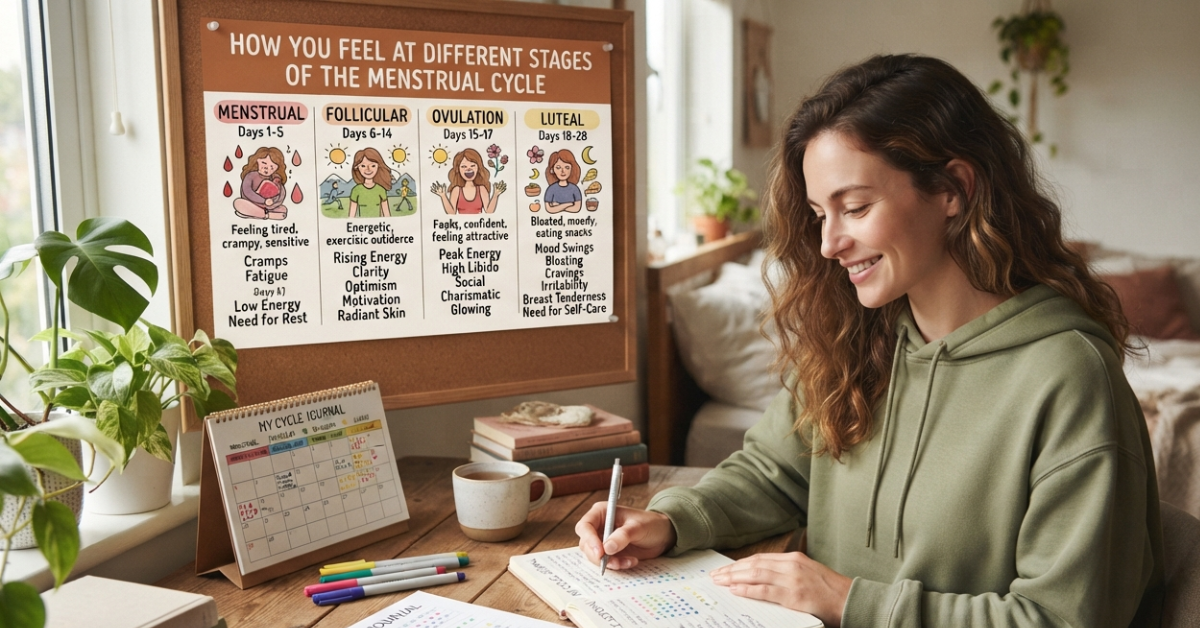
Have you ever wondered why you feel energetic one week, emotional the next, and completely exhausted just before your period? These changes aren’t random—they’re closely linked to the natural hormonal shifts that occur throughout your menstrual cycle.
Understanding how you feel at different stages of menstrual cycle can help you make sense of your mood, energy levels, sleep, appetite, and overall well-being. In this guide, we’ll explore the four phases of the menstrual cycle, explain what happens inside your body, and share practical tips for managing each stage with greater confidence.
Understanding the Stages of Menstrual Cycle
A typical menstrual cycle lasts about 28 days, although anywhere from 21 to 35 days is considered normal for many adults. The cycle is controlled by hormones produced by the brain and ovaries, including:
- Estrogen
- Progesterone
- Follicle-stimulating hormone (FSH)
- Luteinizing hormone (LH)
These hormones influence much more than reproduction. They also affect mood, concentration, energy, skin, sleep, digestion, and even exercise performance.
The 4 stages of menstrual cycle are:
- Menstrual phase
- Follicular phase
- Ovulation phase
- Luteal phase
Each stage has its own physical and emotional characteristics.
The 4 Stages of Menstrual Cycle Explained
1. Menstrual Phase (Days 1–5)
The menstrual phase begins on the first day of bleeding. During this time, the uterus sheds its lining because pregnancy has not occurred.
How You May Feel
Many people experience:
- Lower energy
- Mild fatigue
- Menstrual cramps
- Headaches
- Back pain
- Bloating
- Increased need for rest
Emotionally, you may feel:
- Reflective
- Sensitive
- Calm
- Easily overwhelmed
Not everyone experiences intense symptoms, and the severity can vary from cycle to cycle.
Helpful Tips
- Stay hydrated.
- Eat iron-rich foods if bleeding is heavy.
- Choose gentle exercise like walking or stretching if it feels comfortable.
- Prioritize sleep and recovery.
2. Follicular Phase (Days 1–13)
The follicular phase overlaps with menstruation but continues after bleeding ends. During this stage, estrogen gradually rises as the ovaries prepare an egg for release.
How You May Feel
As hormone levels increase, many people notice:
- More energy
- Improved mood
- Better concentration
- Increased motivation
- Greater creativity
This phase often feels like a “fresh start” because both physical and mental energy begin to improve.
Why It Happens
Higher estrogen levels can support:
- Brain function
- Memory
- Motivation
- Positive mood
Many people also find that workouts feel easier during this stage.
Helpful Tips
- Plan demanding projects.
- Try new fitness routines.
- Schedule social activities if you feel energized.
- Maintain balanced meals to support rising activity levels.
3. Ovulation Phase (Around Day 14)
Ovulation occurs when an ovary releases a mature egg. Estrogen reaches one of its highest levels, followed by a surge in luteinizing hormone.
How You May Feel
Many people report:
- High confidence
- Increased energy
- Improved communication
- Higher libido
- Better mood
Some also notice:
- Mild pelvic discomfort
- Increased cervical mucus
- Slight rise in body temperature after ovulation
For many, this is the most energetic period of the cycle.
Helpful Tips
- Schedule presentations or meetings if possible.
- Engage in higher-intensity exercise if your body feels ready.
- Stay hydrated, especially during vigorous activity.
4. Luteal Phase (Days 15–28)
After ovulation, progesterone becomes the dominant hormone. If pregnancy does not occur, hormone levels eventually decline, triggering the next menstrual period.
How You May Feel
This phase often brings the greatest emotional and physical changes.
Common experiences include:
- Lower energy
- Food cravings
- Mood swings
- Breast tenderness
- Bloating
- Difficulty concentrating
- Irritability
- Fatigue
These symptoms are commonly associated with premenstrual syndrome (PMS).
Toward the end of the luteal phase, declining estrogen and progesterone can contribute to emotional sensitivity in some people.
Helpful Tips
- Focus on regular sleep.
- Limit excessive caffeine if it worsens anxiety.
- Choose balanced meals with protein, fiber, and healthy fats.
- Practice stress-management techniques such as mindfulness or light exercise.
Stages of Menstrual Cycle and Mood
Hormones can influence neurotransmitters in the brain, including serotonin, which plays a role in regulating mood.
Here’s a general overview of how mood may change across the cycle:
| Phase | Typical Mood |
| Menstrual | Quiet, reflective, emotionally sensitive |
| Follicular | Optimistic, motivated, focused |
| Ovulation | Confident, social, energetic |
| Luteal | More emotional, tired, irritable, or anxious |
It’s important to remember that every person’s experience is unique. Some notice dramatic mood changes, while others experience very few emotional shifts.
If mood symptoms become severe or interfere with daily life, speaking with a healthcare professional is recommended.
Why Hormones Affect Emotions
Hormones interact with several systems throughout the body, including the brain.
Changes in estrogen and progesterone can influence:
- Serotonin activity
- Sleep quality
- Stress response
- Appetite
- Pain sensitivity
- Energy production
These biological changes help explain why emotions may fluctuate during different phases of the cycle.
Lifestyle Habits That Support Every Phase
Understanding your cycle can help you work with your body’s natural rhythms.
Nutrition
Aim for:
- Fruits and vegetables
- Whole grains
- Lean protein
- Healthy fats
- Iron-rich foods during menstruation
Exercise
Adjust activity based on how you feel:
- Walking during menstruation
- Strength training during the follicular phase
- High-intensity workouts around ovulation if comfortable
- Moderate exercise during the luteal phase
Sleep
Consistent sleep supports hormone regulation and mood throughout the month.
Stress Management
Helpful techniques include:
- Meditation
- Deep breathing
- Journaling
- Yoga
- Spending time outdoors
When Symptoms May Need Medical Attention
While some discomfort is normal, you should consider seeking medical advice if you experience:
- Extremely heavy bleeding
- Severe pelvic pain
- Periods lasting longer than a week
- Cycles that are consistently very irregular
- Mood changes that significantly affect work, school, or relationships
Conditions such as endometriosis, polycystic ovary syndrome (PCOS), or premenstrual dysphoric disorder (PMDD) may require medical evaluation and treatment.
Key Takeaways
- The menstrual cycle consists of four distinct phases.
- Hormonal changes influence energy, mood, sleep, appetite, and physical symptoms.
- Many people feel more energetic during the follicular and ovulation phases.
- The luteal phase is often associated with PMS symptoms and mood changes.
- Tracking your cycle can help you better understand your body’s natural patterns and plan accordingly.
Frequently Asked Questions
What are the 4 stages of menstrual cycle?
The four stages are the menstrual phase, follicular phase, ovulation phase, and luteal phase. Each stage is characterized by unique hormonal changes that affect both the body and emotions.
How do you feel at different stages of menstrual cycle?
Many people feel lower energy during menstruation, more motivated during the follicular phase, highly energetic around ovulation, and more tired or emotionally sensitive during the luteal phase. Individual experiences vary.
Why does my mood change throughout my cycle?
Hormonal fluctuations can influence brain chemicals involved in mood regulation, such as serotonin. Sleep, stress, nutrition, and overall health also play important roles.
Which stage has the highest energy?
For many individuals, the follicular and ovulation phases bring the highest energy, improved focus, and greater motivation because estrogen levels are higher.
Is it normal to feel emotional before a period?
Yes. Many people experience emotional changes in the days leading up to menstruation due to hormonal shifts. However, if symptoms become severe or disruptive, it’s important to consult a healthcare provider.
Can tracking my menstrual cycle improve my health?
Tracking can help you recognize patterns in mood, energy, symptoms, and cycle length. This information may support healthier routines and provide valuable insights if you ever need medical advice.
Conclusion
Learning how you feel at different stages of menstrual cycle can transform the way you understand your body. Rather than viewing monthly changes as unpredictable, recognizing the influence of hormones allows you to anticipate shifts in energy, mood, and physical well-being.
Every cycle is unique, and there is no “perfect” experience. By paying attention to your body’s signals, maintaining healthy habits, and seeking medical advice when symptoms become unusually severe, you can navigate each phase with greater awareness and confidence. Small adjustments based on your cycle can make everyday life feel more balanced and manageable.