








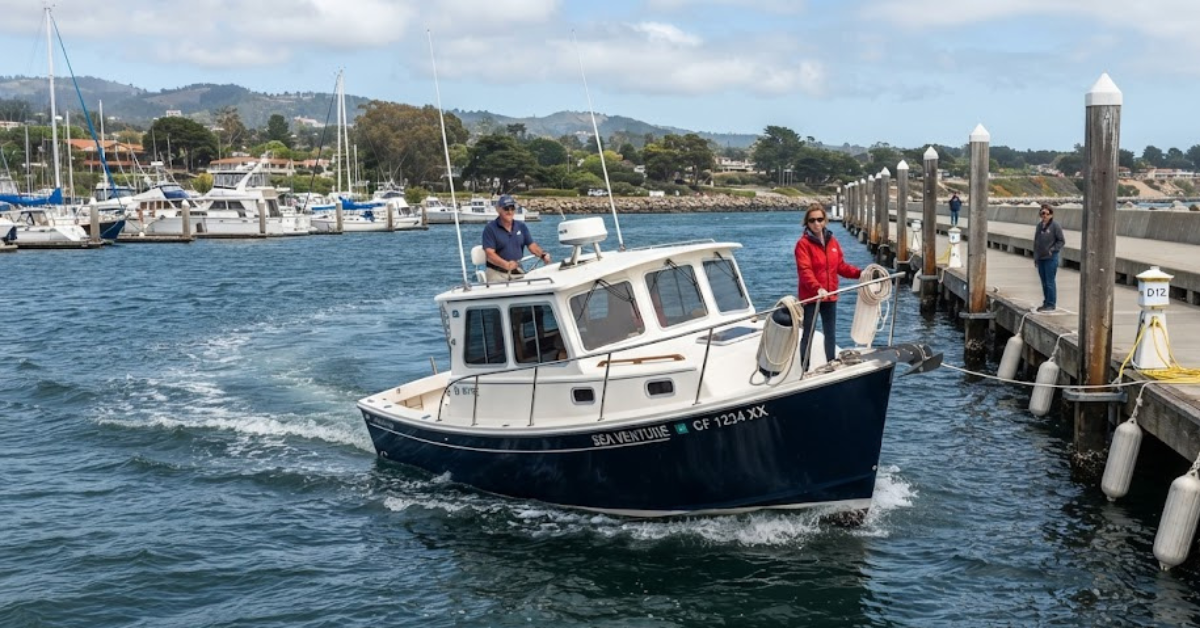
Docking a boat is one of the most challenging skills for both new and experienced boaters, especially when the weather or water conditions aren’t cooperating. If you’ve ever wondered, how should you approach a dock when the wind or current is pushing you away from the dock?, you’re asking one of the most common questions covered in boating safety courses.
The short answer is this: approach the dock at a shallow angle, maintain slow but steady speed, and use controlled bursts of power to maintain steering while compensating for the wind or current. The goal is to stay in control without approaching too fast. In this guide, you’ll learn why this technique works, common mistakes to avoid, and practical docking tips that make handling your boat much easier.
Why Wind and Current Make Docking Difficult
Wind and water currents continuously push against your boat. When they are moving away from the dock, they naturally pull or drift your vessel farther from where you want to go.
Unlike driving a car, a boat doesn’t stop immediately when you reduce throttle. Wind, current, momentum, and steering all work together, making docking a skill that requires patience and planning.
How Should You Approach a Dock When the Wind or Current Is Pushing You Away from the Dock?
The recommended method is to:
- Approach at a small angle, typically around 20 to 30 degrees.
- Maintain slow, controlled speed—just enough to keep the boat responsive to the helm.
- Aim slightly toward the dock while accounting for the wind or current pushing you away.
- Use short bursts of throttle rather than constant acceleration to maintain steering control.
- Shift into neutral as needed to reduce forward momentum once you’re close enough to secure the boat.
This technique allows you to counter the force moving your boat away from the dock while keeping the approach controlled and predictable.
Step-by-Step Docking Technique
Following a consistent process makes docking easier in challenging conditions.
1. Assess Wind and Current
Before beginning your approach, observe:
- Wind direction
- Current direction
- Dock layout
- Nearby boats
- Available maneuvering space
Understanding these factors helps you plan your approach before making any movements.
2. Prepare Your Boat
Before reaching the dock:
- Position fenders on the docking side.
- Prepare dock lines.
- Assign responsibilities to passengers if they’re helping.
- Keep everyone seated until the boat is safely alongside the dock.
Preparation reduces last-minute stress.
3. Use Slow, Controlled Speed
Many docking accidents happen because boaters approach too quickly.
A good rule is:
- Move only as fast as necessary to maintain steering control.
- Remember that boats steer best when there is water flowing past the rudder or lower unit.
Slow doesn’t mean powerless—it means controlled.
4. Compensate for Wind Drift
Because the wind or current is pushing your boat away from the dock, you’ll usually need to aim slightly toward the dock to offset that drift.
Avoid overcorrecting. Small steering adjustments are usually more effective than large, abrupt turns.
5. Secure the Boat
Once alongside:
- Shift into neutral.
- Secure the bow line.
- Secure the stern line.
- Adjust spring lines if necessary.
Properly securing the boat prevents it from drifting after docking.
Common Docking Mistakes
Even experienced boaters occasionally struggle with docking.
Avoid these common errors:
- Approaching too fast.
- Turning sharply at the last second.
- Ignoring wind direction.
- Failing to prepare dock lines beforehand.
- Asking passengers to jump onto the dock.
- Panicking if the first attempt doesn’t go as planned.
If the approach isn’t working, it’s often safer to back away and try again.
Tips for Docking in Strong Wind
When conditions become more challenging:
- Stay calm.
- Make gradual steering corrections.
- Use short throttle adjustments.
- Leave extra room for maneuvering.
- Practice in lighter conditions before attempting stronger winds.
Confidence comes with repetition and experience.
Why Practice Matters
Docking is a practical skill that improves over time.
Practicing in different conditions helps you become comfortable with:
- Boat handling
- Steering response
- Throttle control
- Wind compensation
- Current compensation
The more experience you gain, the easier it becomes to judge distance and timing accurately.
Essential Docking Safety Tips
Safety should always come first.
Remember to:
- Wear a life jacket when appropriate.
- Keep hands and feet inside the boat when approaching the dock.
- Never try to stop the boat with your body.
- Communicate clearly with passengers.
- Stay aware of nearby boats and obstacles.
Safe habits reduce the risk of injury and property damage.
Frequently Asked Questions
How should you approach a dock when the wind or current is pushing you away from the dock?
Approach at a shallow angle with slow, controlled speed. Aim slightly toward the dock to compensate for the wind or current, and use gentle throttle adjustments to maintain steering control.
Should I speed up if the wind is pushing me away?
No. Excessive speed makes docking more difficult and increases the risk of collision. Use only enough power to maintain steering and control.
What angle should I use when approaching a dock?
A shallow approach—generally around 20 to 30 degrees—is recommended in many docking situations, though the exact angle depends on the boat, dock layout, and conditions.
What should I do if my first docking attempt fails?
Remain calm, back away safely, reposition your boat, and make another controlled approach. There’s no benefit to forcing a poor approach.
Is docking more difficult in current than in wind?
Both create challenges, and their combined effect can be significant. Understanding how each influences your boat is an important part of safe boating.
How can beginners improve their docking skills?
Practice regularly in calm conditions before attempting stronger wind or current. Learning how your boat responds to throttle and steering builds confidence over time.
Conclusion
Knowing how should you approach a dock when the wind or current is pushing you away from the dock? is an essential boating skill that improves both safety and confidence on the water. The key is to approach at a shallow angle, maintain slow but steady control, compensate for the wind or current with small steering adjustments, and avoid rushing the maneuver.
Remember that even experienced captains occasionally make multiple docking attempts when conditions are difficult. Careful preparation, patience, and regular practice will help you become more comfortable handling your boat in changing conditions. Continue building your boating knowledge through safety courses, on-the-water practice, and manufacturer guidance to develop docking skills you can rely on in any situation.