








Every manufacturer faces the same fundamental challenge: producing high-quality products while keeping costs under control. As raw materials become more expensive and harder to obtain, businesses are increasingly looking for ways to operate more efficiently. That’s why many people ask, how would a manufacturer benefit by using fewer scarce resources?
The answer is straightforward: using fewer scarce resources can lower production costs, improve profitability, reduce environmental impact, strengthen supply chains, and make a business more competitive. In today’s economy, resource efficiency is no longer just an environmental goal—it’s a smart business strategy. This guide explores the many advantages of conserving limited resources and explains why manufacturers around the world are investing in more sustainable production methods.
What Are Scarce Resources?
Scarce resources are materials or inputs that exist in limited quantities or are costly to obtain. Since these resources cannot meet unlimited demand, businesses must use them wisely.
Examples of scarce resources include:
- Metals such as copper, lithium, and rare earth elements
- Fresh water
- Fossil fuels
- Timber
- Agricultural raw materials
- Skilled labor
- Energy
Because these resources are limited, efficient management is essential for long-term business success.
How Would a Manufacturer Benefit by Using Fewer Scarce Resources?
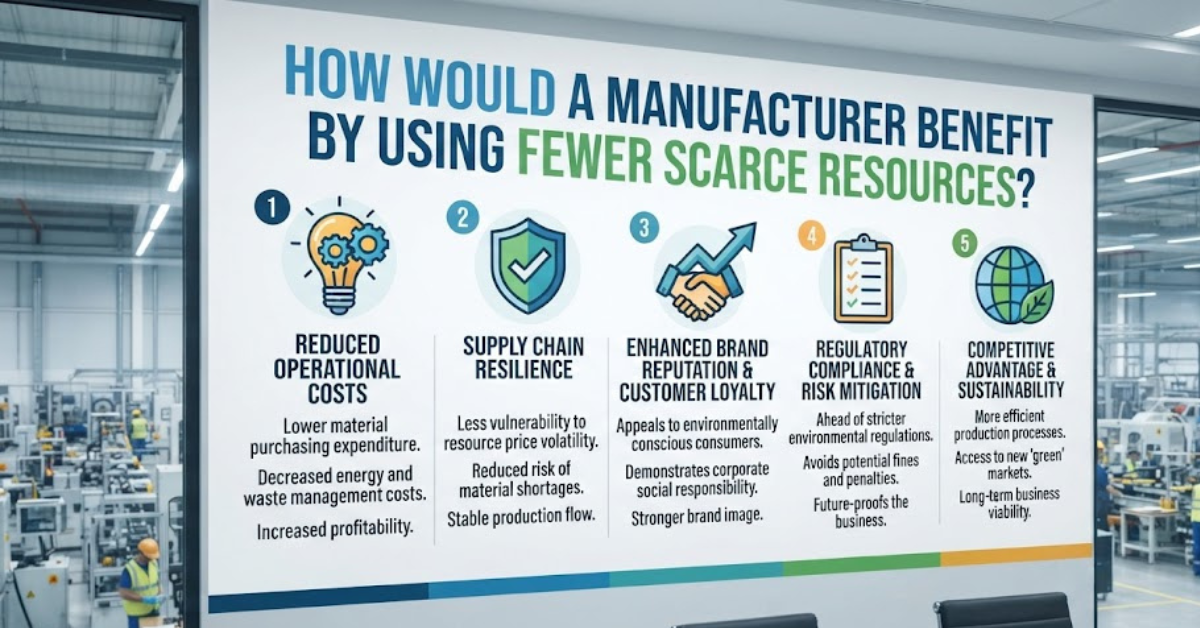
Manufacturers that reduce their dependence on scarce resources often gain several important advantages.
Key benefits include:
- Lower production costs
- Increased profitability
- Greater operational efficiency
- Reduced waste
- Improved sustainability
- Better supply chain resilience
- Enhanced brand reputation
- Stronger long-term competitiveness
Rather than simply cutting costs, resource efficiency helps businesses build more resilient operations.
Lower Production Costs
One of the biggest benefits of using fewer scarce resources is reducing manufacturing expenses.
When companies consume fewer raw materials, they often spend less on:
- Purchasing materials
- Transportation
- Storage
- Waste disposal
- Energy
Lower operating costs can improve profit margins while allowing businesses to remain competitive.
Improved Profitability
Reducing material consumption doesn’t necessarily reduce product quality.
Instead, manufacturers can often produce the same output while using resources more efficiently.
Higher efficiency means:
- Lower cost per unit
- Better return on investment
- Increased profits
- Greater financial stability
Efficient production benefits both businesses and customers.
Stronger Supply Chain Stability
Scarce resources are often vulnerable to:
- Price fluctuations
- Political instability
- Natural disasters
- Transportation disruptions
- Global shortages
By relying less on limited materials, manufacturers reduce their exposure to supply chain risks and improve production continuity.
Reduced Environmental Impact
Using fewer scarce resources also benefits the environment.
Lower resource consumption typically results in:
- Reduced mining
- Lower greenhouse gas emissions
- Less water usage
- Decreased waste generation
- Smaller environmental footprint
Many companies now view sustainability as both an ethical responsibility and a competitive advantage.
Greater Operational Efficiency
Efficient manufacturers continuously look for ways to improve production processes.
Resource-saving strategies include:
- Optimizing production lines
- Recycling manufacturing waste
- Redesigning products
- Using lightweight materials
- Improving inventory management
Small efficiency gains can produce significant long-term savings.
Encouraging Innovation
Resource limitations often inspire new ideas.
Manufacturers may develop:
- Alternative materials
- Improved product designs
- Advanced manufacturing technologies
- Energy-efficient equipment
- Automated production systems
Innovation helps companies remain competitive while reducing resource consumption.
Meeting Consumer Expectations
Today’s consumers increasingly value sustainable products.
Businesses that use fewer scarce resources often appeal to customers who care about:
- Environmental responsibility
- Ethical manufacturing
- Resource conservation
- Corporate sustainability
A positive environmental reputation can strengthen customer loyalty and brand recognition.
Compliance With Environmental Regulations
Governments around the world continue introducing regulations designed to encourage efficient resource use.
Manufacturers that reduce material consumption may find it easier to:
- Meet environmental standards
- Reduce compliance costs
- Avoid penalties
- Qualify for sustainability certifications
Preparing early can simplify future regulatory requirements.
Practical Ways Manufacturers Reduce Resource Use
Companies can conserve scarce resources through a variety of strategies.
Common approaches include:
Recycling Materials
Reusing production waste reduces demand for new raw materials.
Improving Product Design
Designing products with fewer materials can lower costs while maintaining quality.
Investing in Modern Equipment
Newer machinery often uses less energy and generates less waste.
Monitoring Resource Usage
Tracking material consumption helps identify opportunities for improvement.
Training Employees
Educating workers about efficient manufacturing practices encourages continuous improvement throughout the organization.
Real-World Examples of Resource Efficiency
Many industries have successfully reduced their reliance on scarce resources.
Examples include:
- Automotive manufacturers using lightweight materials to improve fuel efficiency.
- Electronics companies recycling valuable metals from old devices.
- Food manufacturers reducing water consumption during production.
- Packaging companies using recyclable and biodegradable materials.
These improvements often deliver both environmental and financial benefits.
Frequently Asked Questions
How would a manufacturer benefit by using fewer scarce resources?
Manufacturers benefit through lower production costs, improved efficiency, higher profitability, reduced environmental impact, stronger supply chains, and greater long-term sustainability.
What are scarce resources in manufacturing?
Scarce resources are limited materials or inputs such as metals, energy, water, timber, fossil fuels, and skilled labor that cannot satisfy unlimited demand.
Why is resource efficiency important?
Efficient use of resources reduces costs, minimizes waste, improves competitiveness, and supports sustainable business practices.
How can manufacturers reduce resource consumption?
They can recycle materials, improve production processes, redesign products, adopt energy-efficient technologies, and optimize inventory management.
Does using fewer resources affect product quality?
Not necessarily. Many manufacturers improve efficiency through better design and technology while maintaining or even enhancing product quality.
Why do consumers value sustainable manufacturing?
Many customers prefer companies that reduce waste, conserve natural resources, and demonstrate environmental responsibility, which can strengthen brand trust and loyalty.
Conclusion
Understanding how would a manufacturer benefit by using fewer scarce resources? highlights an important principle of modern manufacturing: efficiency creates value. By reducing dependence on limited raw materials, manufacturers can lower production costs, improve profitability, strengthen supply chains, and reduce their environmental impact without sacrificing product quality.
As industries continue to face rising material costs and increasing sustainability expectations, resource conservation will remain a key driver of innovation and long-term success. Businesses that invest in efficient manufacturing practices today are better positioned to adapt to future challenges, meet customer expectations, and remain competitive in a rapidly evolving global marketplace. Whether through recycling, smarter product design, or advanced production technologies, using fewer scarce resources is a practical strategy that benefits manufacturers, consumers, and the environment alike.