







Every responsible hunter knows that the moments after taking a shot are just as important as the shot itself. If you’re asking how should a downed deer or other large animal be approached?, you’re focusing on one of the most important aspects of hunting safety and ethics.
The safest approach is to carefully observe the animal from a distance, approach cautiously from behind the animal’s head whenever possible, keep a safe distance until you’re certain it is no longer capable of movement, and always be prepared for the possibility that the animal is still alive. This method helps protect both the hunter and anyone nearby while ensuring the animal is handled ethically. In this guide, you’ll learn the recommended approach, common mistakes to avoid, and best practices for safe and responsible hunting.
Why Proper Approach Matters
A large animal that appears motionless may still be alive and capable of sudden movement.
Approaching incorrectly can result in:
- Serious injury from kicking or thrashing
- An unsafe firearm situation
- Unnecessary stress for the animal
- Poor decision-making under pressure
Taking your time is one of the most important safety habits any hunter can develop.
How Should a Downed Deer or Other Large Animal Be Approached?
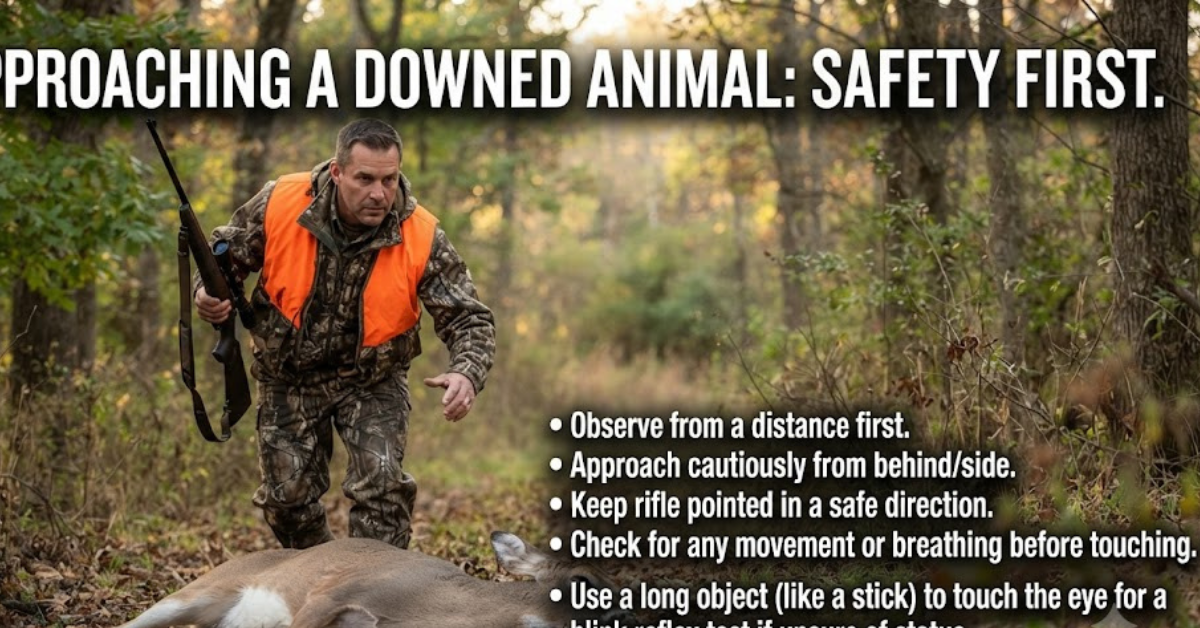
Hunter education courses consistently recommend the following steps:
- Observe the animal from a safe distance before moving closer.
- Watch carefully for signs of breathing, blinking, ear movement, or other indications of life.
- Approach cautiously from behind the animal’s head whenever terrain and safety allow.
- Keep your firearm pointed in a safe direction and follow all firearm safety rules.
- Be prepared to move away quickly if the animal suddenly regains its feet.
The goal is to confirm the animal’s condition without placing yourself in unnecessary danger.
Wait Before Approaching
Unless you clearly see the animal expire, avoid rushing toward it immediately.
Waiting gives the animal time to expire if it has been mortally wounded and reduces the likelihood of pushing it farther away.
Many experienced hunters recommend remaining patient before beginning your approach, particularly if visibility is limited.
Observe From a Distance
Before walking toward the animal, take a few moments to study it carefully.
Look for:
- Chest movement
- Ear twitching
- Eye blinking
- Head movement
- Leg movement
If any movement is visible, remain cautious and avoid assuming the animal is dead.
Approach From Behind the Head
When it is safe to do so, approaching from behind the animal’s head offers several advantages.
This position generally helps you:
- Stay outside the direct path of the animal’s legs.
- Observe its condition more clearly.
- React quickly if unexpected movement occurs.
Never place yourself directly in front of the animal’s head if there is any uncertainty about its condition.
Keep Safety Your Highest Priority
Firearm safety remains essential throughout the recovery process.
Always remember to:
- Keep the muzzle pointed in a safe direction.
- Keep your finger off the trigger until necessary.
- Be aware of your surroundings.
- Identify what lies beyond the animal before taking any additional action.
Safe firearm handling never stops after the shot.
Confirm the Animal Has Expired
Before handling the animal, carefully check for signs that it has expired.
Indicators may include:
- No visible breathing.
- No blinking when the eye is touched with a long object (avoid unnecessary contact with your hands until you’re certain the animal is no longer alive).
- Complete absence of movement over an extended observation period.
If there is any doubt, proceed with extreme caution and follow your local hunter education guidance.
Common Mistakes to Avoid
Even experienced hunters can make errors during recovery.
Avoid these common mistakes:
- Running directly toward the animal.
- Assuming it is dead because it is motionless.
- Ignoring surrounding hazards.
- Failing to observe for movement.
- Becoming distracted by excitement.
Remaining calm leads to better decisions.
Ethical Hunting Practices
Responsible hunters place great importance on ethical wildlife management.
Good practices include:
- Taking only ethical shots.
- Tracking wounded animals carefully.
- Recovering harvested game whenever possible.
- Respecting wildlife and the environment.
- Following all local hunting laws and regulations.
Ethical behavior supports conservation and promotes responsible hunting traditions.
After the Animal Is Confirmed Down
Once you’re certain the animal has expired:
- Ensure your firearm is in a safe condition.
- Attach any required harvest tags according to local regulations.
- Begin field dressing promptly if appropriate.
- Transport the animal safely.
- Follow local wildlife reporting requirements where applicable.
Proper handling helps preserve meat quality and complies with hunting regulations.
Frequently Asked Questions
How should a downed deer or other large animal be approached?
Approach cautiously from behind the animal’s head whenever possible after first observing it from a safe distance for any signs of life. Always remain prepared for unexpected movement.
Why should you wait before approaching?
A wounded animal may still be alive. Waiting reduces the chance of startling it and allows time to assess the situation more safely.
What signs indicate the animal may still be alive?
Watch for breathing, blinking, ear movement, head movement, or leg movement before approaching closely.
Is it safe to assume a motionless animal is dead?
No. A motionless animal may still be alive. Always observe carefully before approaching.
Why is firearm safety still important after the shot?
Firearms should always be handled safely, regardless of whether hunting is complete. Keep the muzzle pointed in a safe direction and follow standard firearm safety rules throughout the recovery process.
What should I do after confirming the animal has expired?
Follow local hunting regulations, secure your firearm safely, attach any required tags, and prepare the animal for transport or field dressing as appropriate.
Conclusion
Knowing how should a downed deer or other large animal be approached? is a critical part of safe, ethical hunting. The recommended approach is simple but important: observe from a distance, look for signs of life, approach cautiously from behind the animal’s head whenever possible, and remain alert until you’re certain the animal has expired.
Patience, careful observation, and consistent firearm safety help protect both hunters and wildlife while promoting responsible hunting practices. By following these principles and adhering to local regulations and hunter education guidance, you can recover game safely, ethically, and with confidence every time you head into the field.