








Ever watched a video, read a post, or heard someone say “stay tuned” and wondered what it really means? The phrase Stay Tuned Meaning is more than just a casual sign-off—it’s a widely used expression in media, conversations, and digital communication that signals something is coming next.
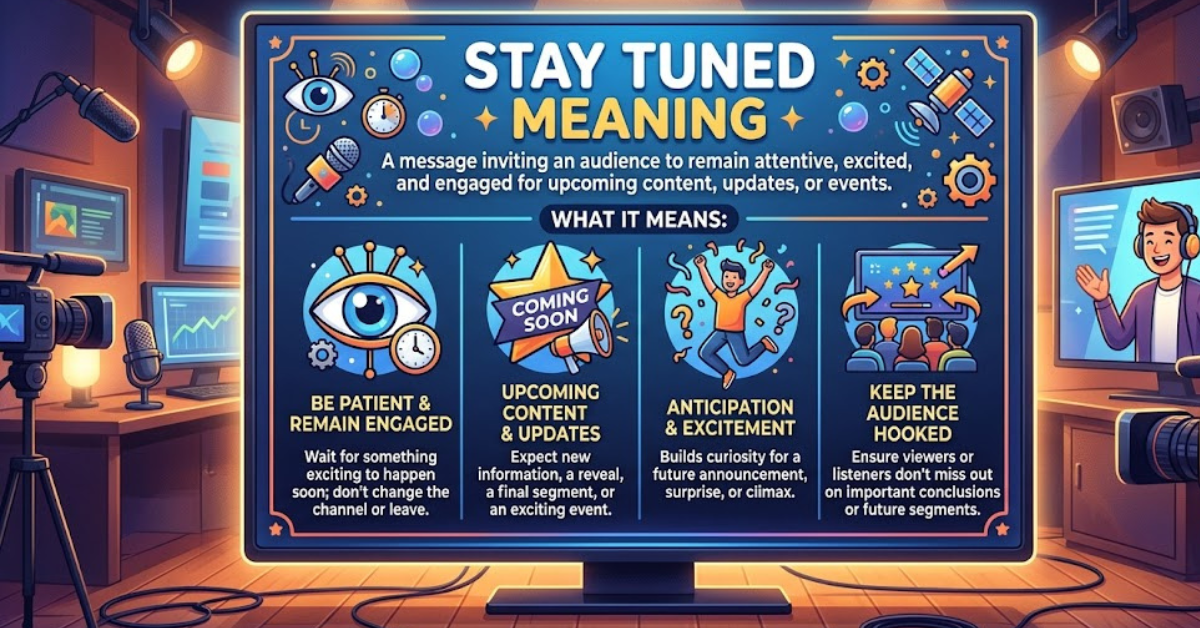
In simple terms, stay tuned means keep paying attention because more information, updates, or content will follow soon. Let’s break it down in detail so you can fully understand how and when to use it.
What Does “Stay Tuned” Mean?
The phrase stay tuned meaning comes from old radio broadcasting. In the past, listeners would “tune” their radios to a specific frequency to hear a program. When broadcasters said “stay tuned,” they were literally telling people to keep their radios set to that channel.
Today, the meaning has evolved into something broader:
- Keep watching or listening
- Don’t go away yet
- More updates are coming
- Important information will follow soon
It’s now commonly used in TV, social media, marketing, and everyday speech.
Stay Tuned Meaning in Daily Life
You’ll hear this phrase almost everywhere. Here’s how it shows up in real situations:
1. Television & News
News anchors often say:
- “Stay tuned for breaking updates.”
- “Stay tuned after the break.”
This keeps viewers engaged for upcoming content.
2. Social Media
Creators use it to build excitement:
- “New project dropping soon—stay tuned!”
- “Big announcement coming… stay tuned!”
3. Conversations
People use it casually:
- “I’ll share details later, stay tuned.”
- “We’re planning something exciting, stay tuned.”
Why People Use “Stay Tuned”
The phrase is popular because it creates curiosity and anticipation. It works as a simple engagement tool.
Here’s why it’s effective:
- Builds suspense
- Encourages people to return
- Keeps audiences interested
- Signals upcoming updates
In marketing, it’s especially powerful because it increases attention and retention.
Stay Tuned Meaning in Digital Communication
In the online world, stay tuned meaning has become a key part of engagement strategies. Brands, influencers, and content creators use it to keep audiences hooked.
Common digital uses include:
- Product launches
- Event announcements
- YouTube video series
- Instagram story updates
- Email marketing campaigns
It’s a soft way of saying: “Something important is coming—don’t leave yet.”
Similar Phrases (Synonyms)
If you want alternatives to “stay tuned,” here are some commonly used expressions:
- Keep watching
- More updates coming soon
- Don’t miss out
- Watch this space
- Stay updated
- More to come
Each carries a slightly different tone, but the core idea remains the same.
Common Mistakes People Make
Even though it’s simple, people sometimes misuse the phrase:
- Using it without follow-up content (can frustrate audiences)
- Overusing it in every post or message
- Using it in formal writing where it doesn’t fit
A good rule: only say stay tuned if something actually is coming next.
FAQs About Stay Tuned Meaning
1. What is the simple meaning of stay tuned?
It means to keep watching, listening, or paying attention because more information will be shared soon.
2. Is stay tuned formal or informal?
It is mostly informal but is widely accepted in media and marketing contexts.
3. Where is “stay tuned” commonly used?
It is used in TV shows, news broadcasts, social media posts, YouTube videos, and casual conversations.
4. Can I use stay tuned in emails?
Yes, especially in marketing emails or newsletters where you want to tease upcoming updates.
5. What is another word for stay tuned?
Alternatives include “keep watching,” “more updates coming soon,” and “watch this space.”
Conclusion
The Stay Tuned Meaning is simple but powerful—it tells people to expect more information soon and keeps them engaged. From traditional radio broadcasts to modern social media, this phrase has remained relevant because it builds curiosity and anticipation.
Next time you see or hear “stay tuned,” you’ll know it’s not just a filler phrase—it’s an invitation to keep paying attention. If you’re creating content yourself, using it wisely can help you keep your audience interested and coming back for more.