





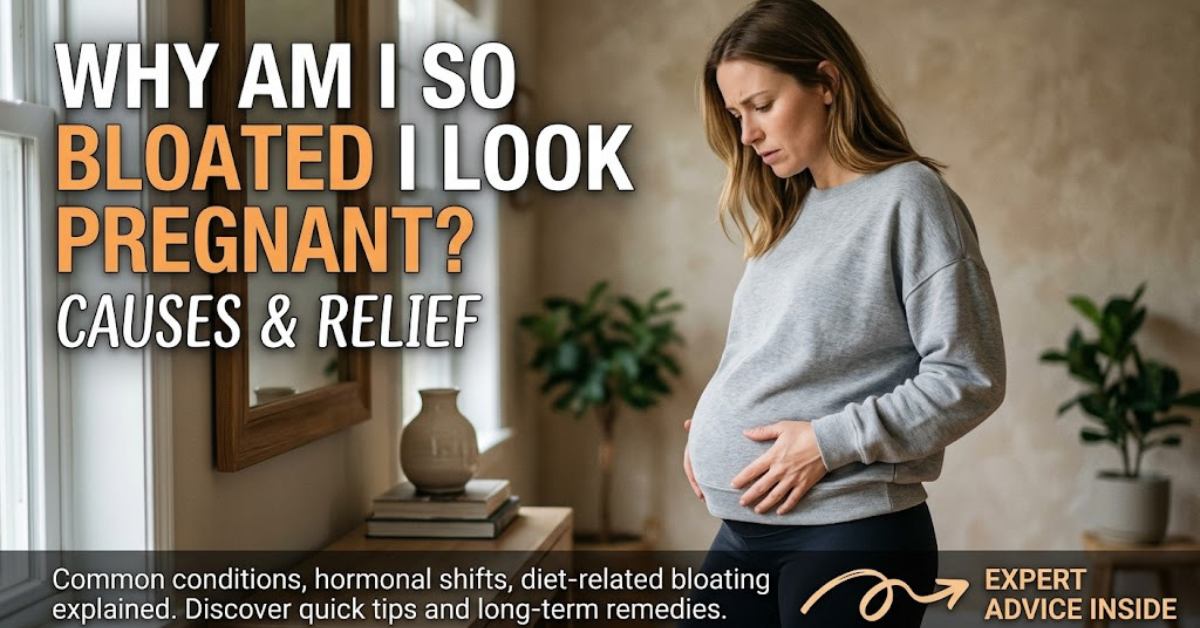
You wake up feeling fine, but by the end of the day, your stomach has expanded so much that it looks like you’re several months pregnant. If you’ve been asking yourself, “why am I so bloated I look pregnant?”, you’re definitely not alone. Abdominal bloating is a common complaint that affects millions of people and can range from a temporary digestive issue to a sign of an underlying health condition.
A swollen belly can happen because of trapped gas, constipation, food sensitivities, hormonal changes, or digestive disorders. While occasional bloating is usually harmless, persistent or severe abdominal swelling should not be ignored. This article explains the most common reasons behind a bloated stomach, how to reduce it, and when to seek medical advice.
What Does It Mean When Your Stomach Is Bloated and Looks Pregnant?
Bloating refers to a feeling of fullness, tightness, or pressure in the abdomen. In some cases, the stomach may visibly protrude, making you feel like you look pregnant even when you’re not.
This can happen due to:
- Excess gas trapped in the intestines
- Water retention
- Slowed digestion
- Hormonal fluctuations
- Inflammation in the digestive tract
- Accumulation of fluid in the abdomen
The severity can vary from mild discomfort to extreme abdominal distension.
Common Reasons Why You Are So Bloated You Look Pregnant
1. Excess Gas and Digestive Bloating
One of the most frequent answers to “why am I so bloated I look pregnant” is excessive gas. Your digestive system naturally produces gas when breaking down food, but too much gas can cause your abdomen to expand noticeably.
Foods that commonly trigger gas include:
- Beans and lentils
- Broccoli, cabbage, and cauliflower
- Carbonated drinks
- Dairy products (for those with lactose intolerance)
- Artificial sweeteners
Eating quickly, chewing gum, or drinking through a straw can also cause you to swallow extra air, leading to bloating.
2. Constipation and a Distended Stomach
When stool remains in the colon for longer than normal, it can cause a hard, swollen belly and uncomfortable pressure.
Signs of constipation include:
- Fewer than three bowel movements per week
- Hard or difficult-to-pass stools
- A feeling of incomplete emptying
- Abdominal pain or cramping
Increasing fiber intake, drinking more water, and staying physically active can often help improve regularity.
3. Food Intolerances and Sensitivities
Certain foods may trigger significant bloating in sensitive individuals.
Common culprits include:
- Lactose found in milk and dairy products
- Gluten for people with celiac disease or gluten sensitivity
- High-FODMAP foods such as onions, garlic, apples, and wheat
Keeping a food diary may help identify patterns between what you eat and when your bloating occurs.
4. Hormonal Changes and Menstrual Bloating
Many women experience a bloated stomach before or during their menstrual period. Hormonal shifts can cause the body to retain water and affect digestion.
Symptoms may include:
- Swelling in the abdomen
- Breast tenderness
- Mood changes
- Temporary weight gain
This type of bloating usually improves after the menstrual cycle progresses.
5. Irritable Bowel Syndrome IBS
IBS is a common digestive condition that can cause extreme bloating, making some people feel like they look pregnant.
Other IBS symptoms include:
- Abdominal pain
- Diarrhea, constipation, or both
- Excessive gas
- Changes in bowel habits
Managing IBS often involves dietary adjustments, stress management, and medical guidance.
6. Small Intestinal Bacterial Overgrowth SIBO
SIBO occurs when excessive bacteria grow in the small intestine. This can lead to fermentation of food, causing large amounts of gas and abdominal swelling.
Common symptoms include:
- Severe bloating after meals
- Gas and burping
- Diarrhea or constipation
- Stomach discomfort
A healthcare professional can diagnose SIBO through specific tests and recommend treatment.
7. Ovarian Conditions and Abdominal Swelling
In some cases, persistent bloating that makes you look pregnant can be linked to gynecological conditions, including ovarian cysts or, less commonly, ovarian cancer.
Warning signs may include:
- Bloating that does not go away
- Pelvic pain or pressure
- Feeling full quickly when eating
- Changes in urination
Any ongoing or unexplained bloating should be evaluated by a doctor, especially if it is new or worsening.
8. Fluid Retention Ascites
A swollen abdomen may sometimes result from a buildup of fluid inside the abdominal cavity, known as ascites.
Possible causes include:
- Liver disease
- Certain cancers
- Heart or kidney problems
Ascites often requires prompt medical evaluation.
How to Reduce a Bloated Stomach Quickly
If your bloating is caused by common digestive issues, these strategies may provide relief:
1. Take a Gentle Walk
Physical activity helps stimulate digestion and can move trapped gas through the intestines.
2. Drink Plenty of Water
Proper hydration can prevent constipation and reduce water retention caused by dehydration.
3. Avoid Trigger Foods
Pay attention to foods that repeatedly cause bloating and consider limiting them.
4. Eat More Slowly
Eating slowly reduces the amount of air swallowed during meals.
5. Try Probiotics
Some studies suggest probiotics may improve gut bacteria balance and reduce bloating in certain people.
When Should You See a Doctor for Severe Bloating?
Occasional bloating is normal, but you should seek medical attention if you experience:
- Bloating that lasts for several weeks
- Rapidly increasing abdominal size
- Severe or worsening abdominal pain
- Unexplained weight loss
- Blood in your stool
- Persistent vomiting
- Fever
- Difficulty eating or feeling full quickly
These symptoms could indicate a more serious medical problem requiring diagnosis and treatment.
FAQs
Why is my stomach suddenly so bloated that I look pregnant?
Sudden bloating can be caused by gas buildup, constipation, overeating, food intolerances, hormonal changes, or digestive disorders. If the swelling is severe, painful, or persistent, consult a healthcare provider.
Can stress make you look bloated and pregnant?
Yes. Stress can affect digestion, slow bowel movements, and worsen conditions like IBS, which may lead to noticeable abdominal bloating.
Why do I look pregnant after eating?
A large stomach after meals is often caused by trapped gas, food intolerance, overeating, or digestive conditions like IBS or SIBO.
How long should bloating last?
Temporary bloating usually improves within hours or a couple of days. Bloating that lasts more than two weeks or keeps returning frequently should be medically evaluated.
Is it normal to be bloated every day?
Daily bloating is not something you should simply ignore. Frequent bloating may indicate a dietary issue, constipation, IBS, or another health condition that needs attention.
Conclusion
If you keep wondering, “why am I so bloated I look pregnant?”, the answer could be as simple as trapped gas or constipation, but it may also point to food intolerances, hormonal changes, digestive disorders, or other medical conditions. Understanding your symptoms, tracking your diet, and making small lifestyle changes can often provide significant relief.
However, if your bloating is persistent, severe, or accompanied by warning signs such as pain, weight loss, or a rapidly expanding abdomen, it’s important to speak with a healthcare professional. For more digestive health tips, explore related guides on gut health, healthy eating, and managing common stomach issues.