









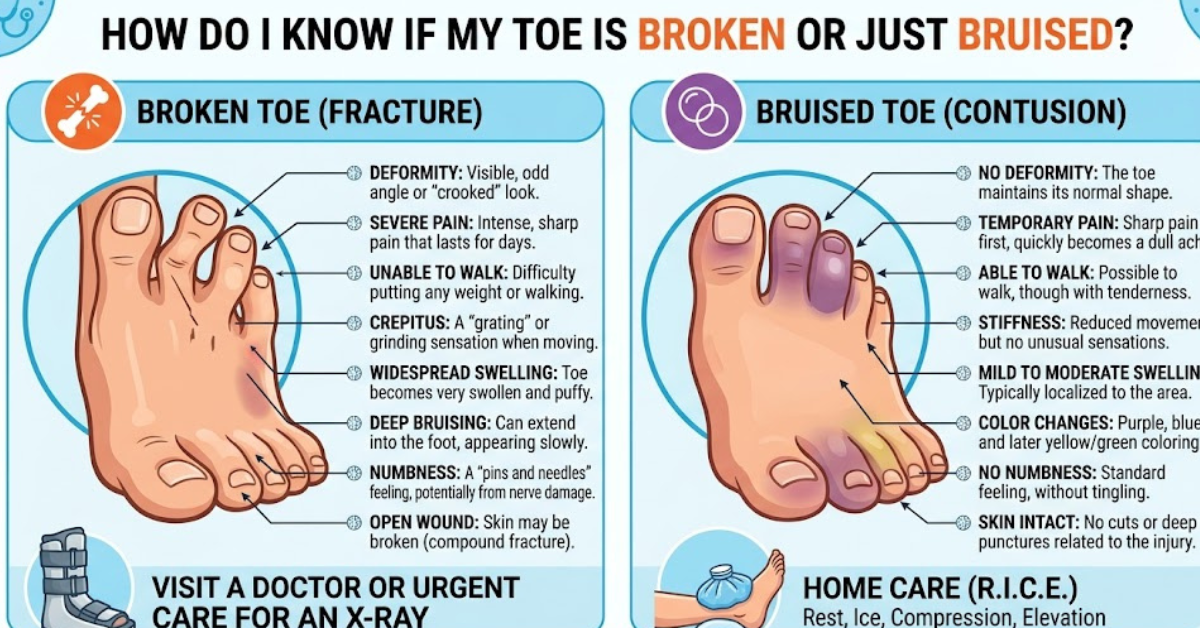
Have you ever stubbed your toe so hard that the pain made you stop in your tracks? A few minutes later, you might find yourself wondering whether it’s just a painful bruise or something more serious. Since both injuries can cause swelling, discoloration, and tenderness, it isn’t always easy to tell the difference.
If you’re asking, “how do I know if my toe is broken or just bruised?”, you’re not alone. Toe injuries are among the most common foot injuries, especially after sports activities, accidents, or simply bumping into furniture at home.
In this guide, you’ll learn the key differences between a broken toe and a bruised toe, the symptoms to watch for, treatment options, and when it’s time to seek medical attention.
Understanding the Difference Between a Broken Toe and a Bruised Toe
Before comparing symptoms, it’s helpful to understand what each injury actually involves.
What Is a Bruised Toe?
A bruised toe occurs when soft tissues, small blood vessels, or muscles around the toe are damaged due to impact. Blood leaks into surrounding tissues, causing discoloration and tenderness.
Most bruised toes heal naturally within a few days to a couple of weeks.
What Is a Broken Toe?
A broken toe, also called a toe fracture, happens when one of the toe bones cracks or breaks. Fractures can range from small hairline cracks to complete breaks that affect alignment.
Broken toes often require more recovery time and, in some cases, medical treatment.
Signs Your Toe May Be Bruised
A bruised toe can be surprisingly painful, but the symptoms are usually less severe than those of a fracture.
Common signs include:
- Mild to moderate pain
- Tenderness when touched
- Swelling around the injured area
- Blue, purple, or black discoloration
- Slight stiffness
- Ability to walk, although it may be uncomfortable
The pain from a bruise typically improves gradually over the first few days.
How Bruising Develops
Bruises often become more noticeable several hours after the injury. The color may change from red to purple, blue, green, and eventually yellow as healing occurs.
Signs Your Toe May Be Broken
When trying to determine how do I know if my toe is broken or just bruised, certain symptoms strongly suggest a fracture.
Severe Pain Immediately After Injury
Broken toes often cause sharp, intense pain right after the impact.
The pain may:
- Feel deep within the toe
- Worsen when walking
- Persist longer than typical bruising pain
Visible Deformity
One of the strongest indicators of a fracture is a toe that appears:
- Crooked
- Twisted
- Out of alignment
- Shorter than usual
If the toe looks noticeably different from the others, seek medical evaluation promptly.
Difficulty Bearing Weight
Many people with a broken toe find it difficult or impossible to put pressure on the injured foot.
Walking may cause:
- Sharp pain
- Instability
- Significant discomfort
Swelling That Doesn’t Improve
Both bruised and broken toes swell, but fracture-related swelling often remains significant for several days.
Cracking or Popping Sensation
Some individuals report hearing or feeling a crack at the moment of injury. While not always present, it can indicate a fracture.
Broken Toe vs Bruised Toe: Side-by-Side Comparison
| Symptom | Bruised Toe | Broken Toe |
| Pain Level | Mild to moderate | Moderate to severe |
| Swelling | Mild to moderate | Often significant |
| Bruising | Common | Common |
| Walking Ability | Usually possible | Often difficult |
| Toe Shape | Normal | May appear crooked |
| Healing Time | Days to 2 weeks | 4–8 weeks or more |
| Bone Tenderness | Usually mild | Often severe |
Can You Move a Broken Toe?
One common misconception is that if you can move your toe, it isn’t broken.
Unfortunately, that’s not always true.
Many people with toe fractures can still:
- Wiggle their toes
- Walk short distances
- Move the injured toe slightly
Movement alone does not rule out a fracture.
How Doctors Diagnose a Broken Toe
If symptoms suggest a fracture, a healthcare provider may perform:
Physical Examination
The doctor will assess:
- Swelling
- Tenderness
- Alignment
- Range of motion
- Weight-bearing ability
X-Rays
An X-ray is the most reliable way to confirm whether a toe bone is fractured.
Imaging can also reveal:
- Hairline fractures
- Displaced fractures
- Joint involvement
- Multiple breaks
What to Do Immediately After a Toe Injury
Whether your toe is bruised or broken, initial care is often similar.
Follow the RICE Method
Rest
Avoid activities that worsen pain.
Ice
Apply an ice pack for 15–20 minutes every few hours during the first 48 hours.
Compression
Light support may help reduce swelling.
Elevation
Keep your foot elevated above heart level when possible.
Wear Protective Footwear
Stiff-soled shoes can help reduce movement and discomfort.
When Should You See a Doctor?
Medical evaluation is recommended if you experience:
- Severe pain
- Significant swelling
- Toe deformity
- Open wounds
- Numbness
- Inability to walk
- Symptoms that worsen after several days
- Persistent pain lasting more than a week
Prompt treatment helps prevent complications and improper healing.
How Long Does a Bruised Toe Take to Heal?
Most bruised toes improve within:
- Minor bruises: 3–7 days
- Moderate bruises: 1–2 weeks
- Severe bruises: Up to 3 weeks
Pain should gradually decrease throughout the healing process.
How Long Does a Broken Toe Take to Heal?
Toe fractures generally require:
- 4–6 weeks for uncomplicated fractures
- 6–8 weeks or longer for more severe breaks
Factors affecting recovery include:
- Age
- Overall health
- Severity of fracture
- Treatment compliance
Treatment Options for a Broken Toe
Treatment depends on the type of fracture.
Buddy Taping
Many simple fractures are treated by taping the injured toe to a neighboring toe for support.
Protective Footwear
Doctors may recommend:
- Walking boots
- Medical shoes
- Stiff-soled footwear
Pain Management
Over-the-counter medications may help reduce discomfort and inflammation.
Surgery
Although uncommon, surgery may be necessary if:
- Bones are severely displaced
- The fracture involves a joint
- Multiple fractures occur
Common Mistakes People Make After Toe Injuries
Ignoring symptoms can delay healing and worsen outcomes.
Avoid these mistakes:
- Continuing sports immediately after injury
- Wearing tight shoes
- Skipping medical evaluation when the toe appears deformed
- Applying heat too early
- Assuming movement means the toe isn’t broken
Key Takeaways
- Both bruised and broken toes can cause pain, swelling, and discoloration.
- Severe pain, deformity, and difficulty walking are stronger indicators of a fracture.
- An X-ray is the most accurate way to determine whether a toe is broken.
- Bruised toes often heal within days to weeks, while broken toes typically require several weeks.
- Seek medical care if symptoms are severe or don’t improve.
Frequently Asked Questions
How do I know if my toe is broken or just bruised without an X-ray?
You can look for signs such as severe pain, deformity, difficulty walking, and persistent swelling. However, only an X-ray can definitively confirm a fracture.
Can a bruised toe hurt as much as a broken toe?
Yes, some severe bruises can be extremely painful. The difference is that bruising pain usually improves steadily, while fracture pain often remains intense for longer.
Should I walk on a potentially broken toe?
It’s best to limit weight-bearing until the injury is evaluated. Walking on a fractured toe may worsen pain and delay healing.
What does a hairline fracture in a toe feel like?
A hairline fracture may cause localized pain, swelling, tenderness, and discomfort when walking. Symptoms can sometimes resemble a severe bruise.
Can a broken toe heal on its own?
Many simple toe fractures heal without surgery when properly protected. However, medical assessment is important to ensure proper alignment and recovery.
How long should I wait before seeing a doctor for a toe injury?
Seek immediate care if the toe is crooked, severely swollen, or difficult to walk on. Otherwise, consult a healthcare provider if symptoms do not improve within several days.
Conclusion
If you’re wondering, “how do I know if my toe is broken or just bruised?”, the answer often comes down to the severity of symptoms. While both injuries can cause pain, swelling, and bruising, a broken toe is more likely to involve intense pain, difficulty bearing weight, and visible deformity. Because symptoms can overlap, an X-ray remains the most reliable way to determine the extent of the injury.
Pay attention to how your toe feels over the first few days, follow proper first-aid measures, and don’t hesitate to seek medical care if something doesn’t seem right. Early treatment can speed recovery and help you get back on your feet with confidence.