







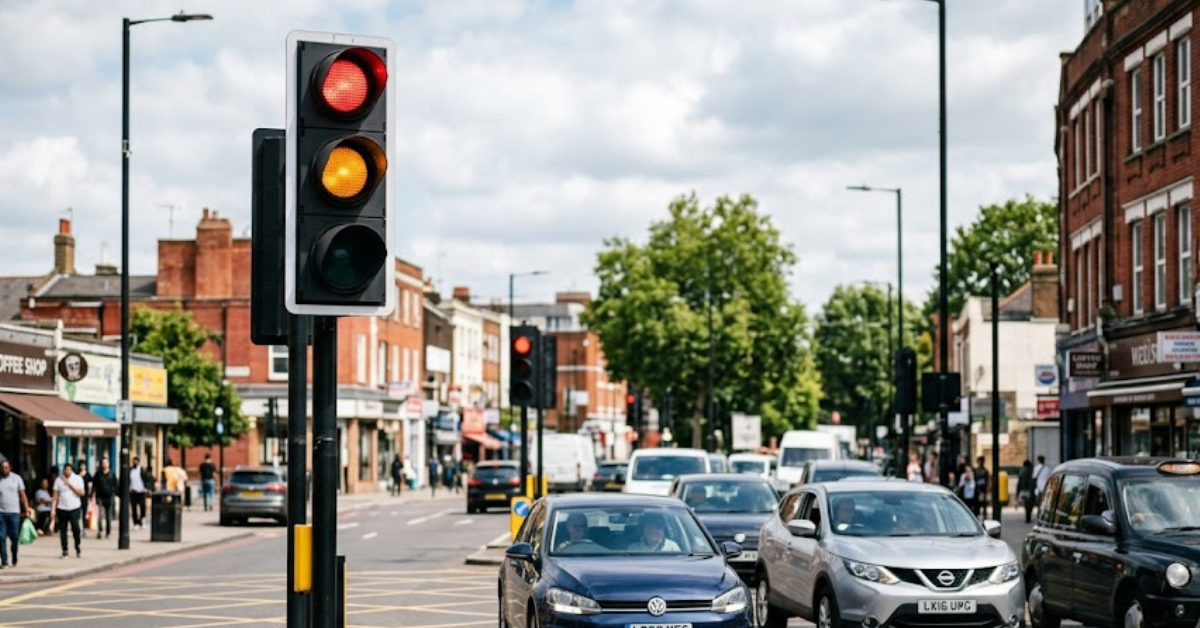
Have you ever approached a set of traffic lights and noticed both the red and amber lights illuminated at the same time? It’s a situation many drivers encounter, yet it often causes confusion—especially among new motorists preparing for driving tests.
If you’re wondering what should you do when you’re approaching traffic lights that have red and amber showing together?, the answer is straightforward: you should prepare to move, but do not cross the stop line until the green light appears and it is safe to proceed.
In this guide, you’ll learn exactly what red and amber lights mean, how traffic signal sequences work, common mistakes drivers make, and the safest way to respond in real-world driving situations.
Understanding Traffic Light Signals
Traffic lights are designed to regulate traffic flow and improve road safety. Each color carries a specific instruction that drivers must follow.
The standard traffic light sequence in many countries, including the United Kingdom, follows this pattern:
- Green
- Amber
- Red
- Red and Amber Together
- Green
While green, amber, and red are familiar to most drivers, the red and amber combination often raises questions.
What Does Red and Amber Together Mean?
When red and amber lights show together, it signals that the traffic lights are about to turn green.
The instruction is:
- Remain behind the stop line.
- Prepare your vehicle to move.
- Check mirrors and surroundings.
- Wait for the green signal before proceeding.
The presence of the red light means the instruction to stop is still active.
The Correct Answer: What Should You Do When You’re Approaching Traffic Lights That Have Red and Amber Showing Together?
The correct response is:
Stay behind the stop line, prepare to move, and wait for the green light before driving forward.
Many drivers mistakenly believe that red and amber together gives permission to start moving. It does not.
The sequence is intended to help drivers prepare for movement, reducing delays when the light changes to green.
Why You Must Not Move Yet
Even though the green light is imminent, the red signal is still displayed.
Moving before green can:
- Result in traffic violations
- Create collision risks
- Endanger pedestrians
- Lead to failed driving tests
- Cause confusion for other road users
The safest approach is to remain stationary until green appears.
Why Traffic Lights Show Red and Amber Together
Traffic engineers use the red-and-amber phase for several important reasons.
Improves Traffic Flow
Drivers can engage the clutch, select gear, or prepare their vehicle before the light changes.
This minimizes delays and improves intersection efficiency.
Enhances Driver Awareness
The signal provides advance notice that traffic will soon begin moving.
Drivers become more attentive and ready to proceed safely.
Reduces Hesitation
Without the red-and-amber phase, drivers might react slowly when the green light appears, causing unnecessary congestion.
Common Mistakes Drivers Make
Understanding the meaning of red and amber together helps avoid several frequent driving errors.
Moving Before Green Appears
This is perhaps the most common mistake.
Drivers may:
- Release the brake too early
- Roll over the stop line
- Accelerate before receiving a green signal
Even slight movement beyond the line may constitute a traffic offense.
Focusing Only on the Amber Light
Some motorists see the amber light and assume it overrides the red signal.
In reality:
- Red remains legally enforceable.
- Amber is simply a warning that green is next.
Ignoring Pedestrians
Pedestrians may still be crossing when the red and amber lights are displayed.
Always:
- Check crosswalks
- Scan both sides of the road
- Look for cyclists and pedestrians
How Driving Examiners Assess This Situation
For learner drivers, understanding traffic signals is essential.
During a driving test, examiners expect you to:
- Recognize the signal correctly
- Remain behind the stop line
- Demonstrate observation skills
- Move only when the green light appears
Premature movement may be marked as a fault and, depending on circumstances, could result in a test failure.
Example Driving Test Scenario
Imagine you’re stopped at a junction.
The lights change from red to red-and-amber.
A safe response would be:
- Check mirrors.
- Confirm the junction is clear.
- Prepare the vehicle.
- Wait for green.
- Proceed when safe.
This demonstrates proper anticipation and control.
Traffic Light Signal Meanings Explained
Understanding all traffic signal phases helps eliminate confusion.
| Signal | Meaning |
| Green | Proceed if the road ahead is clear |
| Amber | Stop unless stopping would be unsafe |
| Red | Stop and remain behind the line |
| Red + Amber | Prepare to move, but do not proceed |
| Flashing Amber (where applicable) | Proceed with caution according to local laws |
Knowing these distinctions improves both safety and confidence behind the wheel.
Real-World Safety Considerations
Traffic signals provide guidance, but drivers must also assess surrounding conditions.
Check for Pedestrians
Even when the light turns green:
- Pedestrians may still be crossing.
- Children may enter the roadway unexpectedly.
- Elderly pedestrians may need extra time.
Watch for Cyclists
Cyclists often position themselves near intersections.
Before moving:
- Check blind spots.
- Look to both sides.
- Give adequate space.
Be Aware of Emergency Vehicles
Emergency vehicles may override normal traffic patterns.
If you hear sirens or see flashing lights:
- Stay alert.
- Follow local traffic regulations.
- Yield when appropriate.
Differences Between Countries
Traffic light systems vary slightly around the world.
United Kingdom
The red-and-amber phase is a standard part of the signal sequence.
Drivers prepare to move but remain stationary until green.
United States
Most traffic signals transition directly from red to green.
Many American drivers may be unfamiliar with the red-and-amber combination.
Australia and New Zealand
Traffic light sequences generally resemble the UK system, though local regulations may differ.
Always follow the driving laws specific to your location.
Tips for Responding Correctly at Red and Amber Lights
Developing good habits can improve both safety and driving confidence.
Before the Light Changes
- Keep your foot on the brake.
- Observe traffic conditions.
- Check mirrors regularly.
During the Red-and-Amber Phase
- Select gear if driving a manual vehicle.
- Prepare to move.
- Stay behind the stop line.
Once Green Appears
- Verify the intersection is clear.
- Look for pedestrians and cyclists.
- Proceed smoothly and safely.
Key Takeaways
- Red and amber together means the green signal is about to appear.
- You must remain behind the stop line.
- Do not move until the green light shows.
- Use the time to prepare your vehicle and observe your surroundings.
- Always prioritize safety over speed when leaving an intersection.
Frequently Asked Questions
What should you do when you’re approaching traffic lights that have red and amber showing together?
You should remain behind the stop line, prepare to move, and wait until the green light appears before proceeding.
Can you drive when the red and amber lights are showing together?
No. The red signal is still active, meaning you must remain stopped until the green light is displayed.
Why do traffic lights show red and amber at the same time?
The signal alerts drivers that the light is about to turn green, allowing them to prepare for movement without causing unnecessary delays.
Is moving during red and amber a driving offense?
In many jurisdictions, crossing the stop line before the green light appears can be considered a traffic violation and may result in penalties.
Do all countries use red and amber together?
No. Countries such as the United States typically move directly from red to green, while the UK and several other nations use the red-and-amber phase.
Will I fail a driving test for moving on red and amber?
Potentially, yes. Moving before the green light appears may be marked as a driving fault and could lead to a failed test depending on the situation.
Conclusion
Understanding what should you do when you’re approaching traffic lights that have red and amber showing together is a fundamental part of safe and responsible driving. While the signal indicates that the green light is about to appear, it does not grant permission to move forward.
The correct action is simple: stay behind the stop line, prepare your vehicle, observe your surroundings, and proceed only when the light turns green and it is safe to do so. By following this rule consistently, you’ll improve road safety, avoid penalties, and become a more confident driver. Continue building your traffic awareness skills, and you’ll be better prepared for every journey ahead.