








Have you ever tightened a screw only to watch it spin endlessly without gripping the wood? It’s a frustrating problem that can make furniture feel unstable, cabinet doors sag, and DIY projects come to a halt.
The good news is that learning how to fix a stripped screw hole wood is much easier than most people think. Whether you’re repairing a loose hinge, securing a shelf, or restoring a piece of furniture, there are several reliable methods that can restore a strong hold.
In this guide, you’ll discover why screw holes become stripped, the best repair techniques for different situations, and practical tips to prevent the problem from happening again.
What Is a Stripped Screw Hole?
A stripped screw hole occurs when the wood fibers surrounding a screw become damaged or worn out. As a result, the screw can no longer bite into the wood and hold securely.
Common signs include:
- The screw spins without tightening
- The screw pulls out easily
- Furniture joints become loose
- Hinges wobble or sag
- Shelves feel unstable
This issue can occur in solid wood, plywood, MDF, particleboard, and engineered wood products.
Why Screw Holes Become Stripped
Understanding the cause helps you choose the right repair method.
Overtightening the Screw
Applying too much force compresses and damages wood fibers, reducing their ability to grip the screw threads.
Repeated Removal and Reinstallation
Frequently removing screws weakens the surrounding wood over time.
Using the Wrong Screw Size
A screw that’s too small may not engage enough wood fibers, leading to premature stripping.
Moisture Damage
Water exposure can soften wood, making it easier for screw holes to enlarge.
Heavy Loads and Vibration
Doors, cabinets, and furniture subjected to frequent movement often experience gradual wear around screw holes.
Best Methods to Fix a Stripped Screw Hole in Wood
The right repair depends on the size of the damaged hole and how much strength is required.
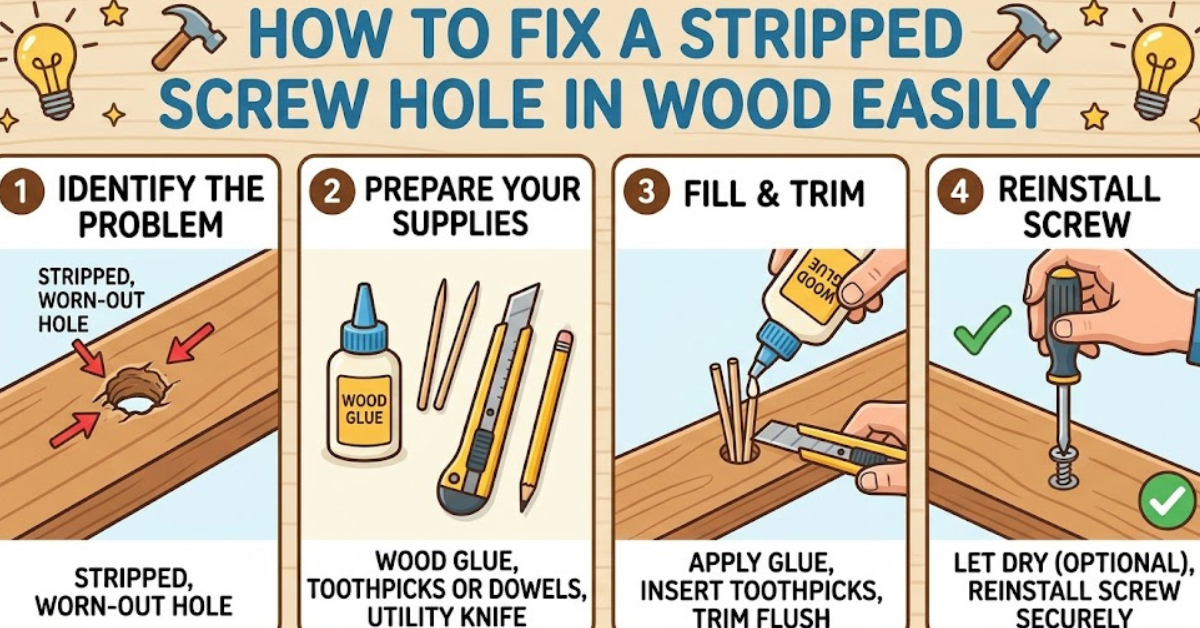
Method 1: Use Wooden Toothpicks
This is one of the quickest and most popular fixes for minor stripping.
What You’ll Need
- Wooden toothpicks
- Wood glue
- Screwdriver
- Utility knife
Steps
- Remove the screw.
- Apply a small amount of wood glue inside the hole.
- Insert several wooden toothpicks until the hole is filled.
- Break off excess toothpick material flush with the surface.
- Allow the glue to dry completely.
- Reinstall the screw.
Best For
- Cabinet hinges
- Light-duty furniture repairs
- Small stripped holes
Pros
- Fast and inexpensive
- Requires minimal tools
- Effective for small repairs
Method 2: Fill the Hole with a Wooden Dowel
For stronger repairs, a wooden dowel provides a durable solution.
What You’ll Need
- Wooden dowel
- Wood glue
- Drill
- Saw
Steps
- Drill the damaged hole to match the dowel size.
- Apply wood glue to the dowel.
- Insert the dowel firmly into the hole.
- Let the glue cure completely.
- Trim the dowel flush with the wood surface.
- Drill a new pilot hole.
- Reinstall the screw.
Best For
- Door hinges
- Furniture frames
- Structural wood repairs
Why It Works
The dowel essentially replaces damaged wood fibers with solid new wood, creating a fresh anchor point for the screw.
Method 3: Use Wood Filler and Re-Drill
Wood filler can work for certain applications, though it’s generally less durable than a dowel repair.
Steps
- Remove loose debris from the hole.
- Fill the hole completely with high-quality wood filler.
- Allow it to harden according to manufacturer instructions.
- Sand smooth if needed.
- Drill a pilot hole.
- Reinsert the screw.
Best For
- Decorative repairs
- Light-duty applications
Limitations
Wood filler alone may not provide enough holding power for heavy loads or frequently used hardware.
Method 4: Install a Larger Screw
Sometimes the simplest fix is using a slightly larger screw.
When to Use This Method
- The stripped hole is only slightly enlarged.
- The surrounding wood remains solid.
- Hardware can accommodate a larger screw head.
Tips
- Increase screw diameter gradually.
- Avoid using excessively large screws that may split the wood.
- Always drill a pilot hole if necessary.
This approach often works well for cabinet hardware and furniture repairs.
Method 5: Use a Wood Plug Repair
A wood plug repair offers professional-level strength.
Steps
- Drill out the damaged hole.
- Insert a matching wood plug with glue.
- Allow the glue to cure.
- Sand the surface smooth.
- Drill a new pilot hole.
- Reinstall the screw.
Best For
- High-stress applications
- Fine furniture restoration
- Visible wood surfaces
This method creates a nearly invisible repair when done correctly.
Method 6: Epoxy Repair for Severely Damaged Holes
When the wood is badly damaged, epoxy can create a strong new foundation.
Materials Needed
- Two-part epoxy
- Mixing stick
- Drill
Process
- Clean the damaged hole thoroughly.
- Fill the hole with epoxy.
- Let it cure completely.
- Drill a new pilot hole.
- Reinstall the screw.
Best Applications
- Exterior wood
- Deck repairs
- Moisture-damaged areas
Epoxy is especially useful when traditional wood repairs aren’t practical.
Choosing the Right Repair Method
Here’s a quick comparison:
| Repair Method | Strength | Difficulty | Best Use |
| Toothpicks + Glue | Moderate | Easy | Small holes |
| Larger Screw | Moderate | Easy | Slight stripping |
| Wood Filler | Moderate | Easy | Cosmetic repairs |
| Wooden Dowel | High | Medium | Furniture and hinges |
| Wood Plug | Very High | Medium | Professional repairs |
| Epoxy | High | Medium | Severely damaged wood |
How to Fix a Stripped Screw Hole in Door Hinges
Door hinges are one of the most common places where screw holes fail.
Recommended Solution
For hinge repairs:
- Remove the hinge.
- Fill the stripped hole using a hardwood dowel and wood glue.
- Allow it to dry.
- Drill a pilot hole.
- Reinstall the hinge screws.
This repair provides enough strength to support the repeated opening and closing of the door.
How to Fix Stripped Screw Holes in MDF and Particleboard
Engineered wood products require special attention.
Best Methods
- Wood glue and dowels
- Epoxy filler
- Threaded inserts designed for wood
Avoid
- Repeatedly tightening screws
- Oversized screws that can cause cracking
- Low-quality fillers
Because MDF and particleboard are less dense than solid wood, stronger reinforcement methods generally work better.
Tips to Prevent Screw Holes from Stripping
Prevention is often easier than repair.
Always Drill Pilot Holes
Pilot holes reduce stress on wood fibers and help screws seat correctly.
Use the Correct Screw Size
Choose screws appropriate for the wood type and project.
Avoid Overtightening
Stop tightening once the hardware is secure.
Use Quality Screws
Premium screws from reputable brands tend to hold better and resist failure.
Repair Problems Early
A slightly loose screw can quickly become a fully stripped hole if ignored.
Common Mistakes to Avoid
Many DIY repairs fail because of simple errors.
Skipping Glue
Wood glue significantly increases repair strength.
Reinstalling Screws Too Soon
Allow sufficient drying time before applying pressure.
Using Soft Materials
Paper, cardboard, or other weak fillers may provide only temporary results.
Ignoring Pilot Holes
Driving screws directly into repaired areas can split wood or weaken the fix.
Key Takeaways
- Stripped screw holes occur when wood fibers can no longer grip the screw.
- Toothpicks and wood glue work well for minor repairs.
- Wooden dowels offer one of the strongest long-term solutions.
- Larger screws can solve lightly damaged holes.
- Epoxy is ideal for severe damage or moisture-exposed wood.
- Proper pilot holes and careful installation help prevent future stripping.
Frequently Asked Questions
How do you fix a stripped screw hole in wood without a dowel?
You can use wooden toothpicks and wood glue to fill the damaged hole. Once the glue dries, reinstall the screw for a surprisingly strong repair.
Is wood filler strong enough for screw holes?
Wood filler works for light-duty applications, but it is generally not as strong as a dowel or wood plug repair for load-bearing hardware.
Can I simply use a bigger screw?
Yes, if the hole is only slightly stripped and the surrounding wood remains solid. A larger screw can often restore holding power quickly.
What is the strongest way to repair a stripped screw hole?
A hardwood dowel or wood plug repair is typically the strongest method because it replaces damaged fibers with new solid wood.
Why does my screw keep spinning in the wood?
The surrounding wood fibers have likely become worn or damaged, preventing the screw threads from gripping properly.
How do you repair stripped screw holes in particleboard?
Using epoxy, wood dowels, or specialized threaded inserts generally provides the most durable repair in particleboard and MDF materials.
Conclusion
Knowing how to fix a stripped screw hole wood can save furniture, doors, cabinets, and countless DIY projects from unnecessary replacement. From quick fixes using toothpicks and glue to professional-grade dowel and wood plug repairs, there’s a solution for virtually every level of damage.
The key is choosing the right method for your situation and taking the time to prepare the repair properly. With the techniques covered in this guide, you can restore a secure hold, extend the life of your wood projects, and prevent future stripping problems. Apply these tips the next time a screw loses its grip, and you’ll be surprised at how strong the repair can be.