








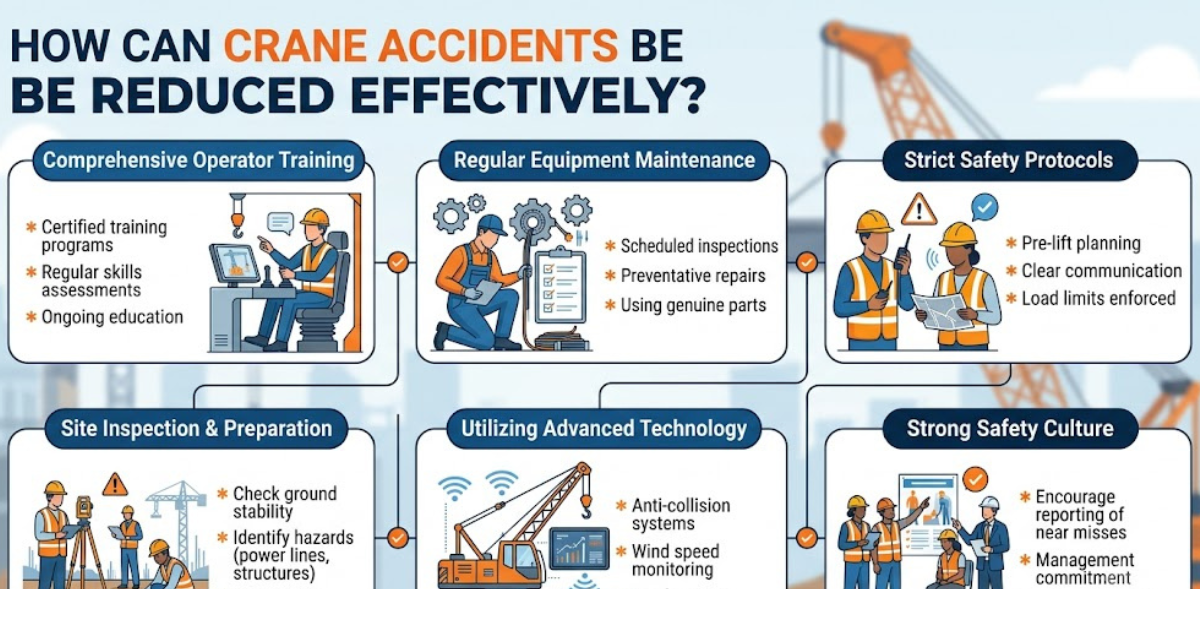
Imagine a busy construction site where a crane is lifting several tons of steel high above workers. One small mistake—a miscommunication, equipment failure, or overloaded lift—can lead to serious injuries, costly property damage, or even fatalities. This is why understanding how can the most common accidents which occur when using cranes be reduced is essential for every construction manager, crane operator, rigger, and safety professional.
Crane-related incidents continue to be a major concern across construction, manufacturing, shipping, and industrial sectors. The good news is that most crane accidents are preventable when proper safety procedures, training, and planning are in place.
In this guide, you’ll learn the leading causes of crane accidents, practical prevention strategies, industry best practices, and actionable safety measures that can significantly reduce risks on any job site.
Understanding the Most Common Crane Accidents
Before discussing prevention methods, it’s important to identify the accidents that occur most frequently during crane operations.
Crane Tip-Overs
A crane tip-over happens when the machine loses stability and overturns. These incidents often result in severe injuries and extensive equipment damage.
Common causes include:
- Overloading the crane
- Unstable ground conditions
- Improper outrigger setup
- High wind speeds
- Incorrect load calculations
Contact With Power Lines
Electrocution remains one of the deadliest crane-related hazards.
This typically occurs when:
- The crane boom gets too close to overhead power lines
- Operators misjudge distances
- Spotters are not used effectively
- Work zones are poorly planned
Falling Loads
Loads can fall due to:
- Defective rigging equipment
- Improper load securing
- Overloading
- Mechanical failures
- Human error during lifting operations
Struck-By Incidents
Workers may be struck by:
- Swinging loads
- Crane components
- Falling materials
- Moving equipment
These accidents often happen when personnel enter restricted lifting zones.
Equipment Failure
Mechanical failures can involve:
- Hydraulic systems
- Hoist mechanisms
- Wire ropes
- Brakes
- Structural components
Regular maintenance is critical to preventing these issues.
Why Crane Accidents Happen
Most crane accidents are not caused by a single factor. Instead, they result from a combination of human error, inadequate planning, and equipment issues.
Key contributing factors include:
- Lack of operator training
- Poor communication
- Inadequate site inspections
- Failure to follow safety procedures
- Insufficient maintenance
- Time pressure and rushed operations
Understanding these root causes helps organizations develop stronger prevention strategies.
Proper Operator Training and Certification
One of the most effective answers to the question, how can the most common accidents which occur when using cranes be reduced, is comprehensive operator training.
Benefits of Professional Training
Well-trained operators are better able to:
- Identify hazards
- Calculate load capacities
- Interpret load charts
- React to emergencies
- Follow safety protocols
Training should cover both classroom instruction and practical field experience.
Ongoing Skill Development
Even experienced operators benefit from:
- Refresher courses
- Safety workshops
- Equipment-specific training
- Simulation exercises
Continuous education helps operators stay current with evolving regulations and technologies.
Conduct Thorough Pre-Lift Planning
Every lift should begin long before the crane starts moving.
Essential Pre-Lift Assessments
Evaluate:
- Load weight
- Load dimensions
- Lift path
- Ground conditions
- Weather conditions
- Nearby structures
- Utility lines
A detailed lift plan reduces uncertainty and improves safety.
Job Hazard Analysis
A Job Hazard Analysis (JHA) helps identify:
- Potential risks
- Environmental hazards
- Worker exposure areas
- Emergency response procedures
This proactive approach significantly lowers accident risks.
Perform Regular Equipment Inspections
Routine inspections are a cornerstone of crane safety.
Daily Inspection Checklist
Operators should inspect:
- Wire ropes
- Hooks
- Hydraulic systems
- Controls
- Brakes
- Outriggers
- Safety devices
Even minor defects should be addressed immediately.
Scheduled Preventive Maintenance
Maintenance programs should include:
- Manufacturer-recommended servicing
- Component replacement
- Lubrication schedules
- Structural inspections
Preventive maintenance helps detect problems before they become dangerous.
Ensure Proper Rigging Practices
Rigging errors contribute to many crane accidents.
Selecting the Right Rigging Equipment
Always verify:
- Load ratings
- Sling condition
- Hook capacity
- Shackle strength
- Attachment points
Using improperly rated equipment can lead to catastrophic failures.
Rigging Inspection Procedures
Inspect rigging for:
- Frayed cables
- Corrosion
- Broken wires
- Damaged hooks
- Deformed fittings
Damaged equipment should be removed from service immediately.
Maintain Safe Distances From Power Lines
Contact with electrical lines remains one of the leading causes of crane fatalities.
Power Line Safety Measures
Safety teams should:
- Identify utility lines before work begins
- Establish minimum clearance distances
- Use dedicated spotters
- Mark exclusion zones
- Coordinate with utility companies when necessary
Use Spotters and Warning Systems
Spotters provide an extra layer of protection by monitoring crane movement near hazards.
Technology such as proximity alarms can also help prevent dangerous contact.
Improve Communication on the Job Site
Poor communication is a common factor in crane incidents.
Standardized Hand Signals
All crew members should understand standardized crane hand signals.
Benefits include:
- Faster communication
- Reduced misunderstandings
- Improved coordination
Radio Communication
Two-way radios are particularly useful for:
- Long-distance operations
- Complex lifts
- Noisy construction environments
Clear communication reduces confusion and improves overall safety.
Monitor Weather Conditions Carefully
Weather can dramatically impact crane stability and control.
Dangerous Weather Conditions
Operators should be cautious during:
- High winds
- Heavy rain
- Snow
- Lightning storms
- Dense fog
Wind Speed Monitoring
Many cranes have specific wind limitations established by manufacturers.
If wind exceeds safe limits, lifting operations should stop immediately.
Establish Restricted Work Zones
Workers should never stand beneath suspended loads.
Creating Exclusion Zones
Use:
- Barriers
- Warning signs
- Safety tape
- Spotters
These measures help prevent struck-by and falling-object incidents.
Controlling Site Access
Only authorized personnel should enter active lifting areas.
Restricted access minimizes unnecessary exposure to hazards.
Use Technology to Enhance Crane Safety
Modern technology is transforming crane operations.
Load Moment Indicators (LMI)
These systems help operators avoid:
- Overloading
- Stability issues
- Capacity violations
Anti-Collision Systems
Used on busy sites, anti-collision systems prevent cranes from:
- Contacting structures
- Striking other cranes
- Entering restricted zones
Real-Time Monitoring
Advanced systems can track:
- Equipment performance
- Wind speeds
- Load weights
- Maintenance requirements
These tools improve decision-making and reduce risk.
Build a Strong Safety Culture
Technology and equipment alone cannot eliminate accidents.
Leadership Commitment
Management should:
- Prioritize safety over speed
- Enforce safety policies
- Encourage reporting of hazards
- Conduct regular audits
Worker Engagement
Employees should feel empowered to:
- Stop unsafe work
- Report concerns
- Participate in safety meetings
- Suggest improvements
A strong safety culture often produces the biggest long-term reductions in accidents.
Key Takeaways
To reduce crane accidents effectively:
- Train and certify operators regularly
- Conduct detailed pre-lift planning
- Inspect cranes and rigging equipment frequently
- Maintain safe distances from power lines
- Use clear communication systems
- Monitor weather conditions continuously
- Establish restricted work zones
- Invest in modern safety technology
- Promote a site-wide safety culture
Frequently Asked Questions
How can the most common accidents which occur when using cranes be reduced?
The most effective methods include operator training, routine inspections, proper lift planning, safe rigging practices, power line awareness, and strong communication among crew members.
What is the leading cause of crane accidents?
Human error is a major contributor, often combined with inadequate planning, equipment misuse, poor communication, or insufficient maintenance.
Why are crane inspections important?
Regular inspections help identify worn components, mechanical issues, and safety hazards before they result in accidents or equipment failures.
How do weather conditions affect crane safety?
High winds, lightning, rain, and poor visibility can reduce crane stability and operator control, increasing the risk of accidents.
What role does training play in crane accident prevention?
Training ensures operators understand load limits, safety regulations, hazard recognition, and proper operating procedures, significantly reducing accident risks.
Can technology help reduce crane-related incidents?
Yes. Technologies such as load moment indicators, anti-collision systems, wind monitoring tools, and real-time diagnostics improve safety and help prevent operator errors.
Conclusion
Understanding how can the most common accidents which occur when using cranes be reduced is critical for maintaining safe and productive worksites. While cranes are indispensable tools in construction and industry, they also present significant hazards when operated improperly.
The majority of crane accidents can be prevented through proper training, detailed planning, routine inspections, effective communication, and adherence to established safety protocols. Organizations that prioritize these practices not only protect workers but also reduce downtime, equipment damage, and legal liabilities.
By applying the strategies outlined in this guide, companies can create safer environments, improve operational efficiency, and significantly reduce the likelihood of crane-related accidents.