









Have you ever walked into your home and noticed the air felt heavy, your windows were foggy, or a musty smell lingered in certain rooms? These are common signs of excess indoor humidity, and they can make your home uncomfortable while creating the perfect environment for mold, mildew, and dust mites.
If you’re wondering how to decrease humidity in house, you’re not alone. High humidity affects millions of homes, especially during warm or rainy seasons. Fortunately, lowering indoor moisture doesn’t always require expensive renovations. With the right combination of ventilation, moisture control, and home maintenance, you can create a healthier, more comfortable living space.
In this guide, you’ll learn what causes indoor humidity, why it matters, practical ways to reduce it, and how to maintain ideal moisture levels year-round.
What Is Indoor Humidity?
Humidity refers to the amount of water vapor in the air. The most important measurement for homeowners is relative humidity (RH), which compares the current moisture level to the maximum amount the air can hold at a given temperature.
According to many indoor air quality experts, the ideal indoor humidity level is:
- 30%–50% for most homes
- Above 60% is considered too humid
- Below 30% may feel excessively dry
Maintaining this range improves comfort while reducing the risk of mold growth and structural damage.
Why High Humidity Is a Problem
Excess moisture affects more than comfort. Over time, it can lead to expensive repairs and health concerns.
Common problems include:
- Mold and mildew growth
- Musty odors
- Condensation on windows
- Peeling paint or wallpaper
- Wood floors warping
- Increased dust mites
- Allergies and respiratory irritation
- Higher cooling costs
Even if your home feels comfortable, consistently high humidity can quietly damage walls, furniture, insulation, and ceilings.
Common Causes of High Humidity in Homes
Before learning how to decrease humidity in house, it’s helpful to identify what’s causing the moisture.
Poor Ventilation
Bathrooms, kitchens, and laundry rooms generate significant moisture. Without proper ventilation, humid air becomes trapped indoors.
Everyday Activities
Simple household tasks release surprising amounts of water vapor, including:
- Cooking
- Showering
- Washing dishes
- Drying clothes indoors
- Boiling water
Water Leaks
Leaky roofs, plumbing issues, or cracked foundations introduce moisture that may go unnoticed for months.
Damp Basements and Crawl Spaces
Ground moisture can easily seep into basements, increasing humidity throughout the house.
Outdoor Climate
Homes in coastal, tropical, or rainy regions naturally experience higher indoor humidity, especially without air conditioning.
Signs Your House Is Too Humid
You don’t always need a hygrometer to recognize excess moisture.
Watch for these warning signs:
- Windows constantly fogging
- Condensation on walls
- Mold spots
- Peeling paint
- Persistent musty smells
- Damp carpets
- Sticky indoor air
- Increased allergy symptoms
If multiple signs appear together, it’s time to lower indoor humidity.
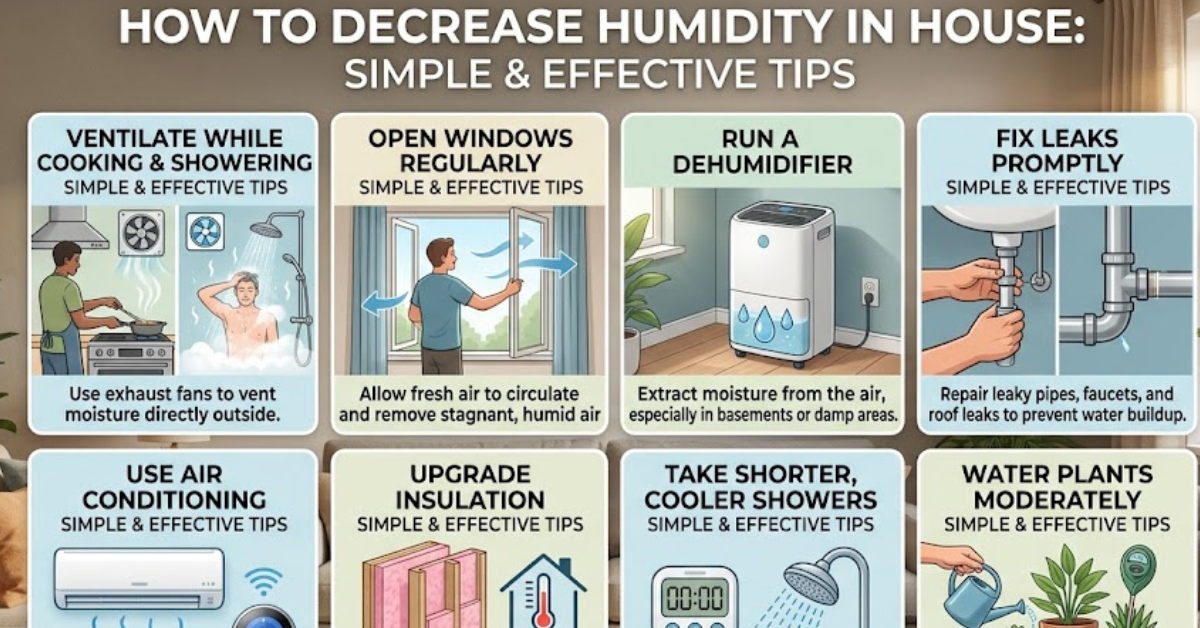
How to Decrease Humidity in House
Here are the most effective solutions, ranging from simple daily habits to long-term improvements.
Use a Dehumidifier
A dehumidifier is one of the fastest and most effective solutions.
Benefits include:
- Removes excess moisture
- Prevents mold growth
- Improves comfort
- Protects furniture and flooring
- Reduces allergens
Portable units work well for bedrooms, while whole-house systems integrate with HVAC systems for larger homes.
Improve Ventilation
Proper airflow helps humid air escape before it settles inside.
Bathroom Tips
- Turn on the exhaust fan during showers.
- Keep it running for 20–30 minutes afterward.
- Open a window if possible.
Kitchen Tips
Always use the range hood while cooking, especially when boiling water or frying food.
Laundry Room
Vent clothes dryers outdoors instead of into enclosed spaces.
Run Your Air Conditioner
Air conditioners naturally remove moisture while cooling.
For maximum effectiveness:
- Replace air filters regularly.
- Keep coils clean.
- Schedule annual maintenance.
- Avoid oversized AC systems, which cool too quickly without adequately removing humidity.
Fix Water Leaks Immediately
Hidden leaks are among the biggest contributors to indoor moisture.
Inspect:
- Pipes under sinks
- Water heaters
- Roofs
- Windows
- Exterior walls
- Foundation cracks
Prompt repairs prevent larger humidity problems later.
Seal Air Leaks
Warm outdoor air often carries moisture indoors.
Seal gaps around:
- Windows
- Doors
- Utility pipes
- Electrical outlets
- Attic access points
Weatherstripping and caulk are inexpensive solutions that improve energy efficiency as well.
Dry Wet Areas Quickly
Never allow standing water or damp materials to remain indoors.
Examples include:
- Wet towels
- Bathroom floors
- Flooded basements
- Spilled water
- Damp rugs
The sooner moisture is removed, the lower the chance of mold growth.
Avoid Drying Clothes Indoors
Freshly washed laundry releases large amounts of moisture into the air.
Instead:
- Use a vented dryer.
- Dry clothes outside when weather permits.
- Use a dehumidifier if indoor drying is unavoidable.
Use Moisture-Absorbing Products
Small enclosed spaces benefit from moisture absorbers.
Popular options include:
- Calcium chloride crystals
- Silica gel
- Activated charcoal
- Moisture-absorbing containers
These work well in closets, bathrooms, storage rooms, and RVs.
Increase Air Circulation
Moving air helps moisture evaporate more efficiently.
Try:
- Ceiling fans
- Portable fans
- Opening windows on dry days
- Keeping interior doors open
Better airflow reduces dampness throughout the home.
Waterproof Your Basement
Basements are naturally vulnerable to moisture.
Solutions include:
- Waterproof wall coatings
- Exterior drainage improvements
- Sump pumps
- Vapor barriers
- Foundation crack repairs
Addressing basement moisture often improves humidity levels throughout the house.
Reduce Houseplant Overwatering
Plants release moisture through transpiration.
If you have many indoor plants:
- Water only when needed.
- Remove standing water from trays.
- Space plants apart for better airflow.
Natural Ways to Reduce Indoor Humidity
If you prefer low-cost methods, these can help.
Open Windows During Dry Weather
Fresh air helps replace humid indoor air with drier outdoor air.
Cook With Pot Lids
Using lids reduces steam entering your kitchen.
Take Shorter Showers
Less steam means less indoor humidity.
Keep Gutters Clean
Overflowing gutters can direct water toward your home’s foundation.
Improve Drainage Around Your Home
Ensure soil slopes away from the house to prevent water intrusion.
Best Rooms to Focus On
Some areas require extra attention.
Bathroom
Highest moisture production.
Priority:
- Exhaust fan
- Open window
- Wipe wet surfaces
Kitchen
Steam from cooking increases humidity.
Priority:
- Use range hood
- Cover boiling pots
Basement
Most common location for mold.
Priority:
- Dehumidifier
- Waterproofing
- Leak inspections
Laundry Room
Priority:
- Outdoor dryer vent
- Good ventilation
How to Measure Indoor Humidity
A digital hygrometer is inexpensive and easy to use.
Check humidity in:
- Living room
- Bedroom
- Basement
- Bathroom
Aim for 30%–50% relative humidity throughout your home.
Mistakes to Avoid
Many homeowners accidentally make humidity problems worse.
Avoid these common mistakes:
- Ignoring small leaks
- Never cleaning HVAC filters
- Blocking air vents
- Drying laundry indoors regularly
- Leaving bathroom doors closed after hot showers
- Assuming mold is “just cosmetic”
Small habits often make a significant difference over time.
Seasonal Tips for Managing Humidity
Summer
- Run air conditioning regularly.
- Close windows during humid afternoons.
- Empty dehumidifier water tanks frequently.
Winter
Indoor humidity usually decreases naturally, but condensation may still occur on windows. Keep ventilation balanced and monitor humidity with a hygrometer.
Rainy Season
Use dehumidifiers more frequently, inspect gutters, and keep basements dry to prevent moisture buildup.
Key Takeaways
- Ideal indoor humidity is between 30% and 50%.
- Excess moisture encourages mold, mildew, and allergens.
- Dehumidifiers provide one of the fastest solutions.
- Proper ventilation is essential in kitchens, bathrooms, and laundry rooms.
- Repair leaks promptly to prevent hidden moisture damage.
- Monitor humidity regularly using a hygrometer.
- Small daily habits can significantly improve indoor air quality.
Frequently Asked Questions
What is the fastest way to decrease humidity in house?
Using a dehumidifier is generally the quickest method. Pair it with proper ventilation and air conditioning for even better results.
Can opening windows reduce indoor humidity?
Yes, but only when the outdoor air is drier than the indoor air. During very humid weather, keeping windows closed may be more effective.
Does air conditioning remove humidity?
Yes. Air conditioners remove moisture as part of the cooling process, helping maintain comfortable indoor humidity levels.
What humidity level causes mold?
Mold often begins growing when indoor humidity stays above 60% for extended periods, especially in poorly ventilated areas.
Why is my house humid even with the AC running?
Possible causes include an oversized air conditioner, hidden water leaks, poor ventilation, dirty filters, or moisture entering through the basement or crawl space.
Is a dehumidifier worth buying?
For homes with persistent moisture issues, a dehumidifier can improve comfort, reduce mold risk, protect furniture, and enhance indoor air quality, making it a worthwhile investment.
Conclusion
Learning how to decrease humidity in house is one of the best ways to protect both your home and your family’s health. High indoor moisture may seem like a minor inconvenience, but over time it can lead to mold, structural damage, unpleasant odors, and increased energy costs.
The good news is that most humidity problems can be managed with practical steps such as improving ventilation, repairing leaks, using a dehumidifier, and monitoring indoor moisture levels. By maintaining humidity between 30% and 50%, you’ll enjoy cleaner air, greater comfort, and a home that’s better protected against long-term damage.
Start by identifying the source of excess moisture, apply the strategies outlined above, and make humidity control part of your regular home maintenance routine for lasting results.