









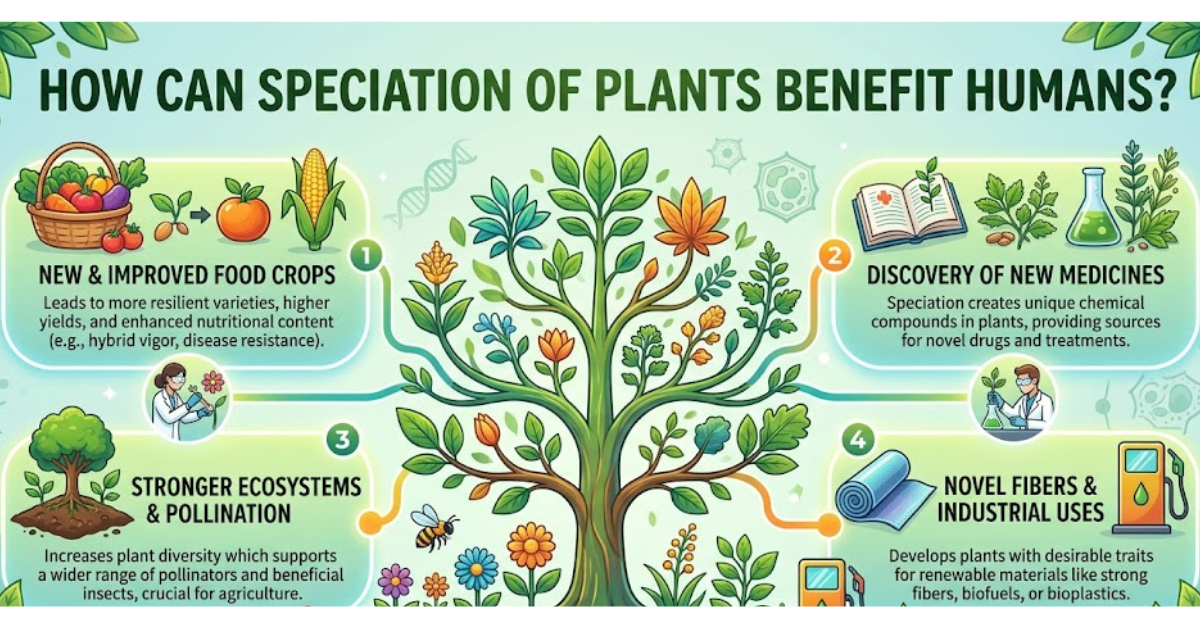
Have you ever wondered why some plants thrive in harsh deserts while others flourish in tropical rainforests? The answer often lies in speciation—the evolutionary process that creates new plant species over time. Understanding how can speciation of plants benefit humans reveals why this natural phenomenon is so important for our food, health, economy, and environment.
From developing crops that withstand drought to discovering life-saving medicines, plant speciation has shaped human civilization in countless ways. In this guide, you’ll learn what plant speciation is, how it happens, and why preserving plant diversity is one of the smartest investments we can make for the future.
What Is Plant Speciation?
Plant speciation is the process through which one plant species evolves into two or more distinct species. Over many generations, genetic differences accumulate until populations become so different that they no longer interbreed successfully.
Unlike animals, plants can speciate relatively quickly because they often reproduce in multiple ways, including self-pollination, cross-pollination, and even cloning.
Common drivers of plant speciation include:
- Geographic isolation
- Climate change
- Soil differences
- Pollinator preferences
- Genetic mutations
- Polyploidy (having extra sets of chromosomes)
Every new species adds unique traits that may eventually benefit ecosystems—and people.
How Can Speciation of Plants Benefit Humans?
The benefits extend far beyond simply having more plant varieties. New species contribute to agriculture, medicine, industry, conservation, and scientific research.
Let’s explore the major advantages.
Improves Food Security
One of the greatest benefits of plant speciation is the development of crops with valuable traits.
New plant species often possess natural characteristics such as:
- Drought tolerance
- Heat resistance
- Flood resistance
- Salt tolerance
- Disease resistance
- Pest resistance
Plant breeders use these traits to improve cultivated crops through selective breeding and modern genetics.
Example
Wild relatives of wheat, rice, and maize have contributed genes that protect modern crops from devastating diseases and environmental stress.
Without this genetic diversity, global food production would be far more vulnerable.
Creates Better Crop Varieties
Agricultural innovation depends heavily on genetic diversity.
Speciation provides plant breeders with an enormous library of useful genes.
Scientists can develop crops that offer:
- Higher yields
- Faster growth
- Improved nutrition
- Longer shelf life
- Better flavor
- Increased resistance to insects
These improvements help farmers produce more food while using fewer resources.
Supports the Discovery of New Medicines
Many of today’s medicines originated from plants.
Every newly evolved plant species may produce unique chemical compounds that scientists have never studied before.
Examples include:
- Aspirin (derived from willow)
- Quinine (from Cinchona trees)
- Taxol (Pacific yew tree)
- Morphine (opium poppy)
- Digoxin (foxglove)
As new species evolve, they may contain compounds capable of treating future diseases such as cancer, Alzheimer’s, antibiotic-resistant infections, or rare genetic disorders.
Plant biodiversity is essentially a natural pharmaceutical library.
Increases Biodiversity
Speciation is one of the primary drivers of biodiversity.
Greater biodiversity leads to healthier ecosystems because different plants perform different ecological roles.
Benefits include:
- Stable food chains
- Better soil fertility
- Improved nutrient cycling
- More habitats for wildlife
- Greater ecosystem resilience
Healthy ecosystems ultimately provide humans with clean water, fertile soil, pollination, and climate regulation.
Strengthens Climate Change Adaptation
Climate change is forcing plants to adapt rapidly.
New species that evolve under changing environmental conditions often become naturally suited to:
- Higher temperatures
- Irregular rainfall
- Rising carbon dioxide levels
- Extreme weather
Researchers can study these species to improve agriculture and conservation strategies.
This makes plant speciation increasingly valuable as global climates continue to shift.
Protects Pollinators
Many flowering plants evolve alongside pollinators such as:
- Bees
- Butterflies
- Birds
- Bats
- Beetles
As plants diversify, they provide a wider variety of food sources throughout the year.
Healthy pollinator populations directly benefit humans because pollinators support the production of:
- Fruits
- Vegetables
- Nuts
- Coffee
- Cocoa
Without diverse flowering plants, pollinator populations decline, threatening food production.
Supports Economic Growth
Many industries rely on plant diversity.
New plant species can become valuable sources of:
- Timber
- Fibers
- Essential oils
- Spices
- Natural dyes
- Biofuels
- Ornamental plants
Entire regional economies depend on unique plant species found nowhere else.
For example, many tropical countries generate significant income from native medicinal and ornamental plants.
Promotes Scientific Research
Every plant species is an opportunity to better understand evolution, genetics, ecology, and adaptation.
Scientists study plant speciation to answer questions like:
- How do organisms evolve?
- How do plants survive extreme environments?
- Which genes improve stress resistance?
- How do ecosystems recover after disturbances?
These discoveries often lead to advances in agriculture, biotechnology, and environmental management.
Helps Restore Damaged Ecosystems
Different plant species perform different ecological functions.
Some stabilize soils.
Others improve water retention.
Certain species restore nutrients after mining, wildfires, or deforestation.
Introducing native plant diversity often accelerates ecosystem recovery.
This benefits both wildlife and nearby human communities.
Conserves Valuable Genetic Resources
Every plant species carries unique DNA.
Once a species becomes extinct, its genetic information disappears forever.
That genetic material may contain:
- Disease resistance genes
- Climate adaptation traits
- Improved nutritional characteristics
- Future medicinal compounds
Protecting plant diversity preserves options for future generations.
Real-World Examples of Plant Speciation Benefiting Humans
Wild Rice and Modern Agriculture
Wild rice species possess genes that protect cultivated rice against flooding, pests, and diseases.
Researchers continue using these traits to improve food production worldwide.
Wild Tomatoes
Several wild tomato species from South America contain natural resistance to insects and fungal diseases.
These genes have helped produce healthier commercial tomatoes.
Coffee Species
Wild coffee plants discovered in Africa possess greater drought tolerance than cultivated coffee.
These species may help sustain coffee production as global temperatures rise.
Medicinal Plants
Thousands of plant species used in traditional medicine are now being investigated for treatments involving:
- Cancer
- Diabetes
- Heart disease
- Inflammation
- Viral infections
Many remain largely unexplored.
Types of Plant Speciation
Understanding how new species form helps explain their benefits.
Allopatric Speciation
Occurs when populations become geographically separated.
Examples include:
- Mountain formation
- Rivers
- Islands
- Glaciers
Separated populations evolve independently.
Sympatric Speciation
Occurs without physical separation.
Genetic changes or different pollinators gradually create new species living in the same region.
Polyploid Speciation
Plants commonly gain extra chromosome sets.
Polyploid plants often become:
- Larger
- More productive
- More resilient
Many important crops—including wheat, strawberries, potatoes, and cotton—are polyploid.
Why Conserving Plant Speciation Matters
Human activities increasingly threaten natural plant evolution.
Major threats include:
- Deforestation
- Urbanization
- Pollution
- Habitat fragmentation
- Climate change
- Invasive species
When habitats disappear, future plant species may never have the chance to evolve.
Protecting biodiversity means protecting future food, medicines, and ecosystems.
Practical Ways Humans Benefit from Plant Diversity
Governments, researchers, farmers, and individuals can support the benefits of plant speciation by:
- Conserving forests and wetlands.
- Protecting endangered plant species.
- Supporting seed banks and botanical gardens.
- Growing native plants.
- Reducing habitat destruction.
- Encouraging sustainable farming practices.
- Funding botanical and agricultural research.
These actions preserve valuable genetic resources for future generations.
Key Takeaways
- Plant speciation creates new species with unique genetic traits.
- New plant species improve agriculture by increasing crop resilience and productivity.
- Many medicines originate from diverse plant species.
- Greater biodiversity strengthens ecosystems and supports pollinators.
- Plant speciation helps humans adapt to climate change and future environmental challenges.
- Conserving plant diversity protects genetic resources that may become invaluable in the future.
Frequently Asked Questions
How can speciation of plants benefit humans in agriculture?
Plant speciation provides new genetic traits that breeders use to develop crops resistant to diseases, drought, pests, and changing climates. These improvements increase food production and agricultural sustainability.
Why is plant speciation important for medicine?
Many plants produce unique chemical compounds that can be developed into medicines. As new plant species evolve, they may contain substances useful for treating diseases that currently lack effective treatments.
Does plant speciation increase biodiversity?
Yes. Speciation is one of the primary reasons biodiversity increases over time. More plant species create healthier ecosystems that support wildlife, pollinators, and essential ecosystem services.
Can plant speciation help fight climate change?
Yes. Some newly evolved plant species naturally adapt to extreme environmental conditions. Scientists can use these adaptations to develop climate-resilient crops and improve ecosystem restoration efforts.
What is the biggest human benefit of plant speciation?
The greatest benefit is access to diverse genetic resources. These resources support food security, medicine, scientific innovation, ecosystem stability, and economic development.
How can humans help preserve plant speciation?
People can protect habitats, conserve endangered plants, support sustainable agriculture, reduce pollution, and encourage biodiversity conservation. These actions allow natural evolutionary processes to continue.
Conclusion
Understanding how can speciation of plants benefit humans highlights the remarkable connection between evolution and everyday life. Every new plant species has the potential to improve crops, provide new medicines, strengthen ecosystems, and help societies adapt to environmental challenges. The diversity created through speciation isn’t just a fascinating aspect of biology—it’s a foundation for human well-being, economic growth, and long-term sustainability.
As environmental pressures continue to grow, protecting plant diversity becomes more important than ever. By supporting conservation, sustainable farming, and scientific research, we can ensure that the benefits of plant speciation continue to enrich human life for generations to come.