







A name can tell a story that lasts a lifetime, and the Miles name meaning carries a rich history filled with strength, nobility, and timeless appeal. Popular for centuries, Miles is a classic masculine name that has remained relevant across different cultures and generations.
Whether you’re choosing a name for your baby, researching your own name, or simply curious about its background, understanding the meaning of Miles reveals a fascinating journey through ancient languages, historical figures, and modern trends.
What Does the Name Miles Mean?
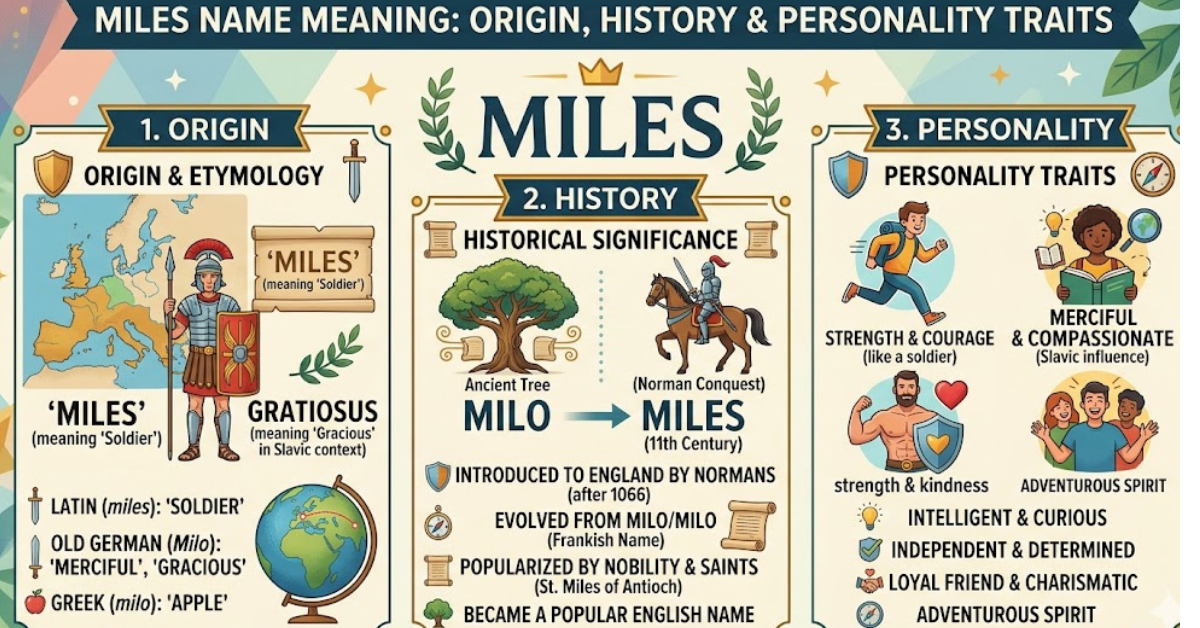
The Miles name meaning is commonly associated with “soldier” or “merciful.” The name has more than one possible origin, which adds to its unique character.
The most widely accepted interpretations include:
- Latin Origin: From the Latin word miles, meaning “soldier” or “warrior.”
- Germanic Origin: It may also derive from the Old German name Milo, connected to words meaning “gracious” or “merciful.”
- Slavic Connection: Some scholars suggest links to the Slavic element mil, meaning “dear” or “beloved.”
Because of these different roots, Miles represents qualities such as courage, kindness, loyalty, and compassion.
The Origin and History of the Name Miles
The origin of the name Miles dates back to medieval Europe. It became popular in England after the Norman Conquest in 1066, largely due to the influence of the Old French name Miles, which was linked to the Germanic name Milo.
During the Middle Ages, the name was often associated with knights and military service because of its similarity to the Latin term miles meaning soldier.
Over time, Miles evolved into a respected English given name and has remained a favorite choice among parents seeking a traditional yet modern-sounding name.
Personality Traits Associated with the Name Miles
While a person’s name does not determine their character, many people associate the name Miles with certain positive traits.
Common personality qualities linked to Miles include:
- Bravery and confidence
- Intelligence and curiosity
- Kindness and empathy
- Leadership skills
- Creativity and independence
The name carries a balanced image—strong and courageous while also gentle and thoughtful.
Is Miles a Popular Baby Name?
Yes, Miles has become increasingly popular in many English-speaking countries, especially in the United States.
Several factors contribute to its popularity:
- It is easy to pronounce and spell.
- It has a classic, sophisticated feel.
- It works well for children and adults.
- It has a meaningful history and elegant simplicity.
In recent years, Miles has consistently ranked among the top baby names in the U.S., reflecting a growing preference for timeless names with historical depth.
Famous People Named Miles
Many notable figures have helped keep the name Miles recognized around the world.
Some famous examples include:
Miles Davis
One of the most influential jazz musicians in history, Miles Davis transformed modern music with his innovative trumpet playing and groundbreaking albums.
Miles Teller
An American actor known for films such as Whiplash, Top Gun: Maverick, and The Spectacular Now.
Miles Kane
An English musician and songwriter known for his solo career and work with the band The Last Shadow Puppets.
These well-known personalities add creativity, talent, and charisma to the reputation of the name.
Spiritual and Symbolic Meaning of Miles
The spiritual meaning of Miles often relates to themes of protection, perseverance, and compassion.
Symbolically, the name may represent:
- A person who overcomes challenges with strength.
- Someone who protects and supports others.
- A kind-hearted individual with a caring nature.
Its combination of “warrior” and “merciful” meanings creates a powerful contrast between courage and kindness.
Variations and Similar Names to Miles
If you love the sound of Miles, you may also like similar names:
- Milo
- Myles
- Milan
- Micah
- Elias
- Silas
- Marcus
The spelling Myles is the most common alternative and shares the same pronunciation and overall meaning.
Why Parents Choose the Name Miles
The name Miles continues to attract parents because it offers the perfect blend of tradition and modern style.
Reasons parents love Miles include:
- A short, strong, memorable sound.
- A meaningful historical background.
- International recognition.
- A sophisticated yet approachable personality.
It is a name that can suit any stage of life, from childhood to adulthood.
FAQs About Miles Name Meaning
Is Miles a biblical name?
Miles does not have a direct biblical origin or appear as a name in the Bible. However, some people appreciate its meanings related to kindness, mercy, and strength.
What is the true meaning of Miles?
The most common meaning of Miles is “soldier,” from the Latin word miles. Other interpretations connect it with “merciful,” “gracious,” or “beloved.”
Is Miles an old-fashioned name?
Miles is a historic name with medieval roots, but it has experienced a modern revival. It is considered classic rather than old-fashioned.
Is Miles a rare name?
No. Miles is a well-known and increasingly popular baby name, especially in the United States, United Kingdom, and other English-speaking regions.
What is the personality of someone named Miles?
Although personality is shaped by life experiences rather than a name, Miles is commonly associated with qualities like confidence, intelligence, kindness, creativity, and leadership.
What are some nicknames for Miles?
Popular nicknames include:
- Mil
- Miley
- Milo
- M
Conclusion
The Miles name meaning combines history, strength, and compassion, making it a name with lasting appeal. With roots connected to soldiers, mercy, and beloved qualities, Miles has evolved from a medieval classic into a stylish choice for modern families.
Its simple pronunciation, rich heritage, and association with talented figures like Miles Davis and Miles Teller make it a name that stands out without being overly complicated. If you’re exploring meaningful baby names, Miles is a powerful option worth considering, and you can continue discovering other classic names to find the perfect fit for your family.