





Have you ever read the words moose vs mousse and wondered why they sound almost identical but mean completely different things? It’s a common language mix-up that often causes confusion among English learners and even native speakers.
In simple terms, a moose is a large wild animal found in northern forests, while mousse is a light and fluffy food or beauty product. Although these words share a similar pronunciation, their origins, meanings, and uses are completely different. This guide breaks down the key differences between moose vs mousse, helping you use each word confidently.
What Is a Moose?
A moose is the largest member of the deer family (Cervidae). It is a massive herbivorous mammal known for its long legs, broad antlers (in males), and distinctive hanging flap of skin under its throat called a dewlap.
Moose are mainly found in cold regions of:
- Canada
- Alaska
- Northern United States
- Scandinavia
- Russia
Characteristics of a Moose
Some interesting facts about moose include:
- Adult males can weigh between 600 and 1,500 pounds (270–680 kilograms).
- Their antlers can span over 6 feet (1.8 meters) from tip to tip.
- They are excellent swimmers and can dive underwater to feed on aquatic plants.
- Despite their size, moose can run at speeds of up to 35 miles per hour (56 km/h).
Example Sentences Using Moose
- We saw a giant moose walking through the forest during our trip to Canada.
- A bull moose uses its large antlers during the mating season.
- Moose often live near lakes and wetlands.
What Is Mousse?
A mousse is a soft, airy preparation that can refer to a dessert, a savory dish, or a cosmetic hair product. The word comes from the French term mousse, meaning “foam” or “froth.”
The most common types of mousse include:
Food Mousse
Food mousse is a light and creamy dish made by incorporating air into ingredients.
Popular examples include:
- Chocolate mousse
- Fruit mousse
- Coffee mousse
- Seafood mousse
Hair Mousse
Hair mousse is a styling product that adds:
- Volume
- Hold
- Texture
- Definition
It is especially popular among people with curly or fine hair who want a fuller appearance.
Example Sentences Using Mousse
- I ordered a rich chocolate mousse for dessert.
- She applied hair mousse before drying her hair to create extra volume.
- The chef prepared a delicate strawberry mousse.
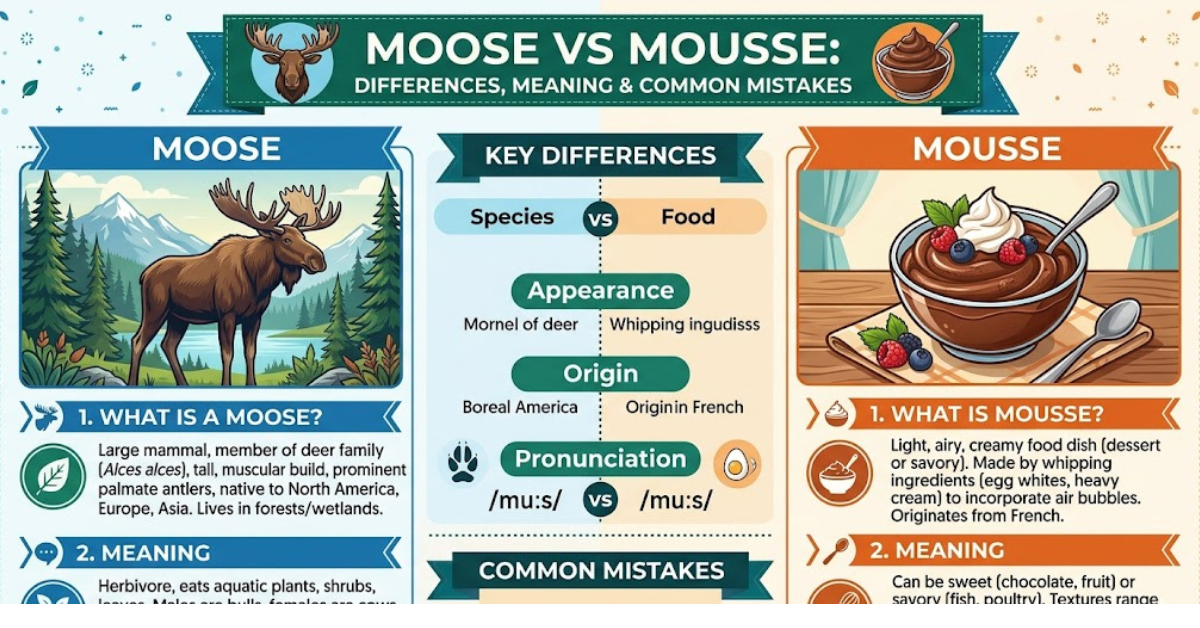
Moose vs Mousse: Key Differences Explained
Although the words sound similar, they belong to completely different categories.
| Feature | Moose | Mousse |
| Meaning | A large wild animal | A fluffy food or hair product |
| Category | Mammal | Food or cosmetic product |
| Origin | Indigenous North American languages | French |
| Appearance | Large animal with antlers | Light, airy, and foam-like |
| Common Use | Wildlife discussions | Cooking and beauty |
The easiest way to remember moose vs mousse is to think of moose as an animal and mousse as something soft and fluffy.
Why Do People Confuse Moose and Mousse?
The confusion between moose and mousse happens because they are homophones, meaning they have nearly identical pronunciations.
For example:
- Moose → /muːs/
- Mousse → /muːs/
Because they sound the same when spoken, context is the only way to understand which word someone means.
Consider these examples:
- “I saw a moose in the woods.” → Refers to an animal.
- “I ate chocolate mousse after dinner.” → Refers to a dessert.
How to Remember the Difference Between Moose vs Mousse
Here are a few easy memory tricks:
Remember “Moose Means Mammal”
The word moose starts with the letter M, and you can associate it with mammal and mountains or forests.
Remember “Mousse Means Mix or Makeup”
Think of mousse as a mixed, whipped, or foamy product, such as a dessert or hair styling foam.
Using visual associations can make it easier to avoid mixing the two words.
The Origin of Moose and Mousse
The History of Moose
The word moose entered English from Eastern Abenaki and other Algonquian languages of North America. It originally referred to the large animal native to the continent’s northern forests.
The History of Mousse
The word mousse comes from French and literally means “foam.” It became associated with airy dishes and later with cosmetic products that have a foam-like texture.
Common Mistakes When Using Moose and Mousse
Many people make simple spelling errors because the words sound the same.
Common mistakes include:
“I saw a mousse in the forest.”
“I saw a moose in the forest.”
“I love eating chocolate moose.”
“I love eating chocolate mousse.”
Paying attention to the context will help you choose the correct word every time.
FAQs About Moose vs Mousse
Is moose and mousse pronounced the same?
Yes. Moose and mousse are pronounced the same way in English, which is why they are often confused.
Is chocolate moose correct?
No. The correct term is chocolate mousse, which is a fluffy French dessert. A moose is an animal.
Is a moose a deer or an elk?
A moose is the largest species in the deer family. In North America, it is a separate species from elk.
What does mousse mean in beauty products?
In cosmetics, mousse usually refers to a lightweight foam product used for hair styling or sometimes skincare and makeup.
Why is it called mousse?
The word comes from the French word meaning “foam,” which describes its airy and light texture.
Conclusion
Understanding moose vs mousse is easy once you know the difference. A moose is a giant deer-like animal that lives in cold forests, while mousse refers to a fluffy dessert or a foam-based beauty product. Even though they sound exactly alike, their meanings are worlds apart.
The next time you encounter these words, remember the context: forests and antlers point to a moose, while desserts and styling products point to mousse. Keep exploring language guides and vocabulary comparisons to sharpen your English skills and avoid common word mix-ups.