








Every workplace, from a small office to a massive construction site, contains potential risks that can lead to injuries, illnesses, or costly accidents. That’s why understanding who is responsible for conducting a hazard assessment is essential for maintaining a safe and compliant work environment.
In most cases, employers are primarily responsible for conducting a hazard assessment, but workplace safety is a shared effort involving supervisors, employees, safety professionals, and sometimes external consultants. A proper hazard assessment identifies potential dangers, evaluates risks, and helps organizations implement effective safety controls before incidents occur.
In this guide, we’ll explain who carries the responsibility for hazard assessments, how the process works, and why regular evaluations are a crucial part of any workplace safety program.
What Is a Hazard Assessment?
A hazard assessment is a systematic process used to identify hazards in the workplace and determine the risks associated with them. The purpose is to prevent accidents, injuries, illnesses, and damage to equipment or property.
Workplace hazards can include:
- Physical hazards such as noise, falls, or moving machinery
- Chemical hazards involving toxic substances or dangerous fumes
- Biological hazards like bacteria, viruses, or mold
- Ergonomic hazards caused by repetitive movements or poor workstation design
- Psychosocial hazards including stress, violence, or workplace harassment
By recognizing these risks early, organizations can put proper safety measures in place.
Who Is Responsible for Conducting a Hazard Assessment?
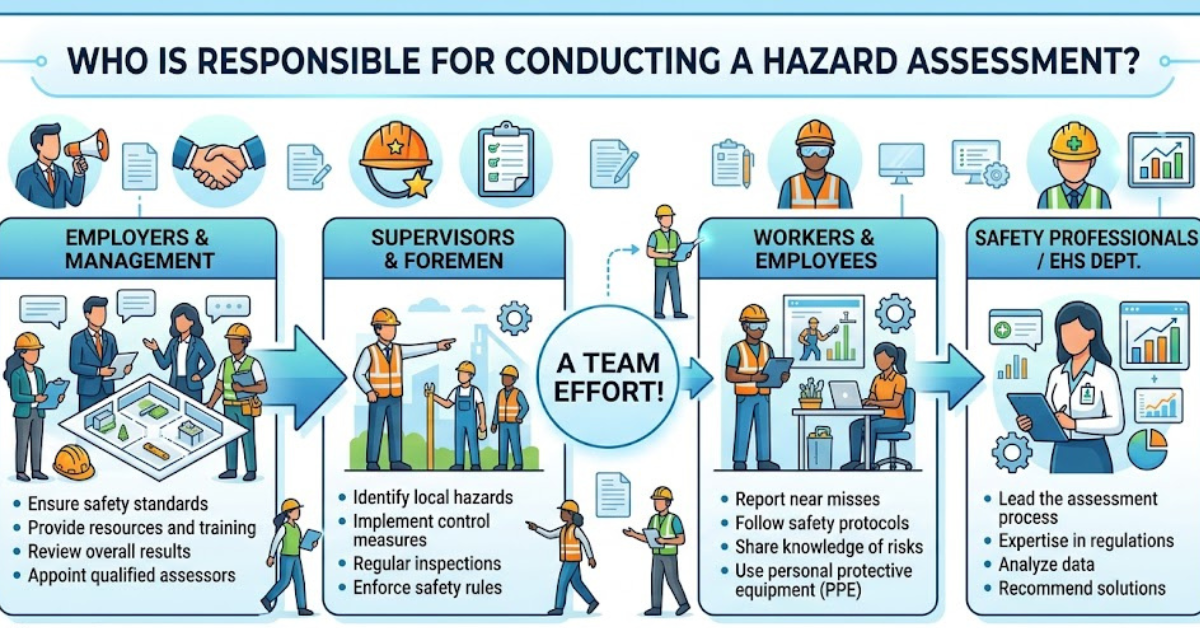
The primary responsibility for conducting a hazard assessment usually belongs to the employer or organization management. Occupational safety laws in many countries, including regulations from agencies like OSHA in the United States, require employers to provide a safe workplace and identify potential hazards.
Employers must ensure that hazard assessments are performed accurately, regularly, and whenever new processes, equipment, or materials are introduced.
Employer responsibilities often include:
- Conducting initial and periodic workplace hazard evaluations
- Identifying potential sources of injury or illness
- Providing appropriate personal protective equipment (PPE) based on assessment findings
- Implementing safety controls and corrective actions
- Maintaining documentation where required by law
- Training employees on identified risks and safe work procedures
While employers hold the ultimate responsibility, they often involve other individuals to make the process more effective.
The Role of Supervisors in Hazard Assessments
Supervisors play an important role in workplace risk assessment because they directly oversee daily operations and employees.
Their responsibilities may include:
- Monitoring work areas for unsafe conditions
- Reporting and addressing potential hazards
- Ensuring employees follow safety procedures
- Communicating new risks to management
- Participating in regular safety inspections
Because supervisors are familiar with specific job tasks, their input helps create more accurate and practical hazard assessments.
How Employees Contribute to Hazard Identification
Employees are often the first people to notice unsafe conditions because they work directly with tools, equipment, and processes every day.
Employees can support the hazard assessment process by:
- Reporting unsafe conditions immediately
- Participating in safety meetings and inspections
- Following established safety protocols
- Providing feedback about workplace risks
- Using PPE correctly
Although employees typically do not carry the legal responsibility for conducting hazard assessments, their participation is essential for maintaining a safe work environment.
When Are Safety Professionals or Consultants Involved?
In complex industries such as construction, manufacturing, healthcare, or mining, organizations may rely on safety officers, industrial hygienists, or external consultants.
These professionals can help by:
- Performing detailed workplace safety evaluations
- Measuring exposure to chemicals, noise, or environmental hazards
- Recommending risk control strategies
- Ensuring compliance with occupational safety standards
- Providing specialized safety training
However, hiring a consultant does not usually transfer the employer’s legal responsibility for workplace safety.
The Hazard Assessment Process: Key Steps
A successful workplace hazard assessment generally follows several steps.
1. Identify Workplace Hazards
Examine work areas, equipment, materials, and tasks to locate anything that could cause harm.
2. Evaluate the Level of Risk
Determine how likely an incident is to occur and how severe the consequences could be.
3. Implement Hazard Controls
Use the hierarchy of controls to reduce risks, including:
- Eliminating the hazard
- Substituting safer materials or processes
- Installing engineering controls
- Establishing administrative controls
- Providing PPE as the last line of defense
4. Document Findings and Review Regularly
Keep records when required and repeat assessments after workplace changes, incidents, or scheduled safety reviews.
Why Conducting Hazard Assessments Is Important
Regular hazard assessments provide many benefits, including:
- Reducing workplace injuries and illnesses
- Improving employee confidence and morale
- Increasing productivity
- Lowering accident-related costs
- Ensuring compliance with safety regulations
- Creating a stronger safety culture
Ignoring hazards can lead to serious consequences, including legal penalties, financial losses, and preventable harm to workers.
Common Mistakes to Avoid During Hazard Assessments
Even organizations with safety programs can make errors. Common mistakes include:
- Performing assessments only once and never updating them
- Failing to involve workers
- Ignoring minor hazards that may become major issues
- Relying solely on PPE instead of eliminating hazards
- Failing to document findings and corrective actions
Regular reviews help keep assessments accurate and effective.
FAQs
Who is legally responsible for conducting a hazard assessment?
In most workplaces, the employer is legally responsible for conducting hazard assessments and ensuring that identified hazards are controlled according to applicable safety regulations.
Can employees conduct a hazard assessment?
Employees can assist with identifying hazards and participating in inspections, but the overall responsibility usually remains with the employer or management.
How often should a hazard assessment be conducted?
A hazard assessment should be performed before work begins, whenever there are changes in equipment or processes, after incidents, and periodically as part of an ongoing safety program.
Is a hazard assessment required by OSHA?
Yes, OSHA requires employers to assess workplace hazards, especially when determining the need for personal protective equipment under OSHA’s PPE standards.
Can a third-party safety consultant perform a hazard assessment?
Yes. Companies may hire external safety experts to conduct assessments, but the employer generally retains responsibility for maintaining a safe workplace.
Conclusion
Understanding who is responsible for conducting a hazard assessment is a key part of building a safe workplace. While employers carry the primary legal responsibility, effective hazard assessments depend on cooperation between managers, supervisors, employees, and safety professionals.
Regularly identifying and controlling hazards helps prevent injuries, improves compliance, and creates a stronger safety culture. Whether you run a small business or manage a large organization, making hazard assessments a routine practice is one of the smartest investments you can make in workplace safety.
For more workplace safety guidance, consider exploring related topics such as PPE requirements, risk assessment methods, and OSHA compliance strategies.