





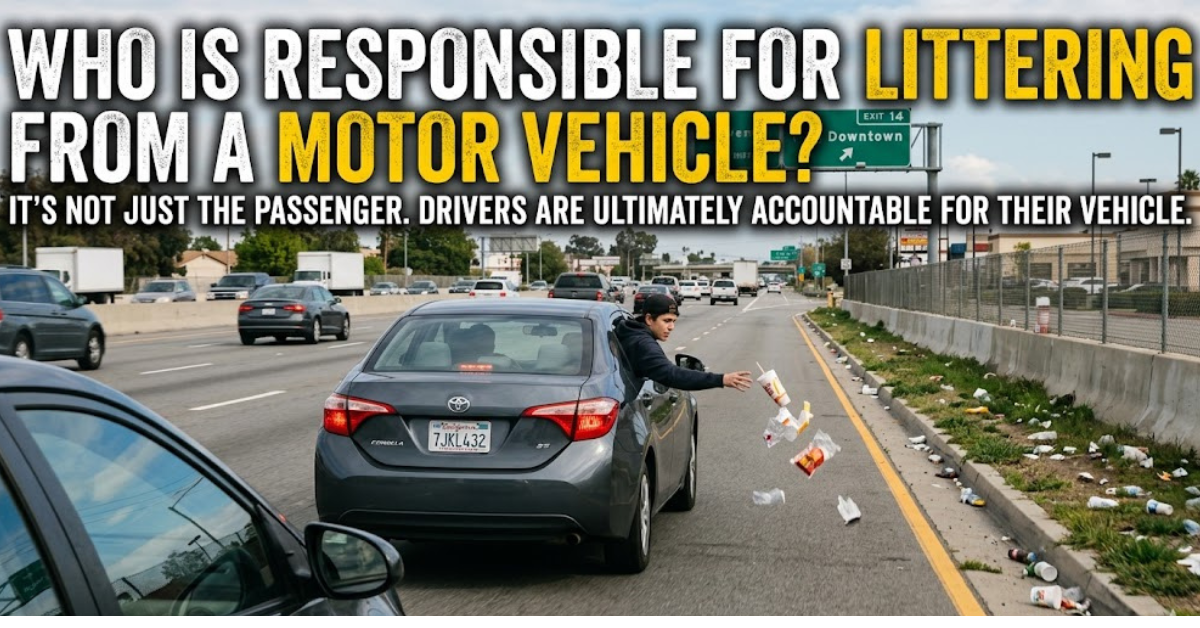
Imagine driving behind a car and suddenly seeing a fast-food wrapper, cigarette butt, or plastic bottle fly out of the window. It may seem like a small act, but littering from a motor vehicle creates serious environmental and safety problems. A common question people ask is, who is responsible for littering from a motor vehicle?
The answer depends on the laws of the country or state where the incident occurs. In many regions, the person who throws the litter is directly responsible, but the vehicle owner or registered keeper may also be held liable under certain laws. Understanding how these rules work can help drivers avoid fines and contribute to cleaner roads and communities.
Understanding Littering From a Motor Vehicle
Littering from a vehicle refers to throwing, dropping, depositing, or leaving waste on a public road, highway, parking area, or other public place from a moving or parked vehicle.
Common examples include:
- Throwing food wrappers out of a car window
- Dropping cigarette butts onto the road
- Discarding plastic bottles or cans
- Leaving garbage on the side of the road
- Allowing unsecured items to fall from a vehicle
Even small items can harm wildlife, pollute waterways, and create hazards for other drivers.
Who Is Legally Responsible for Littering From a Motor Vehicle?
The responsibility for littering from a motor vehicle usually falls on the individual who committed the act of littering. If a passenger or driver intentionally throws trash out of the vehicle, that person can be fined or prosecuted.
However, some jurisdictions have laws that make the registered owner of the vehicle responsible when authorities cannot identify the person who actually discarded the litter. This is similar to certain traffic camera violations where responsibility is linked to the vehicle registration.
The exact legal responsibility varies based on local littering regulations.
Driver vs. Passenger: Who Gets the Fine?
A frequent question is whether the driver is responsible if a passenger throws trash out of the window.
The answer depends on local law:
If the Passenger Is Identified
When authorities can identify the passenger who threw the litter, that person is generally held responsible for the offense.
If the Person Is Unknown
In some areas, the registered owner of the vehicle may receive a penalty notice because they are responsible for the vehicle associated with the littering incident.
If the Driver Encourages the Behavior
A driver who allows or encourages passengers to litter may also face penalties depending on applicable laws.
What Are the Penalties for Littering From a Vehicle?
Penalties for littering from a motor vehicle differ widely by location. They may include:
- Monetary fines
- Community service requirements
- Court appearances
- Points on a driving record in some regions
- Higher penalties for repeated offenses
In cases involving hazardous materials or large amounts of waste, penalties can be much more severe and may include criminal charges.
How Is Vehicle Littering Reported and Enforced?
Authorities use several methods to identify people who litter from vehicles, including:
- Reports from witnesses who provide the vehicle’s license plate number.
- Police officers observing the violation directly.
- Roadside cameras or surveillance systems where legally permitted.
- Environmental enforcement programs.
Many areas also allow citizens to report littering incidents through government websites or hotlines.
Why Littering From Vehicles Is a Serious Problem
Some people underestimate the impact of tossing a small piece of trash out of a car, but vehicle litter has significant consequences.
Environmental Damage
Plastic, paper, and other waste can remain in the environment for years and harm animals and ecosystems.
Road Safety Risks
Objects thrown onto roads can cause accidents, especially for motorcyclists and cyclists.
Increased Cleanup Costs
Local governments spend millions of dollars every year cleaning roadsides, parks, and public spaces.
How Drivers and Passengers Can Prevent Vehicle Littering
Preventing litter from vehicles is simple with a few responsible habits:
- Keep a small trash bag inside your car.
- Dispose of waste only in designated bins.
- Secure items in truck beds or trailers.
- Remind passengers not to throw anything outside.
- Empty your vehicle’s trash regularly.
Small actions by individual drivers can make a major difference in keeping communities clean.
FAQs
Is the owner of a car responsible for litter thrown from it?
In some jurisdictions, yes. If the person who threw the litter cannot be identified, the registered vehicle owner may receive a fine or penalty notice. In other areas, only the person who actually littered is liable.
Can a passenger be fined for throwing trash out of a vehicle?
Yes. A passenger who is identified as the person who discarded the litter can be held legally responsible.
What happens if something accidentally falls from my vehicle?
Accidental loss of items may still result in penalties if the vehicle owner failed to properly secure the load. Laws vary depending on the circumstances and location.
How can I report someone for littering from a vehicle?
Many local governments provide online reporting systems, phone numbers, or environmental hotlines where citizens can report littering incidents with details such as the vehicle’s license plate, location, and time.
Are cigarette butts considered litter?
Yes. In most jurisdictions, throwing a cigarette butt from a vehicle is considered littering and can lead to a fine.
Conclusion
So, who is responsible for littering from a motor vehicle? In most cases, the person who throws the trash is legally responsible. However, some laws place responsibility on the registered owner of the vehicle when the offender cannot be identified. Because littering rules differ by location, it is always wise to understand the laws that apply in your area.
The best approach is prevention: keep trash inside your vehicle, dispose of it properly, and encourage passengers to do the same. By following these simple habits, drivers can avoid penalties and help protect the environment. For more guidance on road safety, environmental laws, and responsible driving practices, explore related resources from your local transportation or environmental authorities.