








Have you ever looked at your cholesterol test results and wondered why your doctor wants your HDL number to be higher? While most conversations about cholesterol focus on lowering LDL, increasing HDL cholesterol can also play an important role in supporting heart health.
If you’re searching for how to increase HDL cholesterol, you’re already taking a positive step toward protecting your cardiovascular system. This guide explains what HDL cholesterol is, why it matters, and the most effective, science-backed ways to improve your HDL levels naturally. You’ll also learn which lifestyle habits make the biggest difference, what foods to prioritize, and when medication may be necessary.
What Is HDL Cholesterol?
HDL (High-Density Lipoprotein) is often called the “good” cholesterol because it helps remove excess cholesterol from your bloodstream. It carries cholesterol back to the liver, where it can be processed and eliminated from the body.
Think of HDL as your body’s cleanup crew. Rather than allowing cholesterol to build up in your arteries, HDL helps transport it away, reducing the risk of plaque formation.
General HDL Cholesterol Guidelines
| HDL Level | Meaning |
| Less than 40 mg/dL (men) | Low |
| Less than 50 mg/dL (women) | Low |
| 60 mg/dL or higher | Considered protective for heart health |
Keep in mind that healthcare providers evaluate HDL alongside LDL cholesterol, triglycerides, blood pressure, and other cardiovascular risk factors.
Why Is HDL Cholesterol Important?
Healthy HDL levels are associated with:
- Better cholesterol transport
- Reduced buildup of plaque in arteries
- Improved cardiovascular health
- Lower risk of heart attack and stroke
- Better overall metabolic health
While raising HDL alone doesn’t guarantee protection from heart disease, improving HDL through healthy lifestyle changes often benefits your entire cardiovascular system.
How to Increase HDL Cholesterol Naturally
The most effective way to increase HDL isn’t through a single food or supplement—it’s through consistent healthy habits.
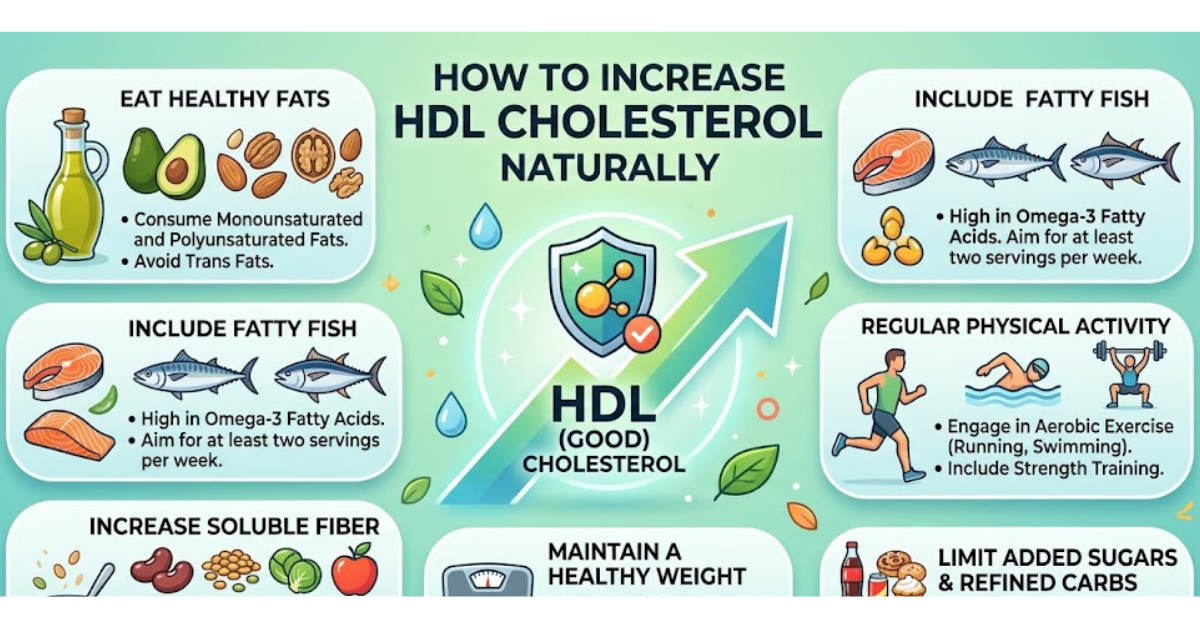
Exercise Regularly
Physical activity is one of the most reliable ways to raise HDL cholesterol naturally.
Best Exercises
- Brisk walking
- Running
- Cycling
- Swimming
- Dancing
- Hiking
- Rowing
- High-intensity interval training (HIIT)
Experts generally recommend:
- 150 minutes of moderate exercise weekly, or
- 75 minutes of vigorous exercise
Adding strength training two or more days each week can further improve metabolic health.
Choose Healthy Fats
Not all fats are harmful. Certain fats actually help support healthier HDL levels.
Eat More
- Extra virgin olive oil
- Avocados
- Almonds
- Walnuts
- Pistachios
- Chia seeds
- Flaxseeds
- Fatty fish like salmon, sardines, trout, and mackerel
These foods contain healthy unsaturated fats and omega-3 fatty acids that support heart health.
Limit
- Trans fats
- Deep-fried foods
- Highly processed baked goods
- Packaged snacks made with partially hydrogenated oils
Reducing trans fat intake is especially important because it lowers HDL while raising LDL cholesterol.
Eat More Fiber-Rich Foods
Although fiber is better known for lowering LDL cholesterol, diets rich in fiber also contribute to healthier cholesterol balance overall.
Include plenty of:
- Oats
- Beans
- Lentils
- Chickpeas
- Apples
- Pears
- Berries
- Broccoli
- Brussels sprouts
- Whole grains
Aim for 25–38 grams of fiber daily, depending on age and sex.
Maintain a Healthy Weight
Even modest weight loss can improve HDL cholesterol if you’re overweight.
Research shows that losing just 5–10% of body weight may improve cholesterol levels while also lowering blood pressure and blood sugar.
Instead of focusing on restrictive dieting, prioritize sustainable habits such as:
- Portion control
- Balanced meals
- Regular movement
- Better sleep
- Consistent eating patterns
Quit Smoking
Smoking damages blood vessels and lowers HDL cholesterol.
The benefits of quitting begin almost immediately, and HDL levels often improve within weeks to months after stopping tobacco use.
Additional benefits include:
- Better circulation
- Reduced heart disease risk
- Improved lung function
- Lower stroke risk
Drink Alcohol Carefully
Some studies have found that light to moderate alcohol consumption may slightly increase HDL cholesterol.
However, alcohol is not recommended as a treatment for low HDL because its risks—including liver disease, certain cancers, addiction, and high blood pressure—often outweigh any potential benefits.
If you don’t drink alcohol, there is no medical reason to start.
Eat Fatty Fish Twice Each Week
Fish rich in omega-3 fatty acids support heart health, even if their effect on HDL is modest.
Great choices include:
- Salmon
- Sardines
- Tuna
- Herring
- Trout
- Mackerel
If you don’t eat fish, discuss omega-3 supplements with your healthcare provider.
Reduce Refined Carbohydrates
Highly processed carbohydrates may contribute to unhealthy cholesterol patterns.
Try reducing:
- White bread
- Sugary cereals
- Pastries
- Soda
- Candy
- Sweetened beverages
Instead, choose:
- Brown rice
- Quinoa
- Whole wheat bread
- Oats
- Sweet potatoes
- Legumes
Improve Sleep Quality
Poor sleep is linked to worse cholesterol profiles and increased cardiovascular risk.
Adults should aim for 7–9 hours of quality sleep each night.
Helpful habits include:
- Going to bed at the same time
- Limiting screen use before sleep
- Keeping the bedroom cool and dark
- Avoiding heavy meals late at night
Manage Stress
Chronic stress can negatively affect many aspects of heart health.
Healthy stress-management techniques include:
- Meditation
- Yoga
- Deep breathing
- Walking outdoors
- Journaling
- Spending time with family and friends
- Mindfulness practices
Small daily habits often produce long-term benefits.
Foods That May Help Increase HDL Cholesterol
Building meals around nutrient-rich foods supports healthier cholesterol levels.
Excellent Choices
- Olive oil
- Avocados
- Salmon
- Tuna
- Walnuts
- Almonds
- Flaxseed
- Chia seeds
- Oats
- Beans
- Lentils
- Fruits
- Leafy green vegetables
A Mediterranean-style eating pattern is frequently recommended because it emphasizes many of these foods.
Foods to Limit
Certain foods can worsen overall cholesterol levels.
Try limiting:
- Fried foods
- Fast food
- Processed meats
- Sugary desserts
- Sugary drinks
- Highly processed snacks
- Foods containing trans fats
Enjoy these foods only occasionally while emphasizing whole, minimally processed options.
Can Medication Increase HDL Cholesterol?
Lifestyle changes remain the first recommendation for most people.
In some situations, healthcare providers may prescribe medications based on your overall cardiovascular risk rather than simply trying to raise HDL.
Common cholesterol medications include:
- Statins
- Fibrates
- Niacin (used much less frequently today because of limited benefit and possible side effects)
Current treatment focuses more on lowering LDL cholesterol and reducing overall cardiovascular risk than on raising HDL alone.
Common Mistakes to Avoid
Many people unintentionally slow their progress.
Avoid these common mistakes:
- Expecting results within a few days
- Depending only on supplements
- Ignoring exercise
- Following crash diets
- Continuing to smoke
- Eating excessive processed foods labeled “low fat”
- Skipping regular cholesterol testing
Consistency matters more than perfection.
How Long Does It Take to Raise HDL Cholesterol?
Everyone responds differently.
Many people begin seeing measurable improvements after 6 to 12 weeks of consistent healthy lifestyle changes.
Factors affecting progress include:
- Genetics
- Age
- Activity level
- Diet quality
- Smoking status
- Weight
- Existing medical conditions
Regular blood tests help monitor improvement over time.
Key Takeaways
- HDL is known as “good” cholesterol because it helps remove excess cholesterol from the bloodstream.
- Regular exercise is one of the most effective ways to improve HDL.
- Healthy fats from olive oil, nuts, seeds, and fish support heart health.
- Maintaining a healthy weight, quitting smoking, and sleeping well can improve cholesterol levels.
- Focus on overall cardiovascular health rather than chasing a single cholesterol number.
- Work with your healthcare provider to interpret your cholesterol results and determine the best treatment plan.
Frequently Asked Questions
What is the fastest way to increase HDL cholesterol?
The fastest evidence-based approach combines regular aerobic exercise, weight management, quitting smoking if applicable, and eating a heart-healthy diet rich in healthy fats. Improvements typically occur over several weeks rather than days.
Which foods increase HDL cholesterol the most?
Foods rich in unsaturated fats, such as olive oil, avocados, nuts, seeds, and fatty fish, are among the best choices for supporting healthy HDL cholesterol levels.
Can walking increase HDL cholesterol?
Yes. Brisk walking performed consistently for at least 150 minutes per week can contribute to improved HDL cholesterol as part of a healthy lifestyle.
Are eggs good for HDL cholesterol?
For most healthy people, eggs can be part of a balanced diet. While they may have a modest effect on HDL in some individuals, overall dietary patterns are more important than any single food.
Is low HDL cholesterol dangerous?
Low HDL cholesterol is associated with a higher risk of cardiovascular disease, particularly when combined with high LDL cholesterol, elevated triglycerides, diabetes, or other heart disease risk factors.
Should I take supplements to raise HDL cholesterol?
Supplements should not replace healthy lifestyle habits. Some may help certain individuals, but you should consult a healthcare professional before starting any supplement, especially if you take medications or have existing health conditions.
Conclusion
Understanding how to increase HDL cholesterol is about much more than boosting a single number on a blood test. Regular physical activity, nutritious eating, maintaining a healthy weight, avoiding smoking, getting enough sleep, and managing stress work together to support healthier cholesterol levels and a stronger heart.
Remember that HDL is only one piece of the cardiovascular health puzzle. The greatest benefits come from improving your overall lifestyle and working with your healthcare provider to monitor your cholesterol profile over time. Start with one or two practical changes today, stay consistent, and build habits that support your heart for years to come.